



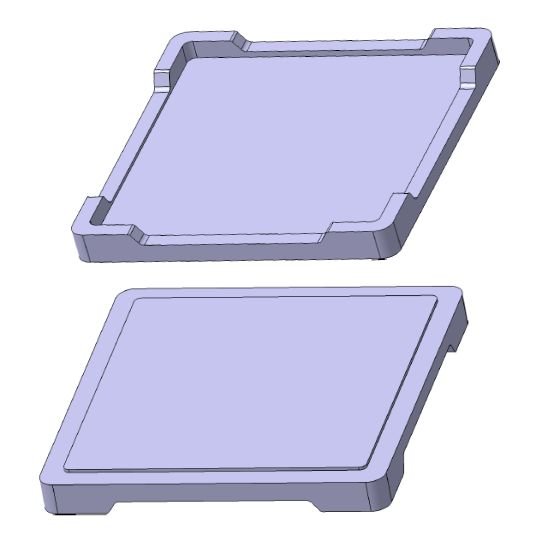
Stackable Alumina Ceramic Tray Overview
A well-designed ceramic tray does more than carry components through a furnace. Its geometry also affects how parts are arranged, how trays are positioned, and how efficiently the available furnace space can be used.
Jinghui offers custom alumina ceramic trays for industrial firing and sintering applications. For processes that require multiple trays to be stacked, the tray geometry can be developed around the required support, positioning and clearance conditions, subject to design feasibility.
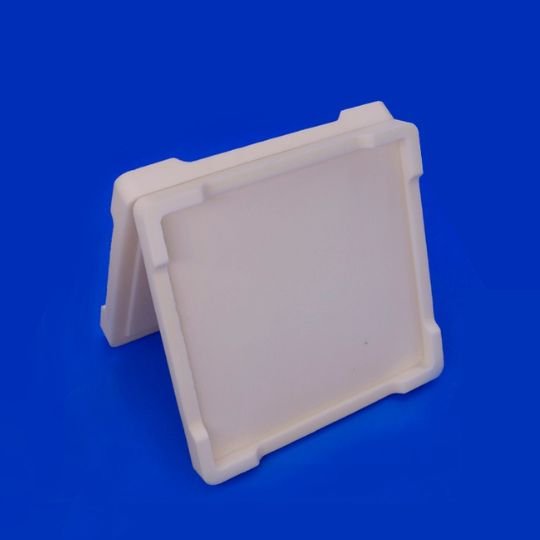
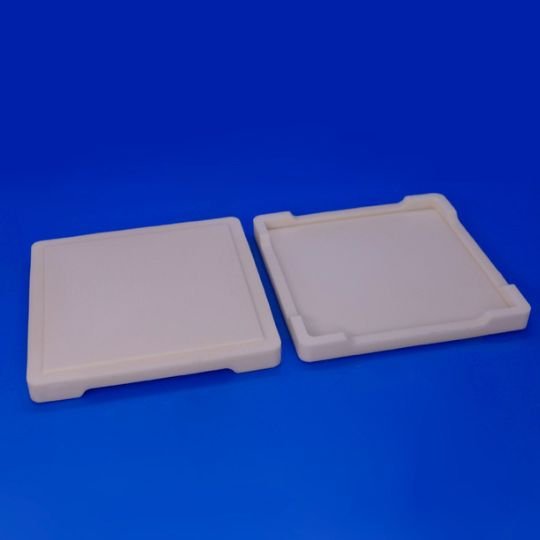
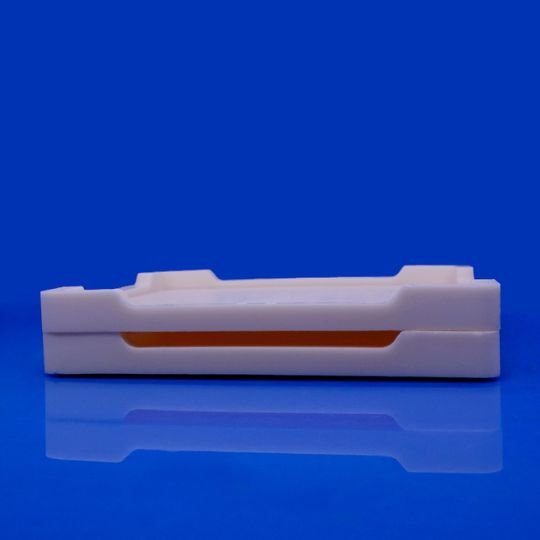
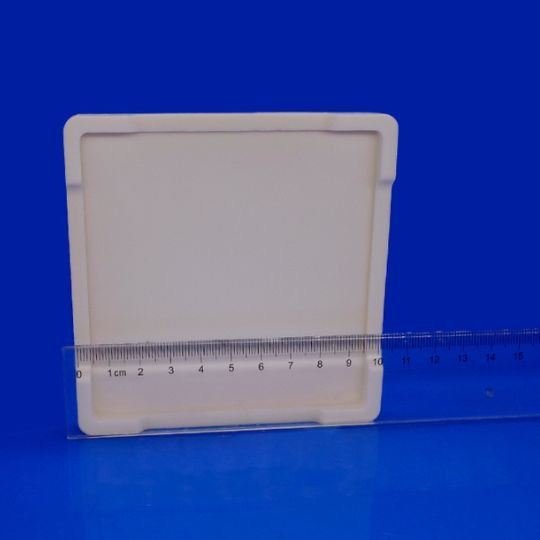
The schematic diagram of the common stackable alumina ceramic tray is as follows:
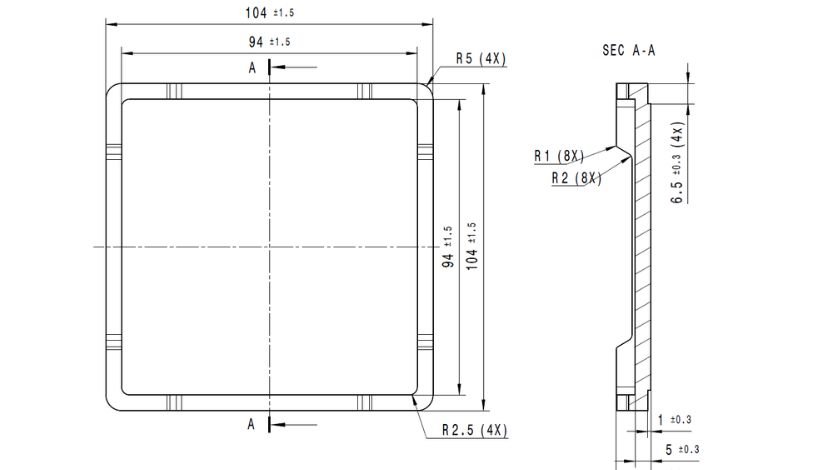
Share your component dimensions, furnace conditions and stacking requirements with us to discuss a suitable tray configuration.
Ceramic Trays for Industrial Firing and Sintering
Alumina ceramic trays can be considered for suitable industrial thermal-processing applications where components require a ceramic support surface. The appropriate design depends on the workpiece, furnace conditions and loading arrangement.
Ceramic Component Processing
Trays may support suitable ceramic components during firing or sintering. Contact conditions and the risk of sticking or surface marking should be reviewed for the specific ceramic body.
Electronic and Functional Ceramics
For electronic and functional ceramic components, material compatibility, cleanliness and the arrangement of workpieces may be important process considerations.
Industrial Furnace Loading
Where the process permits stacked trays, a suitable tray arrangement may help organize the available loading space. The actual usable capacity depends on furnace dimensions, required clearances, load limits and the stability of the complete arrangement.
Other Thermal Processing Applications
Other applications may be considered after checking the operating temperature, atmosphere, load, contact material and thermal cycle.
Key Design Considerations for Stacking
For a stacking application, the tray’s supporting and locating features are important design considerations. Depending on the actual configuration, these may include defined contact areas, raised edges, locating features or other geometry intended to position one tray relative to another.
The purpose is to establish a repeatable arrangement that suits the loading process. The appropriate design depends on tray dimensions, the distribution of the load, the number of layers, handling requirements and the furnace environment.
Stacking suitability should be evaluated using the actual tray geometry and operating conditions. It should not be assumed from the material alone.

Where the design includes locating features, their dimensions and clearances can be evaluated to help achieve the intended relative position between trays.

The contact points and support arrangement should be reviewed against the tray dimensions and the load carried during processing.

The clearance between stacked trays should accommodate the workpiece height, loading arrangement and any process-specific spacing requirements.

Tray geometry should be compatible with the way operators or equipment load, unload and move the trays.
Alumina Ceramic for Industrial Thermal Processing
Alumina is widely used in technical ceramic components because it combines hardness, electrical insulation and good chemical stability in many industrial environments. Its suitability for a specific tray application, however, depends on the selected grade and the actual process conditions.
For a tray designed for stacking, material selection must also account for tray dimensions, thickness, loading, temperature cycling and the risk of damage during handling. The highest available alumina purity is not automatically the best choice for every application.
What Should Be Confirmed?
- Material grade: Confirm the alumina grade required for the operating environment.
- Temperature profile: Consider peak temperature, dwell time, heating rate and cooling rate.
- Chemical compatibility: Evaluate potential reactions with the workpiece, residues and furnace atmosphere.
- Mechanical loading: Consider the weight carried by each tray and the load transferred through the stack.
- Thermal cycling: Review whether repeated heating and cooling may affect the tray or stack stability.


Custom Tray Dimensions and Geometry
Developed Around Your Workpiece and Furnace Layout
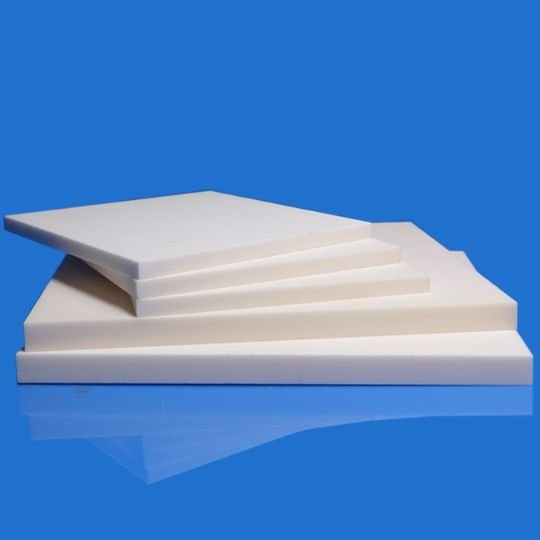
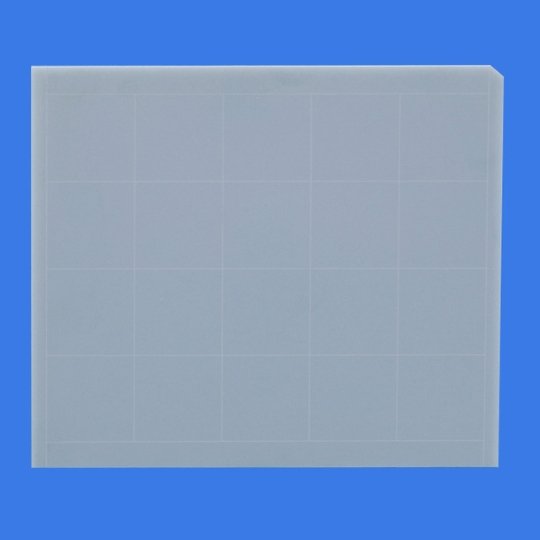
The right tray dimensions depend on the parts being processed and the way they are arranged inside the furnace. A tray that is too small may limit the loading arrangement, while a tray that is too large or too thin for its intended use may create additional handling or deformation concerns.
Jinghui can assess customer-defined dimensions and geometry based on drawings and application requirements. For stacking designs, it is useful to define the overall tray dimensions together with the supporting areas, locating features and required clearance.
Customization Options
- Overall length and width
- Tray height and thickness
- Edge shape and corner geometry
- Stacking and locating features, if required
- Surface finish and selected machined features
- Dimensional tolerances based on the drawing
Not every geometry is suitable for every alumina grade or manufacturing process. Large, thin or complex trays may require additional review before the design is finalized.
Manufacturing and Quality Inspection
From Ceramic Forming to Finished Tray Inspection
Manufacturing a ceramic tray involves more than producing the required external shape. Forming, sintering and any secondary machining must be considered together, particularly when the tray has locating features, thin sections or defined stacking clearances.
A typical manufacturing route may include material preparation, forming, sintering, secondary machining where required, dimensional inspection and protective packaging. The actual process depends on the material grade, tray geometry and agreed specifications.
Inspection Items
Depending on the drawing and application, inspection may cover:
- Overall dimensions and thickness
- Relevant locating dimensions and clearances
- Flatness or other specified geometric tolerances
- Surface condition and visible defects
- Edge condition and handling-sensitive features
- Fit and relative positioning in a stacking arrangement, where specified
Inspection methods and acceptance criteria should be agreed before production. Ceramic materials can be brittle, so packaging and handling are also important for preventing chipping or breakage during transport.
Looking for an alumina ceramic tray tailored to your firing or sintering process?
Send us your drawing, stacking arrangement, workpiece details and furnace conditions. Our team can review the proposed geometry, material requirements and manufacturing feasibility before the final specifications are confirmed.
Stacking suitability depends on the tray geometry, contact points, load distribution and operating conditions. Some designs may use locating features or defined support areas, while others may rely on a different arrangement. The design should be reviewed using the actual tray drawing and intended loading conditions rather than assuming that every ceramic tray can be stacked safely.
Custom dimensions can be assessed based on your furnace layout, workpiece size and loading requirements. Please provide the available furnace space, required tray dimensions, support arrangement and any clearance restrictions. The feasibility of the final design will depend on the selected alumina grade, tray thickness, geometry and manufacturing process.
The appropriate alumina grade depends on the operating temperature, furnace atmosphere, chemical compatibility, mechanical loading and cost requirements. A higher-purity grade is not automatically necessary for every application. Providing the actual process conditions helps determine which available grade should be evaluated. Material availability and final specifications should be confirmed before ordering.
The allowable number of layers cannot be determined from the material name alone. It depends on the tray structure, the load carried by each level, the support arrangement, furnace conditions and the stability requirements of the complete stack. Please provide the intended stacking height and load information so the design can be assessed. Any confirmed limit should be documented in the agreed specification.
Surface finishing options depend on the tray material, geometry, dimensions and intended use. Grinding or other finishing operations may be evaluated where the application requires a defined surface condition or dimensional control. Please specify the required surface characteristics and inspection criteria. The achievable finish and tolerances must be confirmed for the particular design.
Please send a product drawing or dimensional sketch, required material grade if known, intended stacking arrangement, workpiece details, furnace temperature profile, expected quantity and quality requirements. If you have an existing tray, photos or a physical sample can also help. With this information, Jinghui can review the design requirements and determine the next steps for feasibility assessment and quotation.