


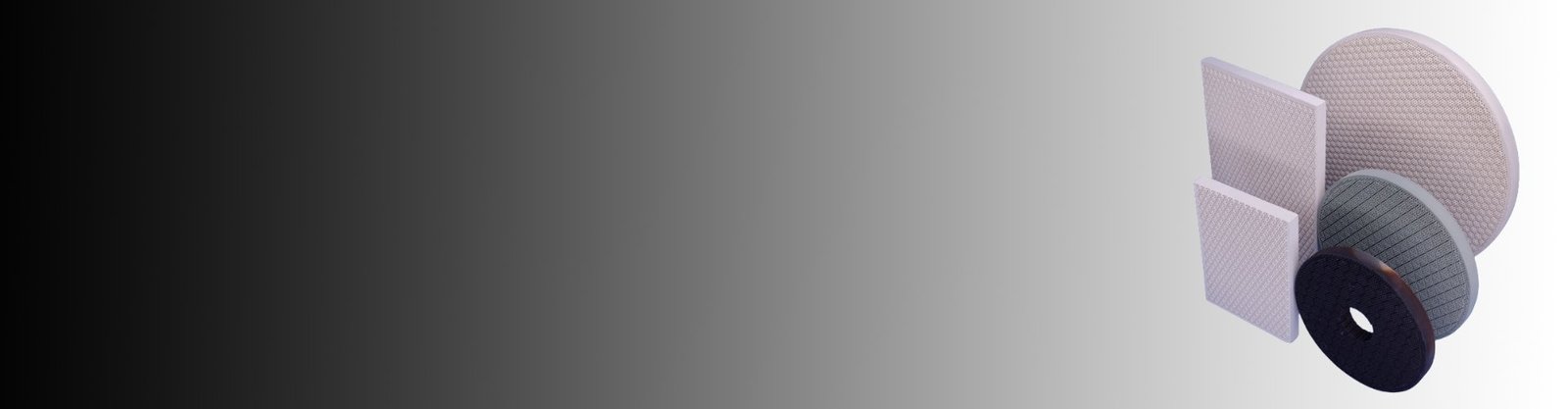
Ceramic Burner Plate Specifications
| Property | Specification |
|---|---|
| Material | Cordierite Ceramic |
| Shape | Round, Rectangular, Custom |
| Cell Density | 60–150 CPI (Customizable) |
| Maximum Operating Temperature | 1200–1300°C |
| Thermal Shock Resistance | ΔT ≥ 350°C |
| Surface Pattern | Hexagonal, Rhombic, Pyramid, Custom |
Specifications can be customized according to application requirements.
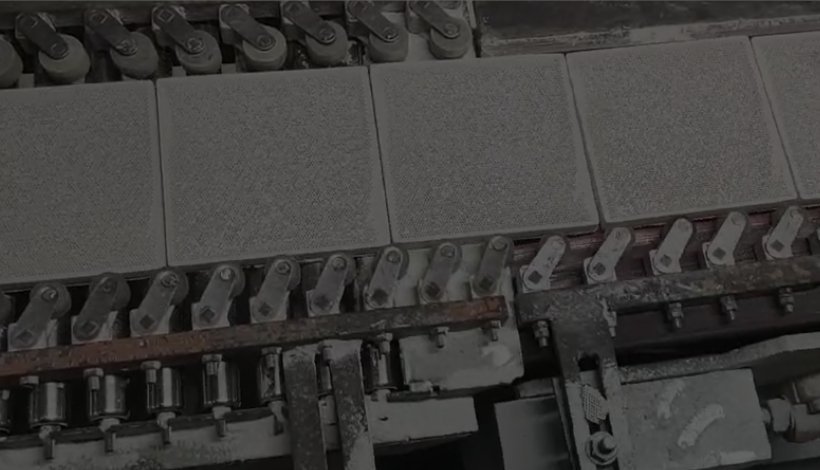
What Is a Ceramic Burner Plate?
A ceramic burner plate is a porous or perforated ceramic component used in gas combustion and radiant heating systems. Gas passes through the designed openings or channels, where the ceramic structure helps distribute the gas across the combustion surface.
In infrared burner systems, the ceramic surface can become heated during combustion and radiate heat toward the target area. The performance of the complete system depends not only on the ceramic plate, but also on gas pressure, air-fuel mixing, burner geometry, heat loading and control conditions.
Because of its refractory ceramic structure, the burner plate:
-
Maintains dimensional stability at high temperatures
-
Provides uniform flame distribution
-
Improves gas utilization efficiency
-
Reduces incomplete combustion
Jinghui provides high quality cordierite ceramic burner plates, have several standard specifications and some sizes in stock. If you need cordierite ceramic burner plates, please contact us today.
The basic function of a honeycomb ceramic burner plate is to provide a controlled path for gas flow and a stable surface for combustion or heat radiation.
The cell structure divides the gas flow into many small channels. Depending on the burner design, the geometry and density of these channels influence gas distribution, pressure drop, available combustion area and heat transfer behavior.
For this reason, cell geometry should not be selected independently from the burner. The ceramic plate needs to be matched with the gas type, burner input, air supply, operating pressure and overall burner structure.
By Features
We have been focusing on the industry for more than 18 years, providing high temperature resistant, energy-saving, efficient and durable cordierite honeycomb ceramic burner plates.
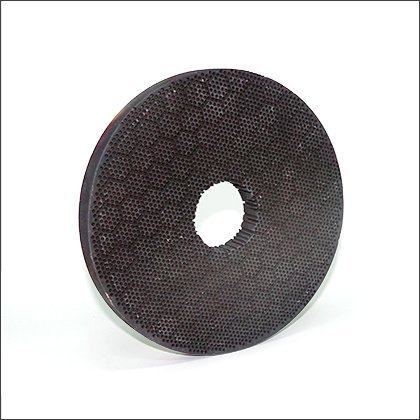
Mainly used for barbecue equipment, compatible with indoor and outdoor environments.
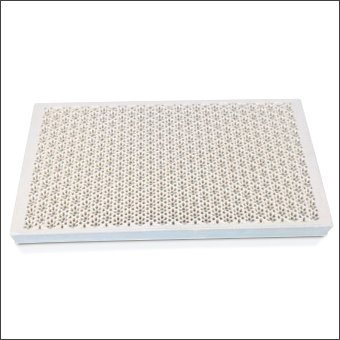
Flameless combustion, high heating efficiency and can save gas and natural gas usage.
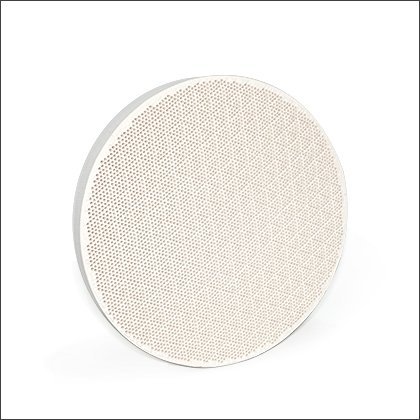
Complete combustion, higher gas utilization rate and reduced harmful emissions.
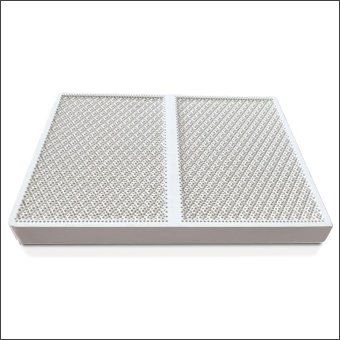
Used for grills, hot stoves, portable snack carts, gas heaters, outdoor heaters, etc.
How to Choose the Right Ceramic Burner Plate
For a new burner project, we recommend evaluating the ceramic component together with the complete burner system.

Identify the gas type, such as natural gas or LPG, and provide the operating pressure where available.

Provide the required heat input or burner capacity.

Provide diameter, length × width, thickness and mounting requirements.

Cell density, cell shape and open area should be evaluated together with gas flow requirements.

Provide the expected operating temperature, heating and cooling cycle, and combustion environment.

Prototype samples should be evaluated in the actual burner assembly before mass production.
More About Ceramic Burner Plates
- Applications
- Comparison
- Materials
Infrared Gas Burners
Ceramic burner plates are used as radiant combustion surfaces in infrared heating systems.
Gas Grills and Cooking Equipment
Honeycomb ceramic burner components can be integrated into gas grills and other cooking equipment requiring distributed heat.
Gas Heating Equipment
Ceramic radiant components can be used in gas-fired heating equipment where stable heat distribution is required.
Industrial Heating Systems
Customized ceramic burner components can be considered for selected industrial thermal processing and heating systems.
Commercial technical ceramic burner plaques are used in applications including room heaters, radiant heaters, industrial process equipment, grills and heating boilers.
Ceramic vs Metal Burner Plates
| Feature | Ceramic Burner Plate | Metal Burner Plate |
|---|---|---|
| Max Temperature | Higher | Lower |
| Oxidation Resistance | Excellent | Limited |
| Flame Distribution | Uniform | Uneven over time |
| Service Life | Longer | Shorter |
| Thermal Deformation | Minimal | Possible |
Ceramic burner plates are preferred in applications requiring stable heat distribution and long-term durability.
Cordierite
Cordierite is a common choice for ceramic burner plates where thermal shock resistance, low thermal expansion and cost-effective production are important.
Mullite
Mullite can be considered for applications requiring higher temperature capability or different thermal and mechanical characteristics.
Silicon Carbide
Silicon carbide provides high-temperature capability and strong mechanical performance, but its material and manufacturing characteristics are different from cordierite and should be evaluated according to the application.
Material selection should be based on the actual burner temperature, thermal cycling, atmosphere, geometry and cost target.
Related Products
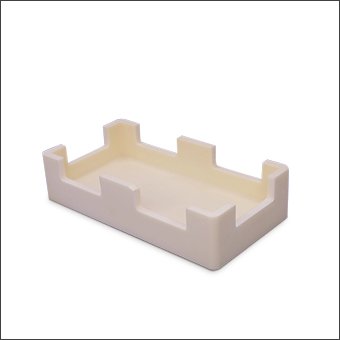
Customization Options for Ceramic Burner Plate
We support OEM production based on:
-
Drawings or samples
-
Specific cell density requirements
-
Custom shapes and sizes
-
Surface pattern design
Bulk supply and long-term cooperation are available.
Request a Quote
If you are looking for reliable ceramic burner plates for gas or infrared heating systems, contact us for technical consultation and pricing information.
A ceramic burner plate is used to provide a controlled combustion or radiant heating surface in gas-fired equipment. Its porous or perforated structure allows gas to pass through designed channels and distribute across the surface. Ceramic burner plates are commonly considered for infrared heaters, gas heating equipment, grills and selected industrial thermal systems where temperature stability and heat distribution are important. The actual burner performance depends on the ceramic plate together with gas pressure, air mixing, burner geometry and operating conditions.
Cordierite is widely used in thermal applications where low thermal expansion and resistance to rapid temperature changes are important. These characteristics help reduce thermal stress when a ceramic component experiences repeated heating and cooling.
Industry technical references identify cordierite as a material suitable for perforated plaques and infrared radiator applications, while also highlighting its thermal shock resistance and low thermal expansion.
For a burner plate, however, material selection should also consider the required temperature, combustion atmosphere, plate geometry, thermal loading and service conditions.
Cordierite offers excellent thermal shock resistance and is suitable for moderate high-temperature applications. Mullite provides higher temperature resistance and improved mechanical strength for more demanding environments.
Cell density should be selected according to the complete burner design rather than simply choosing a higher number of cells. Cell density influences channel dimensions, gas distribution, pressure drop, open area and the available combustion surface. The appropriate design depends on gas type, operating pressure, burner input, air-fuel mixing and plate dimensions. For a new OEM project, providing the burner drawings and operating conditions allows the ceramic manufacturer to evaluate the cell structure more effectively.
Yes. Size, shape, cell density, and surface pattern can be customized to meet different combustion system requirements.
In order for us to accurately understand your requirements, it would be best if you can provide 3D drawings.
Also, please note that custom products usually require a mold. If you pay for the mold fee, we can provide a small number of free samples for you to test. The MOQ for mass production is usually 100 pcs.