


Product Introduction
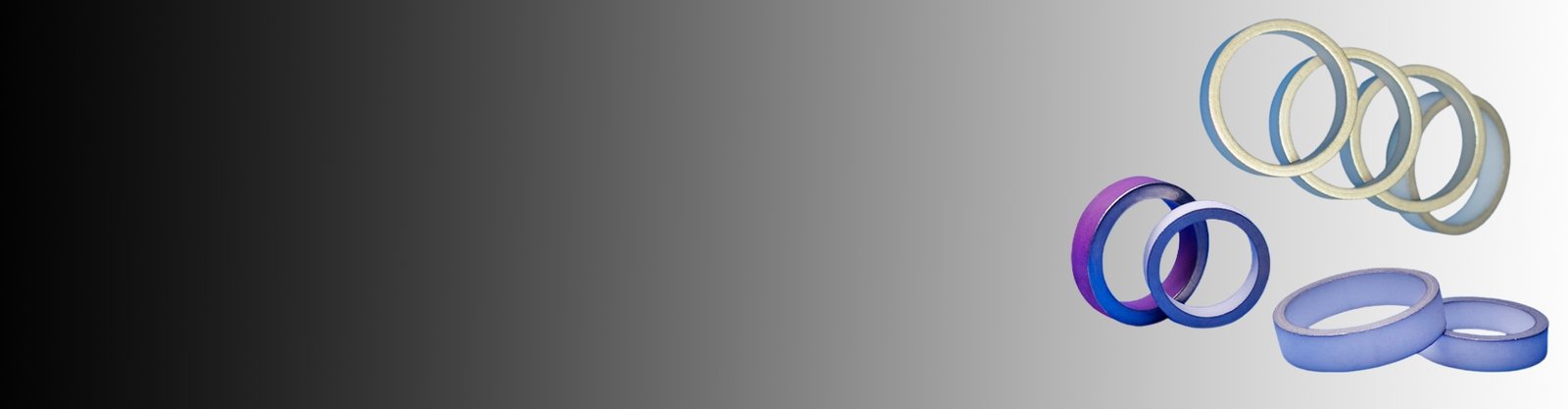
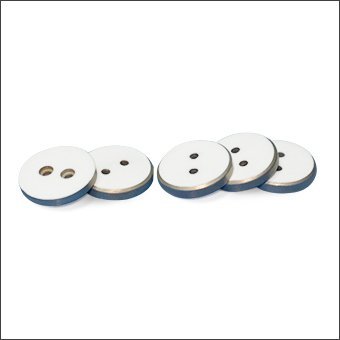
Metallized ceramic rings are precision-engineered components designed to enable reliable ceramic-to-metal joining through metallization and brazing processes. They are widely used in hermetic sealing applications where high vacuum integrity, electrical insulation, and long-term stability are required.
By combining the insulating properties of ceramics with the bonding capability of metals, metallized ceramic rings provide a robust interface solution for demanding environments.
Material Options and Core Advantages
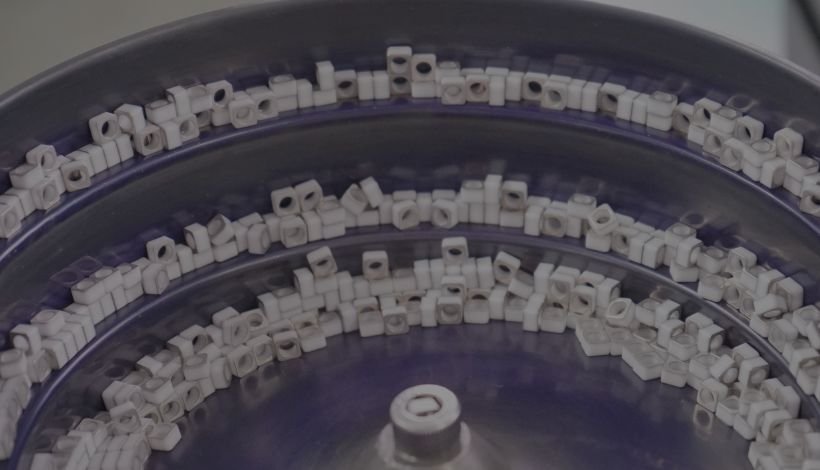
Currently, the metallized ceramic rings customized by customers are basically made of two main materials: alumina and zirconium oxide, these two materials basically meet the usage requirements of metallized ceramic rings.
Alumina (Al₂O₃):
the most commonly used material due to its excellent insulation, cost-effectiveness, and compatibility with metallization processes.
Zirconia (ZrO₂):
Offers higher fracture toughness and improved crack resistance for demanding applications.
Metallized ceramic rings have the following four core advantages.
Hermetic Sealing Performance
Metallized ceramic rings enable ultra-low leakage rates, making them ideal for vacuum and high-pressure environments.
Strong Metallization Bond
Mo-Mn metallization combined with nickel plating ensures strong adhesion and reliable brazing performance.
High Thermal Stability
Capable of operating under high temperatures and repeated thermal cycling without degradation.
Electrical Insulation with Conductive Interface
Ceramic provides excellent insulation, while the metallized layer enables electrical connection.
Metallized Ceramic Tube vs Metallized Ceramic Ring
A metallized ceramic tube is a hollow, elongated ceramic component with a metallized surface, mainly used for insulation, structural support, and transmission paths. A metallized ceramic ring is a short, ring-shaped ceramic component designed for sealing interfaces and reliable ceramic-to-metal joining.
Key Insight is: Tube = Structure & Insulation, Ring = Sealing & Interface
Structural Differences for ceramic tube and ring:
| Item | Ceramic Tube | Ceramic Ring |
|---|---|---|
| Shape | Long tubular | Short ring |
| Length-to-Diameter Ratio | High | Low |
| Function Position | Main body | Interface |
| Stress Type | Axial | Radial |
Manufacturing Difficulty:
| Item | Tube | Ring |
|---|---|---|
| Forming | High | Medium |
| Machining | High | Medium |
| Metallization Uniformity | Difficult | Easier |
| Deformation Risk | Higher | Lower |
Products By Features
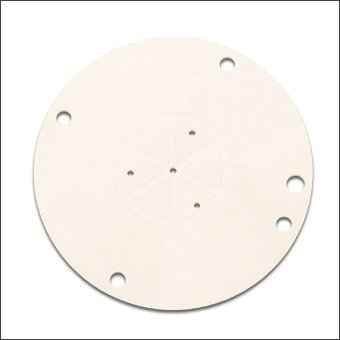
The products we provide have different features, and the representative products are as follows:
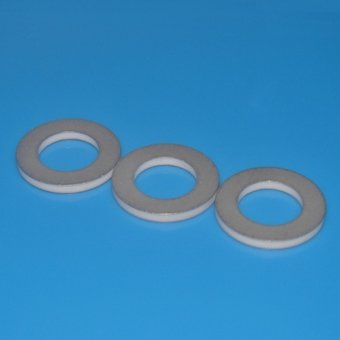
Material: Alumina Ceramic
Packaging: Vacumm packaging with export carton
HS Code: 854710000
Supply Ability: 200,000pcs/month
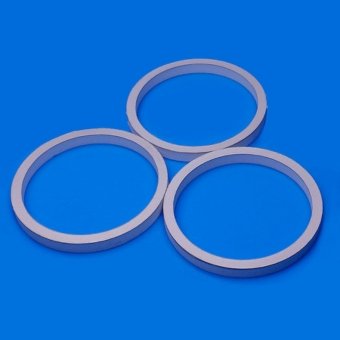
Material: Alumina Ceramic
Packaging: Vacumm packaging with export carton
HS Code: 854710000
Min. Order:100 Pieces
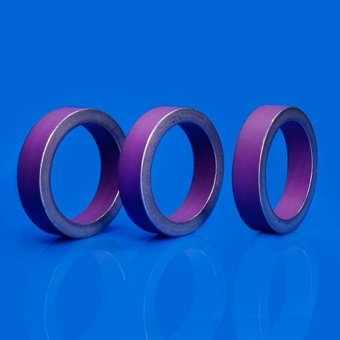
Material: Alumina Ceramic
Packaging: Vacumm packaging with export carton
HS Code: 854710000
Min. Order:500 Pieces

Material: 96% Alumina
Packaging: Vacumm packaging with export carton
Function: Electric Vacuum Ceramics
Min. Order:100 Pieces
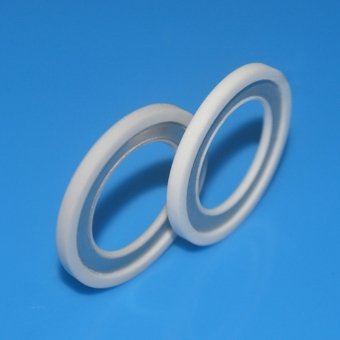
Material: 95% Alumina
Packaging: Vacumm packaging with export carton
Function: Electric Vacuum Ceramics
Min. Order: 20 Pieces
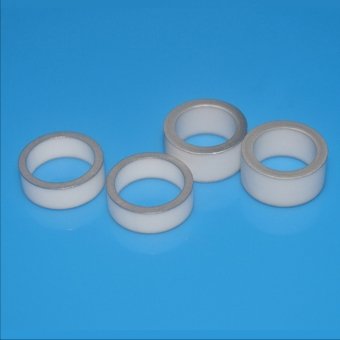
Material: 95% Alumina
Packaging: Vacumm packaging with export carton
Model No.: Customized
Min. Order: 10 Pieces
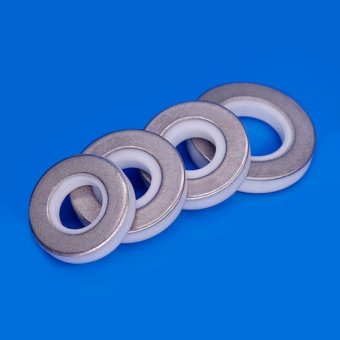
Material: 95% Alumina
Packaging: Vacumm packaging with export carton
Model No.: Customized
Min. Order: 10 Pieces
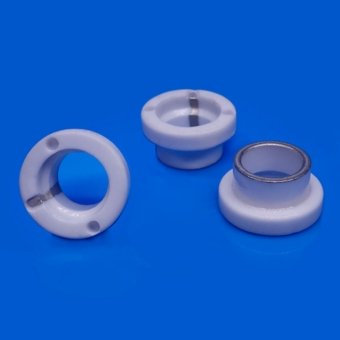
Material: 96% Alumina
Packaging: Vacumm packaging with export carton
Model No.: Customized
Min. Order: 10 Pieces
Key Technical Parameters and Design Considerations
The most widely used process for metallized ceramic rings is Mo-Mn metallization. Typical process flow: Ceramic → Mo-Mn Metallization → High-Temperature Sintering → Nickel Plating → Brazing
This process creates a strong metallized layer that allows reliable ceramic-to-metal joining. the key technical parameters in process are as follow:
| Parameter | Typical Value |
|---|---|
| Metallization Type | Mo-Mn |
| Adhesion Strength | High |
| Leak Rate | ≤ 1×10⁻⁹ mbar·L/s |
| Operating Temperature | Up to 800–1000°C |
| Insulation Resistance | High |
Engineering Insight: Hermeticity and adhesion strength are the most critical parameters for reliability.
Design Considerations
1.CTE Matching: Proper matching between ceramic and metal materials is essential to avoid thermal stress and cracking.
2.Metallization Area Design: Optimized metallization layout improves bonding strength and sealing performance.
3.Geometry and Thickness: Ring geometry and wall thickness affect stress distribution and durability.
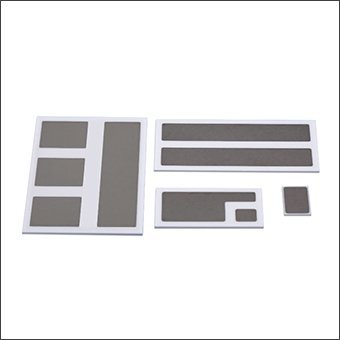
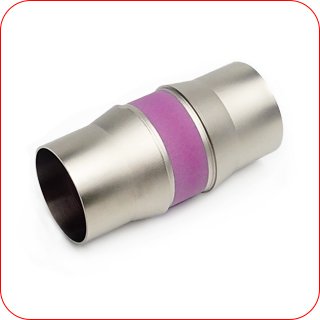
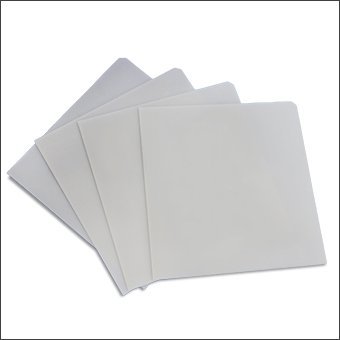
Quality Assurance
Helium Leak Testing
Ensures hermetic sealing performance meets strict standards.
Adhesion Testing
Verifies metallization bonding strength.
Microscopic Inspection
Detects surface defects and metallization quality.
Manufacturing Capabilities
We provide complete metallized ceramic ring solutions including:
- Alumina and zirconia materials
- Mo-Mn metallization and nickel plating
- Precision machining and tight tolerances
- Custom sizes and geometries
- Metallization and brazing integration
Metallized ceramic rings are critical components for achieving reliable ceramic-to-metal connections in high-performance applications.
With advanced metallization technology and strict quality control, they provide excellent hermetic sealing, durability, and long-term reliability.
Send your drawings or technical requirements for evaluation and engineering support. Contact us to develop a customized metallized ceramic ring solution for your application.
A metallized ceramic ring is a ceramic component with a metal layer applied to its surface, enabling it to be joined with metal parts through brazing. It is commonly used in hermetic sealing applications where both insulation and strong bonding are required.
Ceramics cannot be directly brazed due to poor wettability. Metallization creates a bondable surface that allows filler metals to adhere and form strong joints, enabling reliable ceramic-to-metal connections.
Alumina is the most widely used due to its stability and cost advantages, while zirconia is used for applications requiring higher toughness and crack resistance.
Yes, metallized ceramic rings can be fully customized in terms of material, dimensions, metallization pattern, and performance requirements. Engineering support is typically provided to optimize design for specific applications.