



Overviews
Ceramic setter plates are used as supporting surfaces inside furnaces and kilns. They help hold components in position during firing or sintering and provide a defined contact surface between the workpiece and the kiln furniture.
The appropriate plate design depends on more than the maximum furnace temperature. Workpiece weight, loading arrangement, heating and cooling rates, furnace atmosphere, contact conditions and repeated thermal cycling can all affect performance.
Jinghui works with customers to assess these requirements before recommending a material or manufacturing route.
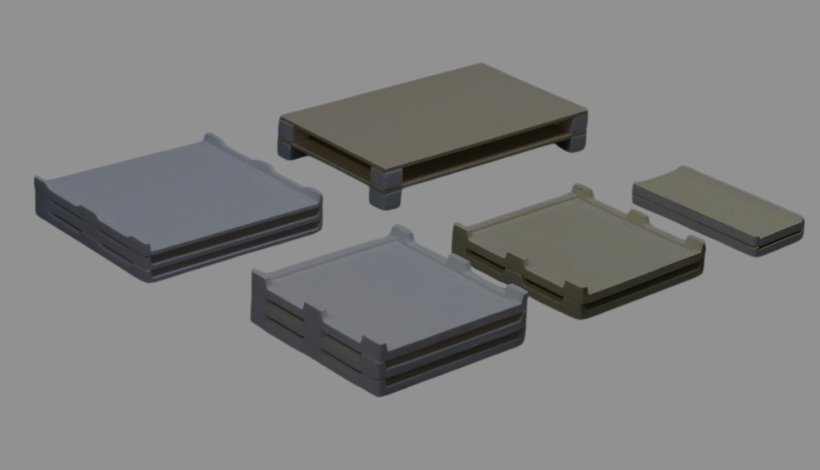
China OEM Manufacturer of Ceramic Setter Plates
Jinghui supplies ceramic setter plates for supporting and positioning components during high-temperature firing, debinding and sintering processes. Depending on the application, setter plates can be manufactured in selected technical ceramic materials and customized to suit the required dimensions, thickness, surface condition and component layout.
Whether you need flat plates for routine kiln loading or precision-finished plates for more demanding production processes, our team can review your drawings, operating conditions and dimensional requirements to assess manufacturing feasibility.
Key options
- Custom plate dimensions and thicknesses
- Selected technical ceramic materials
- Ground or finished surfaces where required
- Custom shapes, holes, slots and other features subject to feasibility
- Dimensional inspection based on agreed specifications
Request a Quote: Send us your drawing, material requirements and firing conditions for a manufacturing review.
Ceramic Setter Plates by Material
Different ceramic materials offer different combinations of high-temperature capability, strength, thermal conductivity, thermal shock resistance and chemical compatibility. No single material is best for every firing or sintering process.
Other materials, such as silicon carbide, silicon nitride or mullite, may be relevant to certain kiln-furniture and thermal-process applications. Material selection should consider the actual temperature profile, furnace atmosphere, workpiece composition, contact reactions, loading conditions and expected service life.
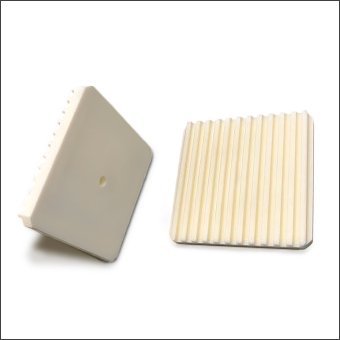
Alumina is a widely used technical ceramic for industrial support and kiln-furniture applications. The appropriate alumina grade and plate design should be selected according to the operating environment and mechanical loading.
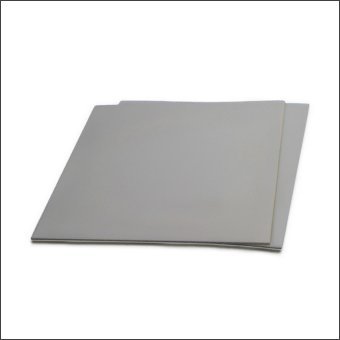
Aluminum nitride has high thermal conductivity and electrical insulation properties. It may be considered for specialized thermal-management or process applications where these properties are required.
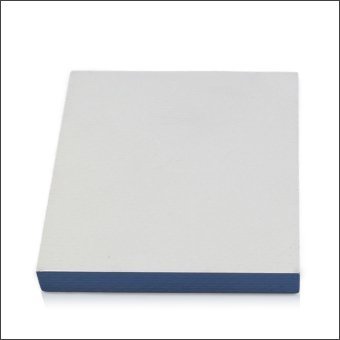
Certain boron nitride grades offer useful non-wetting or release characteristics and can be considered for specialized high-temperature processes. Performance depends on the grade, atmosphere and contact material.
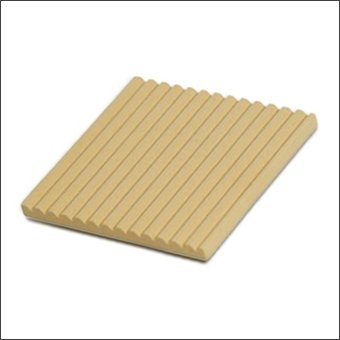
Zirconia offers high strength and fracture toughness compared with many conventional technical ceramics. It may be suitable for applications requiring specific mechanical properties or resistance to damage.
Ceramic Setter Plates by Features
Below are some of the products we have previously made. We can support your customization needs.
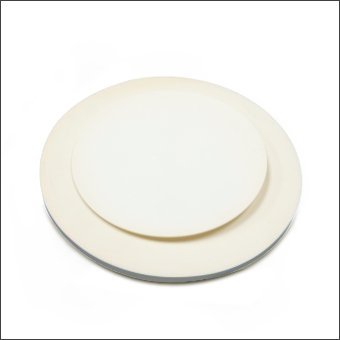
Uniform heat distribution for ceramic or powder metallurgy sintering in rotary kilns.
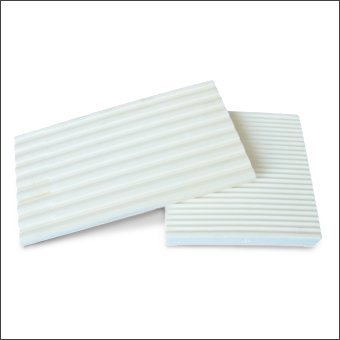
Secure holding of cylindrical workpieces in high-temperature brazing and glass molding.
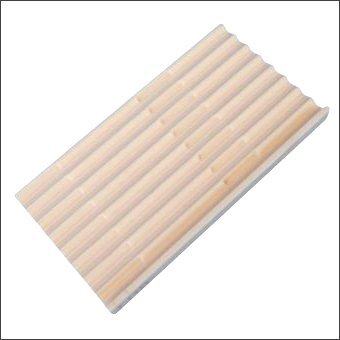
Corrosion-resistant support for wire mesh catalysts in chemical reactors.
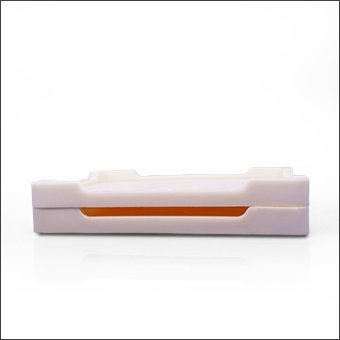
Multi-layer stacking for batch processing of electronic ceramics and battery materials.
Key Performance Considerations

The maximum usable temperature depends on the ceramic grade, atmosphere, load, heating duration, thermal cycling and the presence of reactive materials. A material’s published maximum temperature should not be used as the sole selection criterion.

Rapid heating and cooling can generate thermal stresses that contribute to cracking. Plate thickness, geometry, material properties, furnace uniformity and the heating/cooling profile all influence the risk.

Setter plates may experience distortion under load or after repeated high-temperature cycles. Initial flatness, support points, plate dimensions, thickness and process conditions should be considered together.

The workpiece, binders, residues and furnace atmosphere may react with the setter plate at elevated temperatures. Material selection should account for possible contamination, sticking, surface reactions and changes in the plate over time.

Surface finish and plate geometry can affect workpiece support, contact marks and release. The required finish should be defined according to the component being fired and the acceptable surface condition after processing.
Custom Dimensions, Thickness and Machining
Setter plates can be assessed against customer drawings or application requirements. Depending on the material and manufacturing route, the following features may be considered:
- Length, width and thickness
- Overall flatness and thickness uniformity
- Ground or finished contact surfaces
- Holes, slots, cut-outs and other machined features
- Edge chamfers or radii
- Special shapes and loading arrangements
Large, thin or complex plates may be more sensitive to forming variation, sintering distortion, handling damage and machining limitations. For this reason, tolerances should be agreed according to the actual part geometry rather than assumed from a general catalog value.
Typical information to confirm
| Requirement | Information needed |
|---|---|
| Plate dimensions | Length × width × thickness, or a drawing |
| Material | Required grade or operating requirements |
| Flatness | Required limit and inspection method |
| Surface finish | As-fired, ground, polished or another defined finish |
| Features | Holes, slots, grooves, cut-outs or edge treatment |
| Operating conditions | Temperature, atmosphere, load and thermal cycle |
| Quantity | Prototype, trial batch or recurring production |
Any maximum size, minimum thickness or achievable tolerance should be confirmed for the specific material and design before quotation.
Manufacturing and Quality Inspection
The manufacturing route depends on the ceramic material, plate geometry, dimensions and final specification. A typical process may include:
- Material preparation: Prepare the selected ceramic composition and forming feedstock.
- Forming: Shape the plate using a suitable forming process.
- Sintering: Fire the formed body to develop the required ceramic properties.
- Secondary machining: Grind or finish surfaces and machine specified features where required and feasible.
- Inspection: Check agreed dimensions, surface condition and other specified characteristics.
- Packaging: Protect the ceramic plates against impact and handling damage during shipment.
Ceramics are hard and wear-resistant but can be brittle. Large plates, thin sections and machined features require particular attention during handling, machining and inspection.
Inspection criteria should be agreed before production. Depending on the drawing, these may include dimensions, thickness variation, flatness, surface condition, edge defects and visual appearance.
Applications of Ceramic Setter Plates
Ceramic setter plates are used in industrial thermal processes where components need a stable supporting surface during firing or sintering.
Ceramic component firing and sintering
Setter plates can support ceramic parts during firing, helping organize the loading arrangement and provide a defined contact surface. The correct plate material depends on the ceramic body, firing temperature, atmosphere and risk of sticking or reaction.
Metal Injection Molding (MIM) and Ceramic Injection Molding (CIM)
In MIM and CIM processes, components undergo debinding and sintering cycles. Setter plate selection should consider part geometry, loading density, residue or binder-related effects, dimensional stability and the possibility of contact marks.
Electronic and functional ceramic components
Some electronic ceramic components require controlled support during firing or sintering. Where surface condition, contamination control or dimensional stability is critical, material compatibility and plate finish should be reviewed with the process engineer.
Other industrial kiln processes
Setter plates may also be considered for other furnace and kiln applications when the material, atmosphere, load and thermal cycle are compatible. Suitability should be confirmed for the actual process rather than inferred from temperature alone.
How to Select the Right Setter Plate
Before selecting a ceramic setter plate, review the following factors.
1. Identify the workpiece.
What material is being fired or sintered? What are its dimensions, weight, shape and surface requirements?
2. Define the thermal cycle.
Specify the peak temperature, heating and cooling rates, dwell time, atmosphere and number of cycles.
3. Assess loading and support.
Determine the load per plate, support points, component spacing and whether the plate may sag or distort during use.
4. Check chemical compatibility.
Consider reactions with the workpiece, binders, residues, furnace atmosphere and other materials present during processing.
5. Define the dimensional requirements.
Specify plate dimensions, thickness, flatness, surface finish and any holes or cut-outs.
6. Evaluate service-life requirements.
Where possible, provide information about current failure modes, replacement frequency, sticking, contamination or warping. These details can help identify the most relevant material and design options.
The most suitable choice is the material and design that meet the process requirements with acceptable reliability and total operating cost—not necessarily the material with the highest quoted temperature or the highest price.
Send Jinghui your drawing, required material, plate dimensions, quantity and operating conditions. We can review the manufacturing feasibility and discuss suitable material and machining options based on your application.
A ceramic setter plate supports components during firing, debinding or sintering in a furnace or kiln. It provides a defined contact surface and helps maintain the intended loading arrangement. The plate material and geometry must suit the workpiece, temperature profile, furnace atmosphere and mechanical load. A plate suitable for one process may not be appropriate for another.
There is no single best material for every application. Alumina is a common starting point for many industrial uses, while aluminum nitride, boron nitride, zirconia and other technical ceramics may be considered for specialized requirements. The decision should be based on temperature cycling, chemical compatibility, load, surface requirements and material availability. We can review these factors before confirming a suitable option.
Custom manufacturing can be evaluated from a drawing or application specification. Please provide the plate dimensions, thickness, required material, tolerances, surface finish and any holes or other features. The feasibility of thin, large or complex plates depends on material properties, forming and sintering behavior, machining requirements and handling risks. Final specifications should be confirmed before production.
Warping and cracking can result from uneven temperature distribution, rapid heating or cooling, unsupported spans, excessive loading, residual manufacturing stress or incompatibility with the process environment. Material choice alone does not eliminate these risks. Reviewing the plate dimensions, support arrangement, thermal cycle and observed failure pattern can help identify possible causes and guide a revised design.
Service life depends on the material, loading method, thermal cycle, contact reactions, handling and cleaning practices. Avoiding unsupported spans, excessive loads and severe thermal gradients may help where these are contributing factors. If plates are sticking, cracking, contaminating parts or losing flatness, provide the operating conditions and failure details so the cause can be assessed before changing material or dimensions.
Grinding may be considered when tighter thickness, flatness or surface requirements are needed. The achievable result depends on plate size, thickness, ceramic grade, geometry and machining conditions. Very thin or large plates may require additional feasibility assessment. Specify the required flatness and the inspection method on the drawing rather than relying on an unspecified term such as “precision.”
For an accurate quotation, provide a drawing or dimensions, ceramic material or process requirements, plate thickness, required tolerances, surface finish, quantity and delivery requirements. For process-critical applications, also include the peak temperature, furnace atmosphere, loading conditions and thermal cycle. If you are replacing an existing setter plate, photographs and details of its current performance or failure mode can also be useful.