


Overview
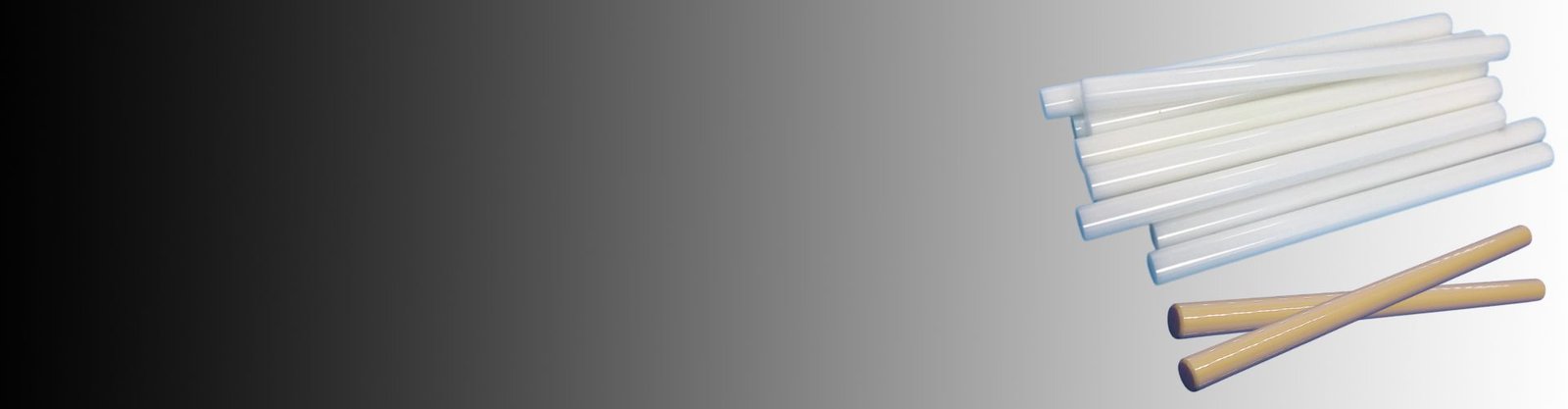
Jinghui manufactures custom zirconia ceramic rods for industrial components requiring high strength, fracture toughness and wear resistance. From solid zirconia pins to precision-ground rods and custom-machined components, we review material grades, dimensions and machining requirements according to your drawings.
Custom options include:
- Y-TZP zirconia and other selected zirconia grades
- Solid round rods and custom geometries
- Precision diameter grinding
- Chamfered, stepped and grooved features
- Drawing-based prototypes and production orders
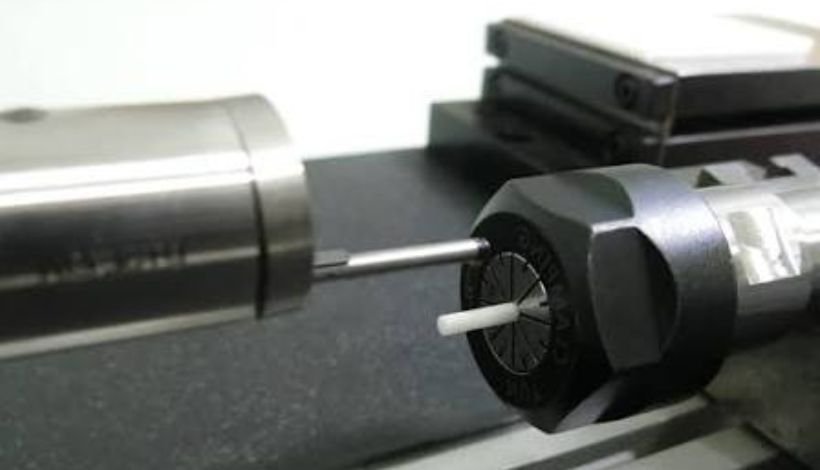
Custom Zirconia Rods Manufactured to Your Specifications
Zirconia ceramic rods are solid components made primarily from zirconium dioxide (ZrO₂). With suitable stabilizer systems and processing, zirconia can achieve a combination of high flexural strength and fracture toughness that makes it attractive for demanding structural and wear-related applications.
Compared with many conventional ceramics, zirconia-based materials can better resist crack initiation and propagation under suitable loading conditions. This makes them worth considering for precision pins, positioning components, wear-resistant contact parts and other components exposed to repeated mechanical contact.
Jinghui supplies zirconia rods for custom industrial applications. Depending on the required grade, dimensions and tolerances, products can be evaluated for precision grinding, surface finishing and selected secondary machining.
If your component needs to withstand repeated contact, friction or mechanical loading, provide your drawing and operating conditions. We can review whether zirconia is an appropriate material for the application.
Zirconia Rods by Features
Zirconia rods can be manufactured or machined into different configurations according to the component design. The following are typical product forms for industrial applications. Actual availability depends on the selected zirconia grade, dimensions and machining feasibility.
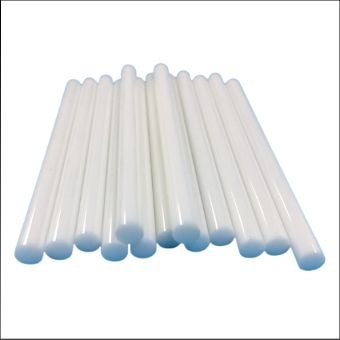
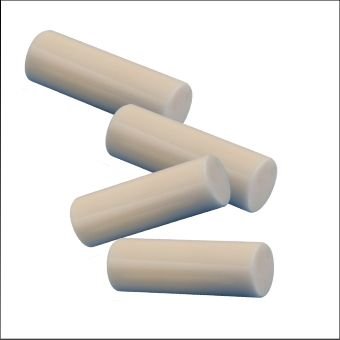
Solid cylindrical rods for structural, positioning and wear-related applications. The diameter and length can be specified according to the component design.
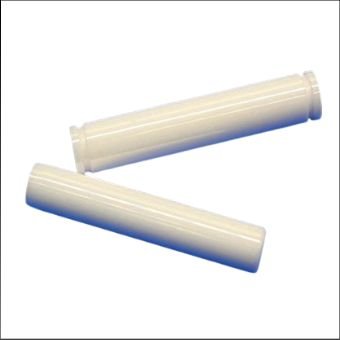
Zirconia rods with precision-ground outer surfaces for applications requiring controlled diameters, improved roundness or consistent fitting dimensions.
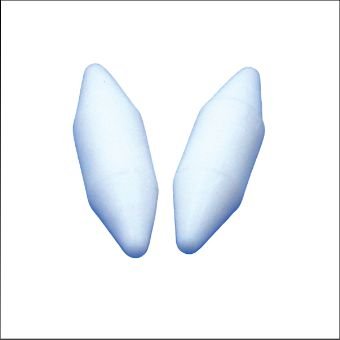
Short cylindrical components used for locating, positioning, alignment or mechanical contact. End geometry and dimensional relationships should be defined according to the assembly requirements.
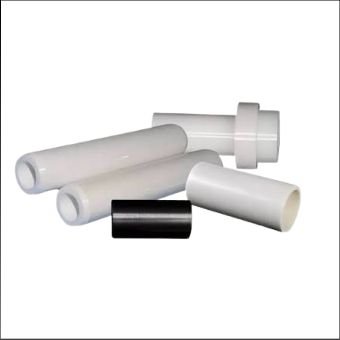
Rods with different diameters or shoulder sections along their length. They can be considered for assemblies requiring multiple locating or fitting surfaces.
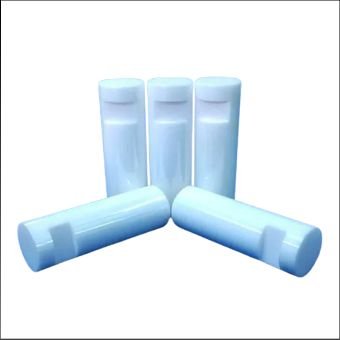
Custom rods with selected grooves, chamfers or end features for positioning, retention and assembly. Feature dimensions should be reviewed to reduce edge chipping and stress concentration.
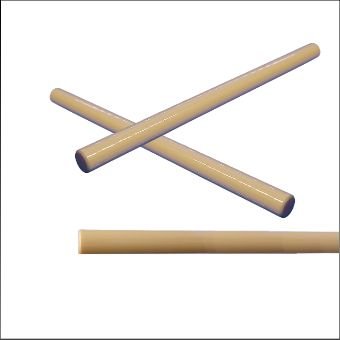
Custom-engineered materials designed for industrial applications requiring resistance to high temperatures, thermal shock, and wear, as well as high fracture toughness.
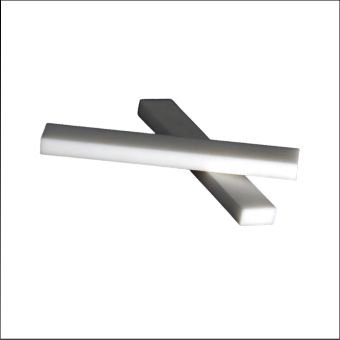
The outer cross-section is square, making it suitable for parts with specific assembly or function requirements.
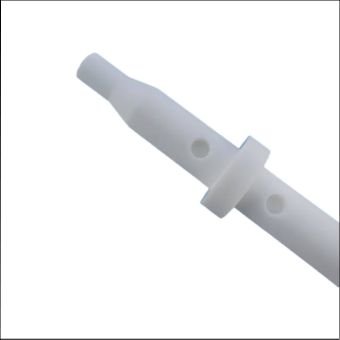
Non-standard zirconia rod geometries with selected holes, slots, shoulders or other functional details, subject to drawing and manufacturing feasibility review.
Which Zirconia Grade Is Suitable for Your Rods
Zirconia is available in different material systems. The stabilizer composition and microstructure influence its mechanical, thermal and aging characteristics. Therefore, specifying zirconia alone may not be sufficient when a component has demanding performance requirements.
| Material Type | General Characteristics | Selection Considerations |
|---|---|---|
| Yttria-Stabilized Zirconia (Y-TZP) | High strength and fracture toughness in suitable grades | Precision structural and wear-related components |
| 3Y-TZP Zirconia | Commonly used transformation-toughened zirconia system | Mechanical loading, surface condition and operating temperature |
| Other Y-TZP Grades | Different yttria contents and formulations may provide different property combinations | Confirm the required strength, toughness and aging performance |
| Magnesia-Partially Stabilized Zirconia (Mg-PSZ) | A different zirconia stabilization system with grade-dependent mechanical and thermal properties | Confirm material availability and suitability for the operating environment |
Y-TZP is often considered for precision structural components because of its combination of strength and fracture toughness. However, the best choice depends on the actual application rather than the material name alone.
What Should You Consider?
- Required flexural strength and fracture toughness
- Contact pressure and repeated mechanical loading
- Sliding speed and friction conditions
- Mating material and surface finish
- Operating temperature and thermal cycling
- Moisture exposure and hydrothermal aging risk
- Dimensional tolerances and machining requirements
- Material cost and expected service life
Important: Some zirconia grades may undergo low-temperature degradation under certain combinations of moisture and temperature. For components exposed to hot water, steam or humid elevated-temperature environments, the material grade and service conditions should be reviewed before selection.
Why Choose Zirconia Ceramic Rods
Zirconia is valued for its mechanical performance, particularly in applications where conventional ceramics may be more vulnerable to cracking under contact or mechanical loading. Some zirconia grades are also sensitive to hydrothermal aging. High-temperature performance and long-term stability must be evaluated according to the specific grade and environment.

For rod applications, higher fracture toughness is relevant where the component experiences repeated contact, localized loading or mechanical fitting. It does not make zirconia immune to fracture, and sharp corners or excessive tensile stress should still be avoided.

Zirconia grades such as Y-TZP can provide high flexural strength. This can be useful for compact structural components where mechanical strength is an important design requirement.

Zirconia can provide good wear performance in properly designed contact applications. It may be considered for pins, positioning components and selected sliding or rubbing parts.

Zirconia offers resistance to many chemical environments. However, compatibility must be evaluated for the actual chemical medium, concentration, temperature and exposure duration.

Zirconia generally has lower thermal conductivity than alumina. This may be useful in selected thermal isolation or temperature-management applications, but it can also affect heat dissipation and thermal gradients.

In transformation-toughened zirconia, stress near a developing crack can trigger a phase transformation that produces a local volume expansion. This mechanism can help oppose crack propagation and is one of the reasons Y-TZP is valued for structural applications.
Precision Machining and Customization
Zirconia rods are often used in precision assemblies where the relationship between diameter, length, straightness and surface condition can affect component performance. Depending on the material grade and rod geometry, selected secondary machining operations may include:
External Cylindrical Grinding
Used to control the outer diameter and improve cylindrical surface quality. It may be suitable for precision pins, locating components and fitted rod assemblies.
Centerless Grinding
May be considered for cylindrical rods requiring controlled diameter and consistent external dimensions. Feasibility depends on rod length, diameter and geometry.
End-Face Grinding
Used to machine rod ends where length, end-face condition or squareness is important to the assembly.
Chamfering and Edge Finishing
Chamfers and radii can help improve assembly and reduce sharp-edge damage. Their dimensions should be specified on the drawing.
Grooves and Stepped Features
Selected grooves, shoulders and diameter transitions may be machined according to the design. Feature depth, width, corner radius and remaining section thickness should be reviewed.
Lapping and Polishing
May be considered when a controlled surface finish is required for contact or sliding applications. The suitable process depends on the material grade and component geometry.
Zirconia machining requires appropriate diamond tooling and controlled processing conditions. Although zirconia has good fracture toughness compared with many ceramics, it is still brittle and can be damaged by excessive machining stress or poor edge design.
Send us your drawing to review the machining route, critical dimensions and achievable tolerances.
Where Are Zirconia Ceramic Rods Used?
Zirconia rods are worth considering for industrial components where mechanical strength, fracture toughness, dimensional stability and wear performance are important.
Precision Positioning Pins
Zirconia pins may be considered for locating and positioning applications where a combination of dimensional control and mechanical performance is required.
Wear-Resistant Contact Components
Selected zirconia grades can be used in contact components exposed to repeated friction or mechanical interaction. The mating material, contact pressure and surface finish should be evaluated together.
Mechanical Guides and Support Components
Zirconia rods may be considered for selected guide, support or locating structures where wear resistance and dimensional stability are important.
Pump and Fluid-Handling Components
Selected zirconia materials may be considered for precision components exposed to friction, fluid contact or repeated mechanical loading. Chemical compatibility, sealing design and operating conditions should be confirmed.
Precision Industrial Mechanisms
Ground zirconia rods can be evaluated for compact mechanical assemblies requiring controlled diameters, accurate positioning or specific surface conditions.
Special Wear-Related Applications
Where conventional metal or plastic components experience frequent wear, zirconia may be evaluated as an alternative. The design must account for ceramic brittleness, mounting stress and impact risk.
Have a specific wear or positioning problem? Send us your component drawing and operating conditions. We can review whether zirconia is a suitable material option.
Zirconia Rod vs. Alumina Rod vs. Metal Rod
Zirconia, alumina and metal rods each have different engineering advantages. The best choice depends on the mechanical loading, wear conditions, electrical requirements, operating environment and total component cost.
| Comparison Factor | Zirconia Rod | Alumina Rod | Metal Rod |
|---|---|---|---|
| Fracture toughness | Relatively high in suitable grades | Generally lower than Y-TZP | Depends on alloy and heat treatment |
| Flexural strength | High in suitable grades | Depends on alumina purity and grade | Depends on alloy and design |
| Hardness | High | Very high | Depends on metal and treatment |
| Wear performance | Good in suitable contact conditions | Good in many abrasive applications | Depends on alloy, coating and lubrication |
| Electrical behavior | Generally insulating | Excellent electrical insulation | Usually conductive |
| Thermal conductivity | Relatively low | Higher than zirconia in common grades | Usually higher, depending on metal |
| Impact tolerance | Brittle; better fracture resistance than many conventional ceramics | Brittle | Generally more tolerant of impact |
| Cost | Usually higher than standard alumina | Often more economical | Varies widely |
Your Custom Zirconia Rod Manufacturing Partner
Jinghui focuses on custom advanced ceramic components for industrial customers. We review the relationship between material properties, component geometry, machining requirements and actual operating conditions rather than selecting a material based on a single performance figure.
For zirconia rod projects, our support can include:
- Material review: Discuss suitable zirconia grades according to strength, toughness, wear and environmental requirements.
- Drawing-based quotation: Review 2D drawings, 3D models or dimensioned sketches.
- Custom dimensions: Evaluate rod diameters, lengths, stepped sections and other geometries.
- Precision machining assessment: Review grinding, chamfering, polishing and selected machined features.
- Critical dimension review: Identify dimensions and geometric characteristics that affect assembly and service performance.
- Project communication: Clarify material, quantity, tolerance and inspection requirements before production.
Whether you need a zirconia positioning pin, a precision-ground rod or a custom wear-resistant component, Jinghui can review your drawing and application requirements.
Send us your drawing today. Our team will review the material, machining feasibility and critical dimensions before preparing a quotation.
A zirconia ceramic rod is a solid rod-shaped component made primarily from zirconium dioxide (ZrO₂). Selected zirconia grades offer a combination of high flexural strength and fracture toughness, making them suitable for evaluating in precision structural, positioning and wear-related applications.
Y-TZP refers to yttria-stabilized tetragonal zirconia polycrystal. 3Y-TZP is a commonly used Y-TZP formulation stabilized with approximately 3 mol% yttria. Different zirconia formulations can have different strength, toughness, aging and thermal characteristics. The material specification should identify the required grade rather than simply state zirconia.
Selected Y-TZP grades can provide higher flexural strength and fracture toughness than many conventional alumina grades. However, the comparison depends on the exact material grade, test method, component geometry and loading conditions. The right material should be selected according to the actual application.
Yes, selected zirconia grades can be considered for wear-related components exposed to repeated contact or friction. However, actual wear performance depends on contact pressure, surface finish, mating material, lubrication and operating speed. A drawing and application review are recommended.
Yes. Custom projects can be reviewed based on 2D drawings, 3D models or dimensioned sketches. Please provide the material grade if known, diameter, length, tolerances, surface finish, quantity and application conditions.
Zirconia has useful high-temperature properties, but its practical operating limits depend on the grade, stabilizer system, mechanical load, atmosphere and thermal cycling. Some zirconia grades may also be affected by hydrothermal aging. Please provide the actual operating temperature and environment for evaluation.
Zirconia may be considered as a metal alternative when hardness, wear performance, corrosion resistance or electrical insulation is important. However, ceramics are brittle and do not tolerate impact or bending in the same way as metals. The mounting design, contact stress and loading conditions should be reviewed before replacement.
Zirconia is still a brittle ceramic material. It can be damaged by severe impact, tensile stress, poor clamping or machining defects. Some grades may also be susceptible to hydrothermal aging. Material selection and component design should account for these limitations.
For an accurate quotation, please provide the zirconia grade if known, diameter, overall length, dimensional tolerances, surface finish, end geometry, machined features, order quantity and operating conditions. A 2D drawing or 3D model is especially helpful for precision-machined components.