


Introduction
In high-temperature sintering, electronic ceramic tape casting, and semiconductor component processing, alumina setter plates are widely used as critical support fixtures due to their excellent high-temperature resistance and chemical stability. However, during actual service, many manufacturers encounter unexpected cracking or catastrophic fracture of setter plates, which can seriously affect production continuity.
Recently, we assisted an overseas customer in analyzing a real failure case involving 99.5% high-purity alumina setter plates with a thickness of 2 mm. During a firing process at 1050°C, several plates developed sudden longitudinal cracks through the middle area, with a failure rate of approximately 3%–4% in one production batch.
Through batch data comparison, process parameter review, and microstructural analysis, we identified the potential causes hidden in the dry pressing process and kiln cooling stage, and proposed targeted optimization measures to improve product reliability.
A Real Customer Failure Case of Alumina Setter Plate Cracking
This technical analysis is based on a real production issue that Jinghui Ceramics helped an overseas customer investigate.
The customer reported that during continuous use of a batch of 99.5% alumina setter plates, some plates developed severe cracks, accounting for approximately 3%–4% of the total quantity. These setter plates were used under a high-temperature firing condition of 1050°C.
From a material performance perspective, high-purity alumina has excellent high-temperature resistance, and the operating temperature of 1050°C is far below its load-softening temperature (>1700°C). Therefore, this failure was not caused by insufficient high-temperature strength of the alumina material itself.
This abnormal phenomenon led our team to conduct a deeper investigation into the failure mechanism.
Failure Investigation: Operating Conditions and Failure Characteristics
The actual operating conditions and failure characteristics are summarized below:
| Evaluation Item | Customer Application Conditions |
| Material | 99.5% electronic-grade high-purity alumina ceramic |
| Dimensions | 150 × 180 mm |
| Thickness | 2 mm |
| Operating Temperature | 1050°C |
| Mechanical Loading | Electronic ceramic components, total weight approximately 80 g |
| Failure Mode | Cracking occurred at the center of the setter plate with irregular longitudinal cracks |
| Failure Rate | 3–4% |
| Abnormal Features | Sudden occurrence; only one production batch was affected, while previous batches showed stable performance |
Based on these operating conditions, we identified two key areas requiring further analysis:
- Residual microscopic stress and defects introduced during the forming process
- Transient thermal stress during kiln cooling and repeated thermal cycling
Failure Mechanism Analysis: Three Root Causes of Cracking
Based on the investigation results, alumina setter plate cracking is usually not caused by a single factor. Instead, failure occurs through a progressive process involving manufacturing defects, residual stress accumulation, and thermal stress during operation.
The following diagram illustrates the typical failure mechanism from defect formation to final crack propagation.
Failure Mechanism of Alumina Setter Plate Cracking
Manufacturing Process Variation
(Dry Pressing & Density Gradient)
↓
Internal Defects
(Microcracks and Pores)
↓
Residual Stress
(Generated During Sintering and Cooling)
↓
Thermal Stress During Operation
(Heating and Cooling Cycles)
↓
Crack Propagation
↓
Center Cracking of Alumina Setter Plate
This failure mechanism shows that the final cracking of an alumina setter plate is the result of multiple interacting factors rather than a single material defect. The following sections will further analyze each key factor and explain how it contributes to crack initiation and propagation.
Microcrack Formation During Dry Pressing: The Origin of Failure
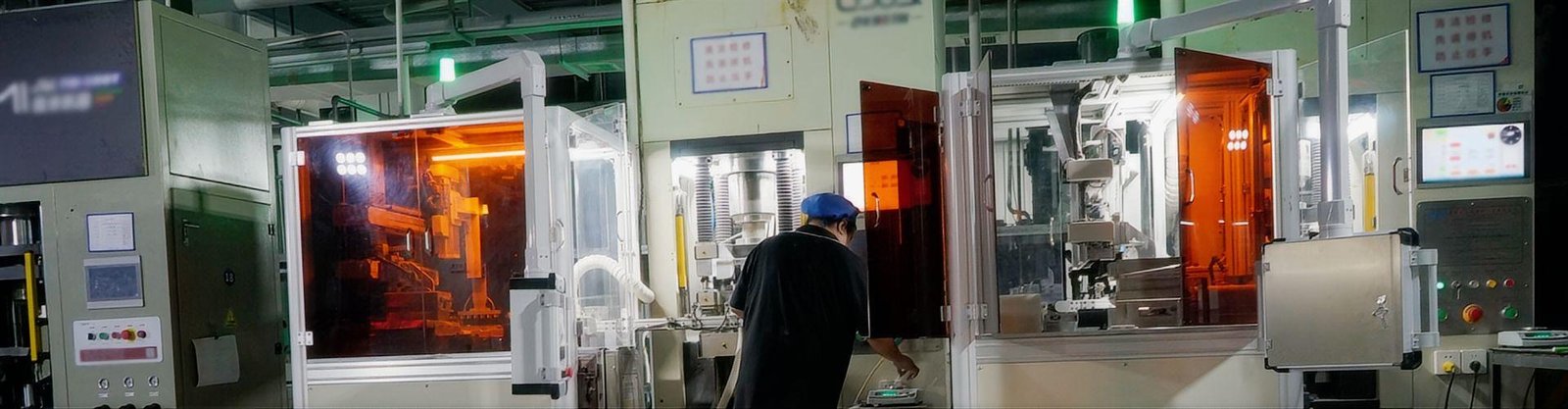
This batch of alumina setter plates was manufactured using a dry pressing process.
During production, factors such as mold wear, powder flowability variation, and uneven powder filling may result in local density gradients and internal defects.
Metallographic analysis showed that the failed products contained microscopic pores and potential crack initiation sources inside the ceramic body.
These microscopic defects formed during the manufacturing process and remained within the ceramic structure, becoming potential sources for crack propagation during later service.
Residual Stress: The Impact of Improper Cooling
During the ceramic sintering process and subsequent cooling, alumina setter plates may develop a certain level of residual stress due to shrinkage differences, temperature gradients, and thermal expansion effects.
If the cooling curve is not properly controlled during kiln cooling, these internal stresses may remain trapped inside the ceramic body before they can be sufficiently released.
When the setter plate is later used in a 1050°C firing process, thermal stresses generated during heating and cooling cycles may interact with existing residual stresses and microscopic defects, accelerating crack propagation.
Process Deviation and Thermal Shock Failure
A small deviation in a single process parameter usually does not directly cause ceramic fracture.
However, in this customer case, process variation during pressing was combined with an excessively steep cooling curve. As a result, microscopic pores and residual stresses accumulated inside the ceramic body before delivery.
During field operation, rapid cooling caused the edges of the setter plate to shrink quickly, while the center area remained hotter due to slower heat dissipation and the presence of loaded components.
This significant temperature gradient generated severe transient thermal stress within the ceramic body.
Under the combined effect of uneven thermal stress and existing crack initiation sources, cracks rapidly propagated from the center area, eventually causing sudden thermal shock failure of the setter plate during the 1050°C firing process.
Prevention Strategies: Manufacturing Control and User Guidelines
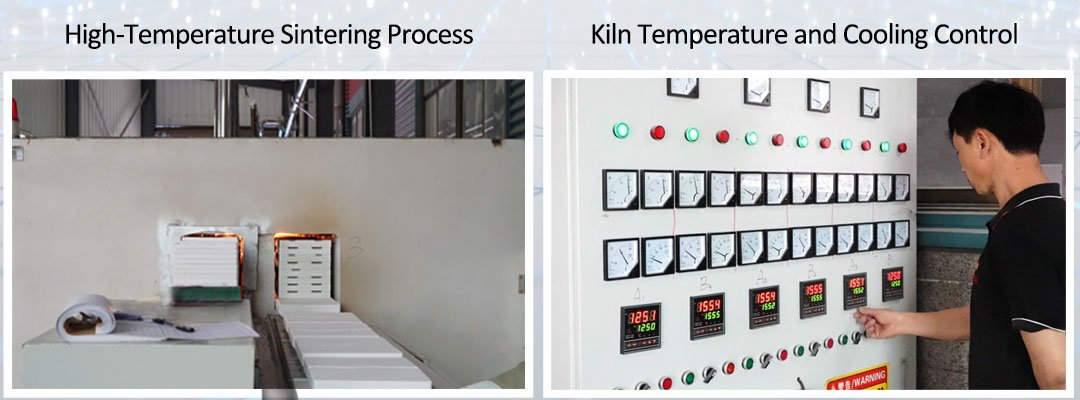
To address this intermittent cracking issue with a failure rate of 3%–4%, Jinghui Ceramics implemented a dual-control approach covering both manufacturing quality control and end-user operating conditions.
The optimization measures are summarized below:
| Item | Jinghui Factory Quality Control | Field Operating Guidelines for Buyers |
| Pressure & Flatness | For critical products, pressing stability should be controlled according to the established process window. Pressure fluctuations should be maintained within the target range. | Carefully check the flatness and alignment of kiln setters or furnace linings to prevent bending stress concentration caused by uneven support. |
| Temperature Gradient | Extend the cooling time from 1000°C to 500°C to ≥300 minutes, allowing sufficient stress relaxation. | Control cooling rates. From 1050°C to 700°C, the cooling rate should not exceed 2–3°C/min. Open the furnace only after the temperature decreases to approximately 150–80°C to minimize edge shrinkage effects. |
| Preheating & Prevention | Critical batches can be inspected through metallographic analysis or other non-destructive testing (NDT) methods. | Before use at 1050°C, cold setter plates should be slowly preheated at 2–3°C/min to 200–250°C and held for 45 minutes. In the 550–600°C temperature range, heating and cooling rates should be reduced appropriately to minimize thermal stress caused by temperature differences. |
Preventing alumina setter plate cracking requires cooperation between the ceramic manufacturer and the end user. Manufacturing control can reduce hidden defects and residual stress, while proper handling, preheating, and cooling procedures can minimize thermal stress during operation.
However, prevention is not only about controlling processes. Selecting the appropriate setter plate thickness based on actual operating conditions is also critical for long-term reliability.
Choosing the Right Alumina Setter Plate Thickness for Reliability
In high-temperature sintering, electronic ceramic tape casting, and semiconductor packaging processes, engineers need to select suitable setter plate thicknesses based on actual operating conditions, including:
- service temperature,
- mechanical loading,
- heating rate,
- thermal cycling conditions.
Proper thickness selection helps prevent brittle fracture caused by insufficient mechanical strength or excessive thermal stress.
| Operating Temperature | Recommended Setter Plate Thickness / Material Selection | Typical Applications |
| ≤800°C | 2–3 mm alumina / cordierite | Medium-temperature sintering and high-frequency rapid heating test fixtures |
| 800–1200°C | 3–4 mm high-purity alumina ceramic | Electronic ceramic tape casting, MLCC, inductors, and power component sintering |
| ≥1200°C | High-purity alumina or silicon carbide (selected according to atmosphere, thermal cycling, and chemical environment) | Ultra-high-temperature applications, large-size precision wafer fixtures, and advanced semiconductor packaging |
Proper thickness selection can improve the mechanical reliability and thermal shock resistance of alumina setter plates. However, thickness is only one part of the overall reliability equation. Material quality, manufacturing consistency, and actual operating conditions must also be considered to achieve stable long-term performance.
For more guidance on material and design considerations, see our setter plate selection guide.
Conclusion
After implementing the above optimization measures on both the manufacturing and user sides, we continuously monitored and verified subsequent production batches.
Under the same 1050°C firing conditions, the failure rate of middle cracking was reduced to zero in subsequent batches. The structural reliability and thermal shock resistance of the setter plates were significantly improved.
The failure of advanced engineering ceramics is often caused by multiple interacting factors rather than a single material defect. In this case, the cracking issue resulted from the combined effects of microscopic defects, residual stress, process deviations, and thermal stress during operation.
In practical applications, evaluating ceramic reliability requires more than simply considering theoretical material properties. A comprehensive analysis of manufacturing processes and operating conditions is essential.
With targeted optimization, the stability and service life of ceramic setter plates can be significantly improved under high-temperature operating conditions.
If you encounter similar technical issues with alumina setter plates, please feel free to contact us.
Frequently Asked Questions About Alumina Setter Plate Cracking
Q1: Does cracking at 1050°C mean that the alumina setter plate material quality is poor?
A1: Not necessarily. The operating temperature of 1050°C is far below the load-softening limit of 99.5% alumina ceramic. Middle-area cracking is usually caused by the interaction between thermal stress cycles, internal defects, and residual stress, rather than insufficient material purity or temperature resistance.
Q2: What non-destructive testing (NDT) methods can identify invisible microcracks in alumina setter plates?
A2: Microscopic grain-boundary cracks are often invisible to the naked eye.
For industrial quality control, ultrasonic testing or other non-destructive testing methods can be used for sampling inspection of internal defects.
For finished products, liquid penetrant testing is commonly used to identify surface-opening microcracks.
Q3: How does setter plate thickness affect mechanical strength and thermal shock resistance? (2 mm vs. 4 mm)
A3: A 4 mm thick setter plate generally provides higher mechanical strength and bending resistance, allowing it to withstand greater contact loads and uneven loading conditions.
A 2 mm thick setter plate offers faster heating response but is more sensitive to rapid temperature changes. Under severe thermal cycling conditions, it is more vulnerable to temperature gradients and stress concentration.
Q4: Why do 99.5% alumina setter plates from different manufacturers show significant performance differences?
A4: Purity is only one basic indicator. The actual performance difference between advanced ceramic manufacturers often comes from factors such as microstructure uniformity, grain size distribution, surface roughness control (Ra), and residual stress management during cooling.
This explains why setter plates with identical specifications may show very different service performance, with some lasting reliably while others experiencing intermittent cracking.