

What Is a Ceramic Grinding Core ?
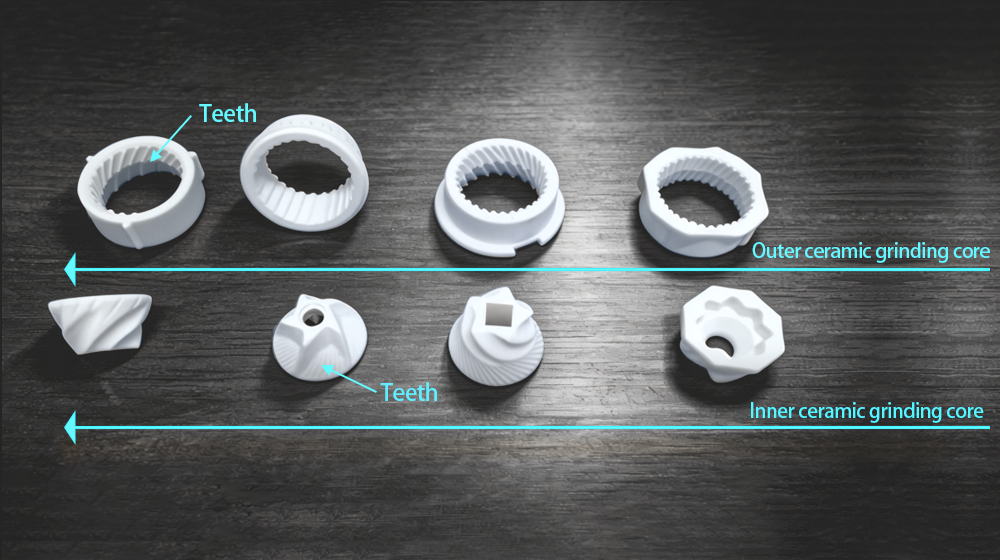
Ceramic grinding cores, also known as ceramic burrs, are grinding components made from advanced ceramics such as alumina and zirconia, and are used in food and powder processing equipment.
It is hard, durable, and resistant to corrosion. Its performance depends on design, material, and assembly accuracy. A deeper understanding of ceramic burr structure, materials, and applications can help engineers select the right solution for different grinding systems.
Main features:
Higher hardness → Better wear and tear;
No reaction → no metal contamination;
Corrosion resistant → suitable for salt and acid;
Long life → 3–10 times longer than metal
How Does a Ceramic Grinding Core Work?
A ceramic grinding core works by using precisely designed teeth to crush and shear materials into smaller particles. During operation, the grinding teeth control how materials are broken down, while the grinding gap determines the final particle size.
Grinding performance depends on several factors, including:
- Tooth geometry – controls grinding efficiency and particle consistency.
- Material properties – affect wear resistance and service life.
- Assembly accuracy – ensures stable and consistent performance.
Therefore, ceramic burr performance depends not only on material selection, but also on design and manufacturing precision.
Why More Equipment Is Choosing Ceramic Burrs?
Ceramic burrs are precision components in grinding systems. They control particle size and define system performance, offer higher wear resistance and chemical stability than metal or plastic burrs, and also ensure more stable grinding results.
Howerver, failures such as cracking or uneven output still occur in use. These are often misattributed to material defects.
Key insight: Root causes are usually design flaws, tolerance issues, or assembly errors.
These advantages and risks play out differently across applications.
Ceramic Burr Applications and Performance Requirements
Different applications have varying performance requirements for ceramic burs, and each application has its own specific engineering requirements:
- For coffee, particle consistency and low heat are critical. Flat and conical burrs are chosen based on size and speed. Material selection typically involves comparing ceramics and stainless steel.
- Spice grinding needs high wear resistance and no flavor mixing.
- Salt grinding requires strong corrosion resistance.
- Food processing needs stable operation and food safety.
- Industrial systems need durability and reliable continuous use.
Across all these applications, one factor matters most: design. Material alone cannot ensure stable performance.
Key Factors Affecting Ceramic Burr Performance
To understand performance, we need to look beyond material. Ceramic burr performance is determined more by geometry than material.
Stable results come from structure design, material choice, tolerances control, and assembly accuracy.
Tooth Geometry (Most Critical)
Geometry has the biggest impact on performance. It directly controls particle size distribution, cutting efficiency, and grinding uniformity. Stable particle size is critical for consistent product quality and long-term stability. The relationship between tooth profile design and grinding results is discussed in more detail in our guide on factors affecting ceramic burr grinding performance.
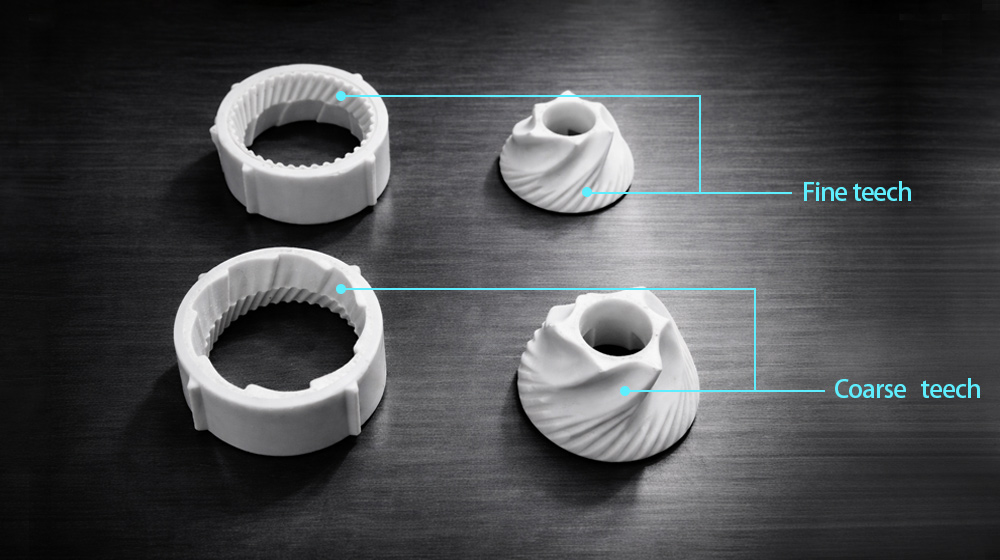
Engineering note: More than 70% of uneven grinding issues come from improper geometry design, not wear.
Material Selection (Sets the Upper Limit)
Material still matters, but it sets the limit, not the result.
| Material | Key Properties | Typical Use |
| Alumina (Al₂O₃) | High hardness, cost-effective | General applications |
| Zirconia (ZrO₂) | High toughness, impact resistant | High-end / high load |
| Steatite Ceramic | Lower hardness, good self-lubrication, low cost | Light-duty / disposable grinders |
Note: Steatite fits disposable grinders and budget limited projects, but wears faster.
Surface Roughness (Real Production Level)
Surface finish is often misunderstood in real production. Most burrs are sintered with lightly polished. Typical roughness is Ra 1.6–3.2 μm.
Conclusion: Structure matters more than surface finish.
Tolerance & Manufacturing Reality
Manufacturing reality also affects performance. Due to sintering causes shrinkage, tight tolerances are hard to achieve directly.
Typical tolerance is ±1% after sintering, and key areas can reach ±0.01–0.05 mm after machining.
Note: Fine machining is only needed for high-end applications.
Assembly Fit (Often Overlooked)
Assembly is often the most overlooked factor. If the assembly is too tight, it can cause cracking and if it is too loose, it can lead to unstable output.
Conclusion: Many failures come from poor assembly, not material.
That said, material still affects durability and long-term cost.
Ceramic Burr Materials: Alumina, Zirconia and Steatite
Ceramic burrs are commonly made from alumina (Al₂O₃), zirconia (ZrO₂), and steatite ceramics. Each material offers different advantages depending on the application requirements.
Alumina ceramic burrs provide excellent hardness, wear resistance, and cost-effectiveness, making them suitable for most grinding applications.
Zirconia ceramic burrs offer higher toughness and impact resistance, making them a good choice for applications requiring enhanced durability.
Steatite ceramic burrs provide a lower-cost solution for light-duty or disposable grinders where extreme wear resistance is not the primary concern.
The right ceramic material should be selected based on grinding conditions, expected service life, and cost requirements.
Ceramic Burr vs Stainless Steel vs Plastic
Compared with stainless steel and plastic burrs, ceramic burrs offer advantages in wear resistance, chemical stability, and long-term performance. The differences between these materials are further discussed in our comparison of ceramic burrs and stainless steel burrs.
| Feature | Ceramic Burr | Stainless Steel Burr | Plastic Burr |
|---|---|---|---|
| Wear resistance | Excellent | Moderate | Low |
| Service life | Long | Medium | Short |
| Corrosion resistance | Excellent | Good | Moderate |
| Contamination risk | Low | Metal particles possible | Microplastic risk |
For high-frequency grinding applications, ceramic burrs can reduce replacement frequency and provide more stable grinding performance over time. However, the best choice depends on the specific application, operating conditions, and cost targets.
When to Choose Ceramic Burrs
In the following situations, we recommend using a ceramic grinding core for better performance.
- Equipment runs often or continuously
- Food-grade compliance is required
- Environment includes salt or humidity
- Stable particle size is critical
However, even in these cases, problems can still occur.
Common Problems & Root Causes
Most failures are not caused by the material. They come from design, tolerance, and assembly.
Issues also occur when replacement burrs do not match original tolerances.
| Issue | Root Cause |
| Cracking | Assembly stress, poor design, uneven load |
| Uneven output | Poor geometry, loose tolerance, incorrect fit |
| Short lifespan | Wrong material or overload conditions |
Among these issues, cracking is the most common concern. In many cases, cracks are related to assembly stress or improper design rather than the ceramic material itself. Learn more about why ceramic grinder burrs crack and how to prevent failures.
Uneven particle output is often caused by geometry or assembly issues. Our analysis of why pepper grinders produce uneven powder explains the common causes and solutions.
How to Choose the Right Ceramic Burr
Selection requires a full system view, not just material.
| Key Factor | What to Check |
| Material type | Coffee, spices, salt, or powder |
| Particle size | Required consistency and distribution |
| Service life | Expected lifetime under real use |
| Food safety | FDA or EU compliance needs |
| Assembly design | Fit with existing structure |
| Customization | Need for design or geometry changes |
In many cases, standard products cannot meet all these requirements. This is where custom engineering becomes important.
Custom Ceramic Burr Solutions for Your Application
We provide complete engineering support based on your needs, from material selection and tooth design optimization to custom ceramic burr manufacturing. Our goal is stable performance and lower long-term cost.
- Optimize tooth design for better output
- Recommend the right material
- Improve assembly fit and stability
- Evaluate service life in real conditions
- Support OEM and ODM production
The final cost of a ceramic burr depends on various factors, including material selection, design complexity, machining requirements, and production volume. These ceramic burr cost factors should be considered together with performance requirements to achieve the best balance between quality and cost.
But design alone is not enough. Manufacturing capability determines whether performance can be delivered.
Why Ceramic Burr Manufacturing Process Matters
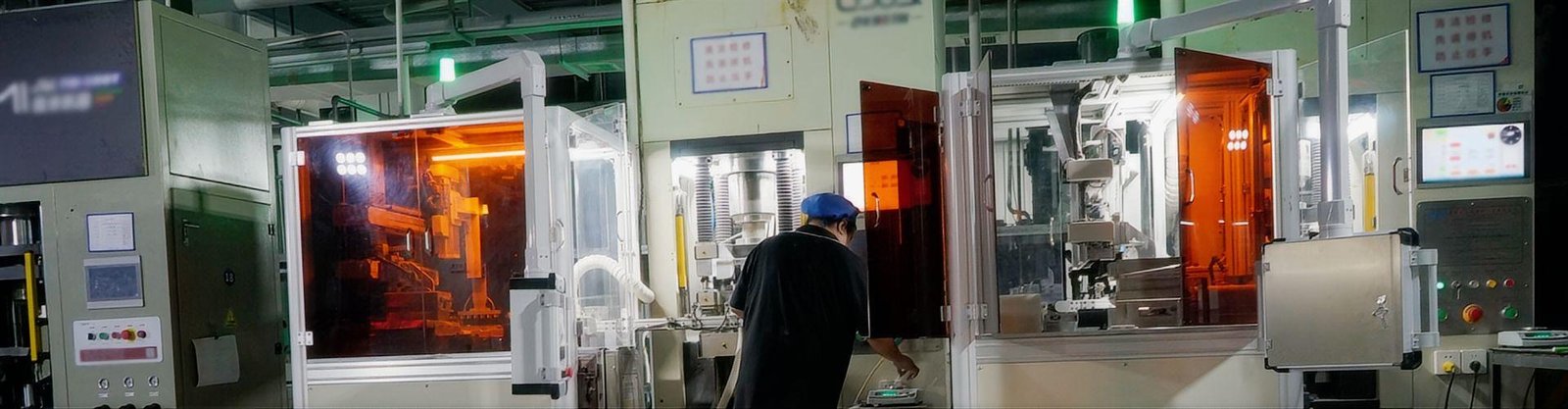
Grinding performance depends on both design and manufacturing. Small process changes can impact quality.
Key factors:
- Forming for strength
- Sintering for stability
- Machining for accuracy
- Inspection for consistency
Weak control leads to unstable output or cracking.
Our production strength:
- 100+ forming machines
- 7 kilns
- 40+ machining units
- Automated inspection
Tolerance: ±0.01 mm in key areas.
The following case shows how this works in real production.
Case Study: Direct Plastic Replacement with Ceramic
A European customer needed a compliant alternative to plastic cores. They wanted no change in assembly and stable grinding results.
We redesigned the ceramic burr to match existing parts. We also optimized tooth geometry and assembly clearance.
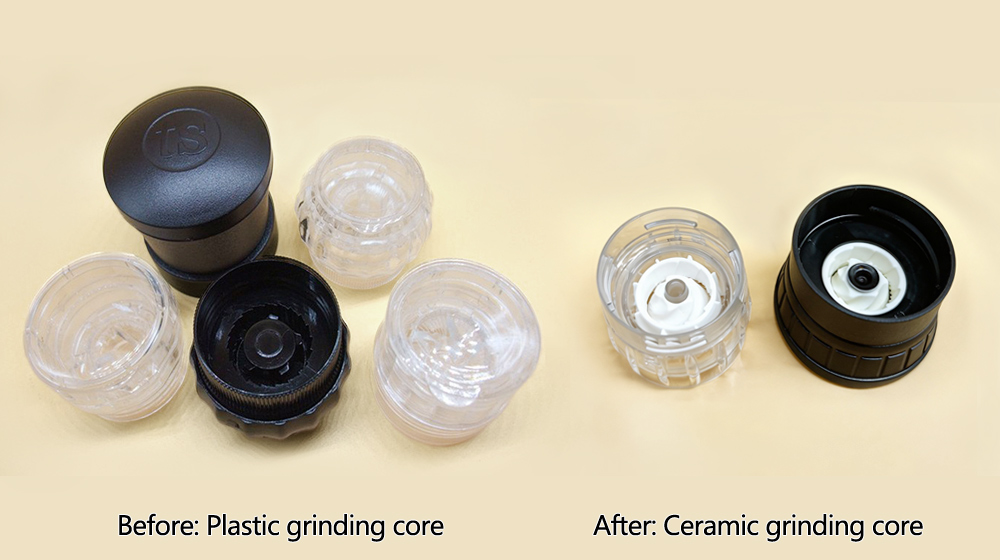
Results:
- FDA and EU compliant.
- Stable particle size.
- No assembly changes required.
- Significantly extended service life compared with the original plastic component.
Value: Lower cost, better quality, full compliance.
Here are some common questions from customers.
Frequently Asked Questions
Q1: Are ceramic burrs better than stainless steel?
Yes. They offer better wear resistance, stability, and food safety. Application still matters.
Q2: How long do ceramic burrs last?
They usually last 3–10 times longer than metal. It depends on design and use conditions.
Q3: Why do ceramic burrs crack?
Cracks are usually caused by assembly or design issues, not material defects.
Q4: What affects particle consistency?
Tooth geometry is the most important factor.
Q5: Which material is best?
Alumina fits general use. Zirconia suits high-end or heavy-duty applications.
Q6: Are ceramic burrs food safe?
Yes. Ceramic is chemically inert and does not contaminate food.
If you are working on a similar project, we can help.
Engineering Support for Ceramic Burr Applications
We support burr replacement and new project development. Please provide application data, drawings or samples, and performance targets.
Our engineers will:
- Evaluate compatibility with existing systems
- Optimize burr geometry
- Recommend material options
- Improve cost efficiency
A quotation and sample plan will be provided within 24 hours.