

Introduction
In pepper mills, coffee grinders, and other small kitchen appliances, ceramic burrs have become a mainstream choice due to their high hardness, wear resistance, corrosion resistance, and food safety.
However, ceramic is a typically brittle material that may crack under complex stress conditions or adverse operating environments. This is one of the most common failure issues encountered by both purchasers and end-users.
If you wish to first understand the structure, types, and OEM selection logic of ceramic grinder burrs, please refer to our Ceramic Grinding Core (Ceramic Burr) Guide: Design, Selection & OEM Solutions.
Why do ceramic grinder burrs crack? This issue not only troubles end users but has also been a crucial issue for materials engineers and equipment designers.
In fact, cracking in ceramic grinder burrs is rarely caused by a single factor; rather, it is the result of the combined effects of microscopic material defects, structural stresses, and operating conditions.
This article will analyze the issue from multiple perspectives—including manufacturing processes, structural stress characteristics, quality control, and end-use scenarios—to help understand the true mechanisms behind ceramic grinder burr cracking.
Manufacturing Defects
In the production of ceramic grinder burrs, we primarily use the hot pressing process to prepare alumina green bodies in order to improve the density of complex tooth profiles.
While hot pressing helps improve the initial density of the green body, grain evolution and residual stresses during the subsequent sintering process remain critical factors affecting final reliability.
If process control is inadequate, the following types of defects may be introduced.
Microporosity and Delamination
In the fabrication of ceramic grinder burrs, we mix alumina raw material with a paraffin system to form a wax-based feedstock, which enhances the storage stability of the raw material and improves forming consistency.
During hot-pressing, this wax system serves as a temporary forming medium, enabling more stable and dense filling of complex tooth profiles.
Subsequently, a debinding process is required to remove the organic phase, providing a stable green body structure for subsequent high-temperature sintering.
If the heating rate is too rapid or the gas venting path is obstructed during this process, the binder may locally and rapidly vaporize, forming micropores or layered defects in the incompletely densified structure.
These internal defects are usually invisible but significantly reduce the material’s flexural strength and become sources of crack initiation.
Abnormal Grain Growth
If the sintering temperature is too high or the holding time is too long, abnormal grain growth may occur.
As the grain size increases, the number of grain boundaries decreases, reducing the resistance to crack propagation and leading to decreased fracture toughness, making the material more susceptible to brittle fracture.
Residual Thermal Stress
The cooling process following high-temperature sintering is equally critical. If the cooling rate is too fast, it can result in a significant temperature difference between the interior and exterior of the material, creating a thermal stress gradient.
Due to the low thermal conductivity of ceramics, this temperature difference can easily create a residual stress field inside, potentially inducing microcracks that propagate under subsequent loads and lead to failure.
Quality Control
As a manufacturer, we conduct quality inspections on tens of millions of ceramic grinder burrs annually.
A key concern for many European and American customers is: how to reduce the potential failure risk of brittle ceramic materials?
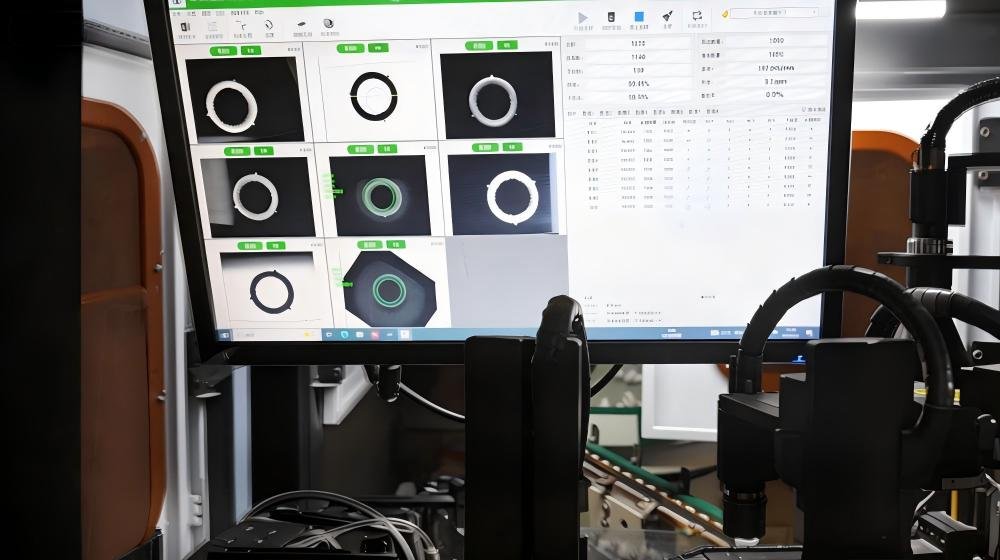
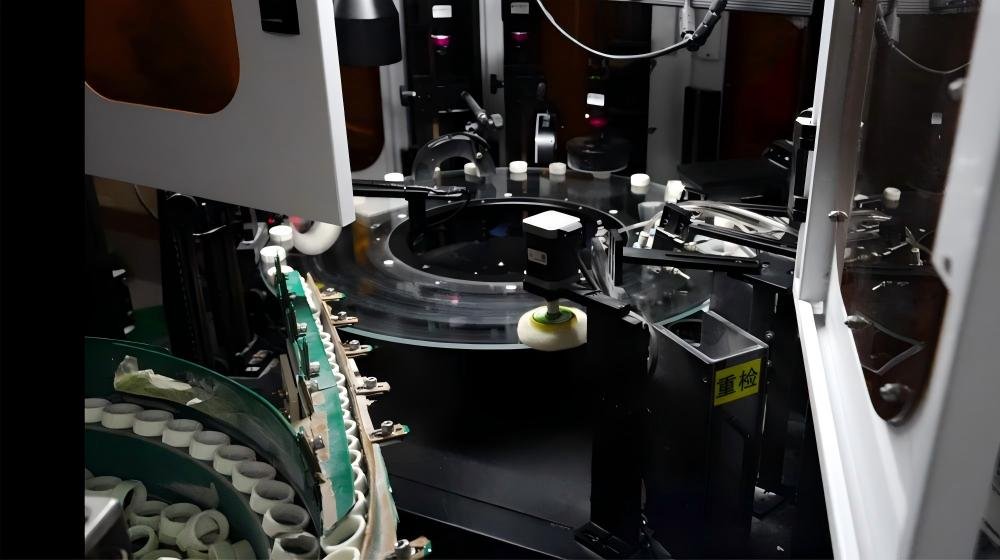
Our approach involves conducting rigorous 100% inspections of dimensions and appearance prior to shipment to mitigate risks associated with assembly and obvious structural defects.
Inner Burr Cracking
During batch inspection, if structural or internal defects are present, cracks often appear in the center hole or groove area.
- Cause Analysis:
This is a typical stress concentration phenomenon. In practical use, the center bore is designed to mate with a metal drive shaft; external torque and radial loads are transmitted to this area through the structure, making it a primary stress concentration point.
- Quality Control Measures:
Regarding assembly compatibility, we strictly control critical dimensions such as the center bore and tooth profile fit to reduce the risk of assembly stress caused by interference or improper fit.
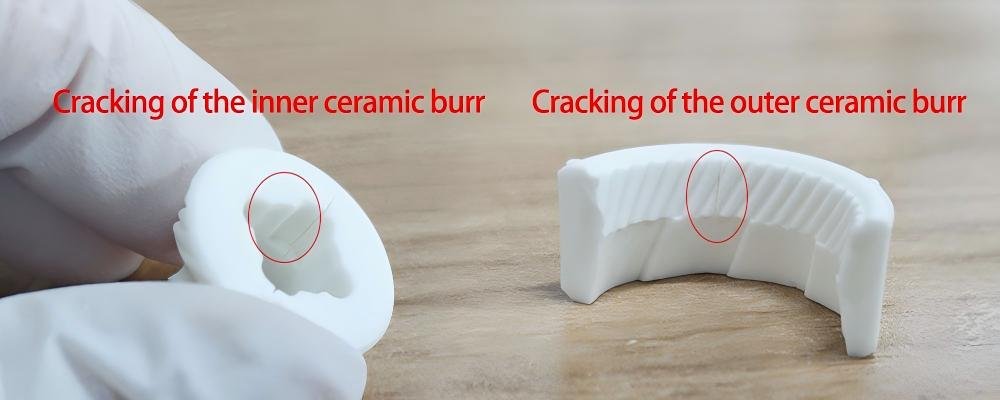
Outer Burr Cracking
Failure of outer ceramic burrs typically presents as fine vertical cracks or localized damage in the tooth region.
- Cause Analysis:
During the grinding process, material passes downward through the tooth structure, and the bottom precision grinding area is subjected to higher localized contact and frictional stresses.
If there are micro-pores or areas of uneven density within the material, these locations are prone to becoming crack initiation points, which then propagate along grain boundaries to form fine cracks.
It is worth noting that tooth profile design, surface roughness, and material density not only affect the risk of cracking but also directly impact grinding efficiency and powder output stability. For more analysis on factors influencing grinding performance, please refer to What Determines Ceramic Burr Grinding Performance.
- Our Quality Control:
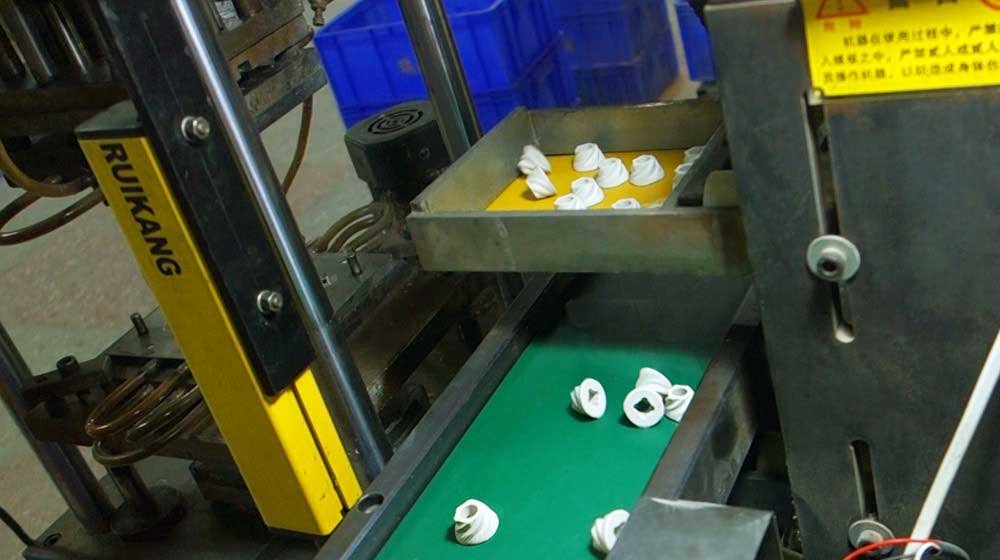
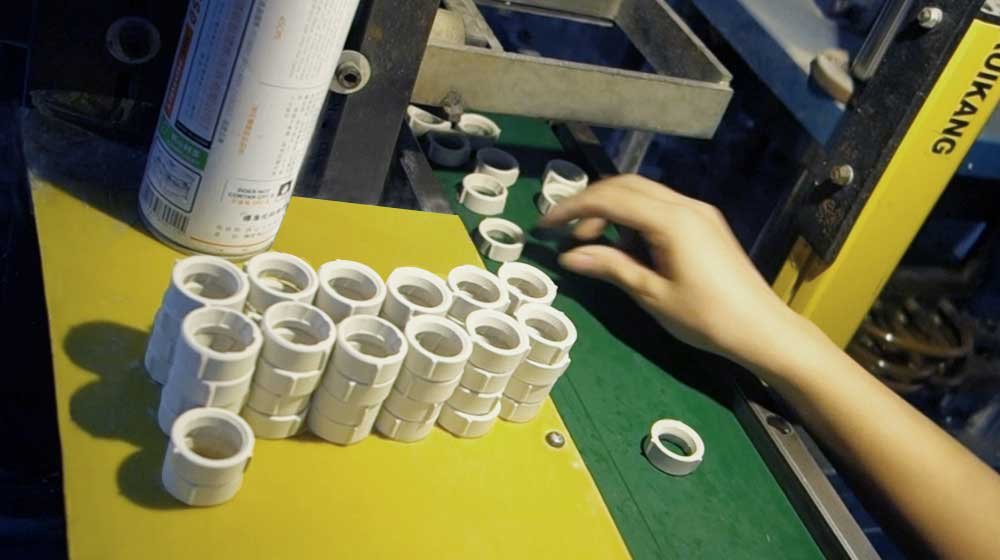
As shown in Figures 4 and 5, our factory is equipped with automatic optical inspection machines. Before finished products leave the factory, the machines perform 100% automated inspection of the dimensions and appearance of every ceramic burr.
This digital quality control approach not only significantly reduces the risk of defective parts entering overseas markets at the source but also lowers labor costs through automation, maintaining our highly competitive price advantage.
Failure Modes
From the perspective of failure analysis, the forms of damage in ceramic grinder burrs are not entirely uniform. Phenomena such as cracking, chipping, microcracks, and wear exhibit distinct differences in their formation mechanisms and inducing conditions.
The table below summarizes the most common failure modes of ceramic grinder burrs and their typical causes.
| Failure Mode | Common Location | Main Cause |
| Cracking | Center hole, slot | Stress concentration |
| Chipping | Tooth tip | Impact from foreign objects |
| Micro-cracking | Tooth root | Residual stress |
| Wear | Working tooth surface | Long-term friction |
Chipping Mechanisms
Besides cracking, another common term in overseas customer complaints is “chipping.”
In failure analysis, chipping typically manifests as multiple microcracks propagating and converging in the surface or subsurface region, ultimately leading to localized material detachment.
We need to clarify the distinction between the two:
Cracking typically involves the initiation and propagation of cracks, which may be related to internal material defects, residual stresses, or mechanical loads;
Chipping, on the other hand, involves localized material detachment at the tip or edge of a tooth, usually caused by foreign object impact, localized stress concentration, or thermal stress. For electric grinders, chipping is often more common due to higher rotational speeds and greater impact loads.
Foreign Object Impact
Ceramic materials (95%/99% alumina) possess high hardness and can meet the grinding requirements for most spices. However, during raw material collection and processing, sand, small pebbles, or metal impurities from mechanical wear may still be introduced.
When these high-hardness foreign objects enter a high-speed rotating grinding system, they generate instantaneous impact loads at the tooth tips. If these loads exceed the local strength limit of the material, they may cause tooth tip chipping or localized failure.
Dry Friction and Heat Build-Up
Dry friction may occur when the burr operates under conditions of insufficient material or excessive tightness.
Continuous friction leads to localized temperature rises, creating temperature gradients when subsequent material enters, thus inducing thermal stress concentration and potentially causing the propagation or spalling of microcracks in the teeth.
In many cases, chipping and localized wear may eventually manifest as uneven particle distribution. We discuss this issue further in Why Does Pepper Grinder Produce Uneven Powder.
Material Selection
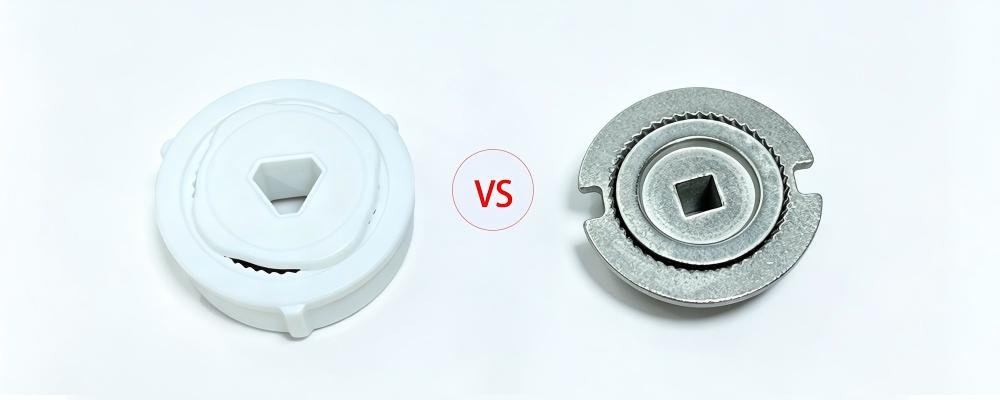
Ceramic and metal grinder burrs each have their advantages in different applications. The choice is essentially an engineering trade-off between hardness, toughness, and environmental resistance.
To mitigate the cracking risk of ceramic grinder burrs, engineering teams in Europe and America often face the choice: should they abandon ceramic altogether and switch to metal (such as stainless steel) grinder burrs?
- Metal grinder burrs (such as SUS304 stainless steel): They possess high ductility and fracture toughness, and are generally less prone to brittle fracture under impact loads.
However, their hardness and wear resistance are usually lower than ceramics, and the cutting edge may gradually dull after long-term use. In high-salinity or corrosive environments, pitting corrosion and surface discoloration may also occur.
- Engineering ceramic grinder burrs (such as 95%/99% alumina): These offer excellent wear resistance, chemical stability, and corrosion resistance, and are resistant to rust, making them particularly suitable for long-term grinding applications involving sea salt, pepper, and other seasonings.
While ceramics exhibit brittleness, their failure risk can be significantly reduced through material formulation optimization, sintering process control, and structural design improvements.
- Industry-wide Material Trade-offs: The debate between ceramic and stainless steel burrs is not unique to pepper grinders. Similar material selection challenges exist in coffee grinding systems, where wear resistance, grinding consistency, and impact tolerance must be carefully balanced. For a detailed comparison, see our Ceramic vs Stainless Steel Burr guide.
In practical engineering selection, the choice between ceramic and metal grinder burrs usually depends on a trade-off between “wear resistance life vs. impact resistance,” rather than a single performance advantage or disadvantage.
Design Optimization
When customizing ceramic grinder burrs for our global customers, we focus on optimization in the following two areas:
- Optimized Chamfering and Stress-Relief Design
Our engineering team gets involved at the drawing stage to optimize the design of stress-concentration areas—such as center holes, slots, and tooth roots—by applying rounded corners. This reduces local stress concentration and enhances the overall structural reliability.
- Temperature-Controlled Sintering Process and Densification Control
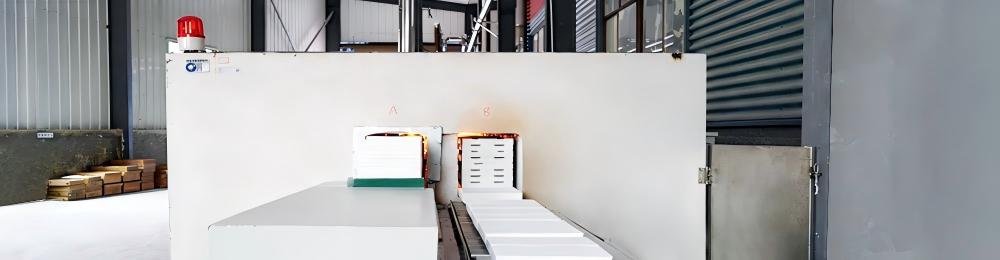
We utilize automated temperature-controlled tunnel kilns. By controlling the heating and cooling curves in stages, we ensure a more uniform and dense internal ceramic structure, thereby reducing the risk of micro-pores and residual internal stresses.
Conclusion
Cracking and chipping of ceramic grinder burrs are essentially the result of the combined effects of microscopic material defects, structural stress distribution, and operating conditions, rather than isolated issues caused by a single factor.
Through proper design, manufacturing process control, and structural optimization, the probability of failure can be significantly reduced, thereby improving overall operational reliability.
Although ceramics are inherently brittle, their superior wear resistance, corrosion resistance, and food safety make them one of the primary choices for pepper mills, coffee grinders, and seasoning grinders.
Selecting a ceramic manufacturer with robust process control capabilities, a strict quality management system, and experience in engineering optimization is a key factor in reducing long-term usage risks and enhancing product reliability.