

Introduction
Sensors used in chemical processing, semiconductor manufacturing, environmental monitoring, and industrial automation often operate in harsh environments involving corrosive chemicals, high temperatures, moisture, and electrical interference.
Traditional metal components may suffer from corrosion, oxidation, or insufficient electrical insulation over time, affecting sensor accuracy and service life. To overcome these challenges, ceramic sensor housings have become an increasingly popular choice for protecting sensitive sensor components in demanding operating conditions.
This article explores the key benefits of ceramic sensor housings, their typical industrial applications, and common customization options for different sensor designs. It also explains why alumina has become the preferred material for many sensor housing applications.
As sensor designs continue to evolve, standard ceramic parts may not always satisfy specific assembly or performance requirements. Custom ceramic sensor housing components provide greater flexibility in geometry, dimensions, and functional features to support a wide variety of industrial sensing applications.
Why Alumina Ceramics Are Ideal for Sensor Housings?
Ceramic sensor housings can be manufactured from several engineering ceramics, including alumina, zirconia, aluminum nitride, and silicon nitride. Among these materials, alumina is by far the most widely used and is typically available in grades ranging from 95% to 99% Al₂O₃, offering excellent corrosion resistance, hardness and wear resistance, electrical insulation, and thermal stability.
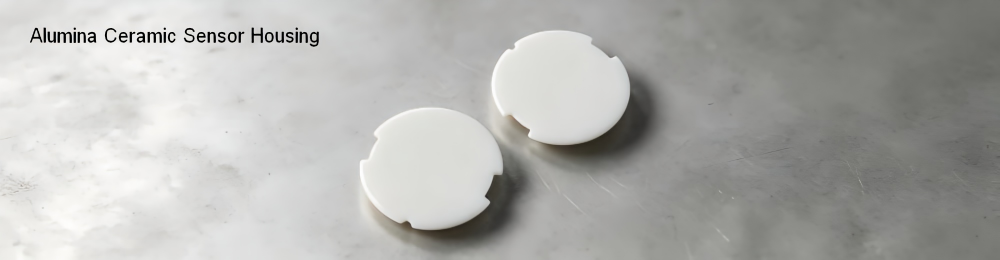
The following sections explain the key advantages of alumina ceramics for sensor housing applications.
Excellent Corrosion Resistance and Chemical Stability
High-purity alumina ceramics are highly resistant to a wide variety of corrosive media, including strong acids, strong alkalis, and many organic solvents.
Their chemically inert structure minimizes material degradation in aggressive environments, helping protect sensitive sensor components from corrosion-related failures. As a result, alumina ceramic housings are widely used in chemical processing, water treatment, and other industrial applications where long-term reliability is essential.
Outstanding Hardness and Wear Resistance
Alumina ceramics have a Mohs hardness of approximately 9, making them highly resistant to abrasion and mechanical wear.
This exceptional hardness allows ceramic housings to withstand particle erosion, frequent handling, and demanding operating conditions while maintaining dimensional stability over time.
For industrial sensors exposed to abrasive environments, alumina ceramic housings provide excellent durability and extended service life.
Excellent Electrical Insulation
Electrical insulation is one of the most important properties of alumina ceramics.
Ceramic sensor housings effectively isolate sensitive sensing elements from external electrical interference and conductive environments, contributing to more stable signal transmission and improved measurement accuracy.
This makes alumina ceramics an ideal choice for sensors used in industrial automation, electronic equipment, and precision measurement systems.
Excellent Thermal Stability
Alumina ceramics maintain excellent mechanical strength and dimensional stability across a wide operating temperature range.
Their low coefficient of thermal expansion helps minimize dimensional changes caused by temperature fluctuations, allowing sensor housings to perform reliably in applications involving elevated temperatures or repeated thermal cycling.
This stability contributes to consistent sensor performance and long-term operational reliability.
Applications of Ceramic Sensor Housings
Thanks to their corrosion resistance, electrical insulation, thermal stability, and mechanical durability, ceramic sensor housings are used in a wide range of industrial sensing applications.
Chemical Processing
Chemical processing equipment often exposes sensors to corrosive liquids, gases, and aggressive chemicals.
Alumina ceramic housings help protect sensitive sensing elements from chemical attack while maintaining reliable operation in harsh process environments.
Typical applications include reactors, chemical dosing systems, and process monitoring equipment.
Semiconductor Manufacturing
Semiconductor manufacturing requires materials with excellent purity, electrical insulation, and chemical stability.
Ceramic sensor housings are commonly used in semiconductor processing equipment where reliable performance and contamination control are critical.
Their dimensional stability also makes them suitable for precision monitoring systems operating under demanding manufacturing conditions.
Environmental Monitoring and Water Treatment
Sensors used in water treatment plants and environmental monitoring systems frequently operate in humid, chemically aggressive environments.
Ceramic housings provide reliable protection for sensor components used in wastewater treatment, chemical dosing equipment, water quality monitoring, and environmental control systems.
Food and Pharmaceutical Industries
Food and pharmaceutical processing requires materials that are chemically stable, easy to clean, and capable of maintaining long-term performance.
Alumina ceramic sensor housings offer excellent corrosion resistance and dimensional stability, making them suitable for sensor assemblies used in hygienic production equipment and process monitoring systems.
Common Design Features of Ceramic Sensor Housings
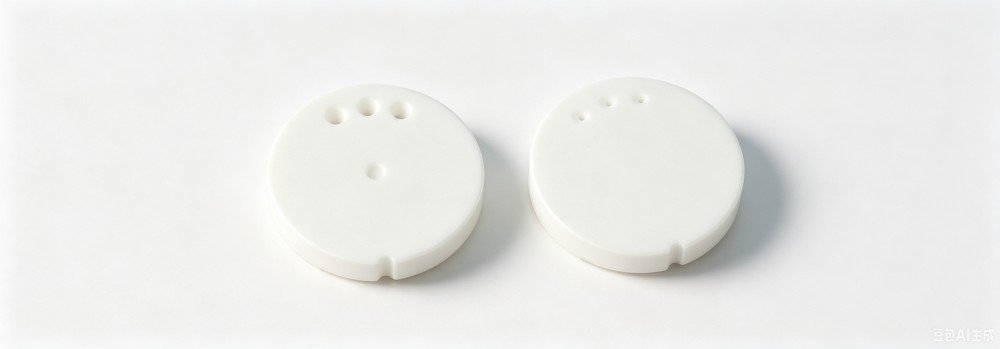
A ceramic sensor housing is a precision-engineered ceramic component designed to support, protect, and electrically isolate sensitive sensor elements.
Ceramic sensor housings are rarely standard components. Their geometry is typically customized according to the sensor type, installation method, and operating environment. Well-designed ceramic housings not only protect sensitive sensor elements but also simplify assembly and improve long-term reliability.
Some of the most common design features include:
Precision Holes
Precision holes are used for mounting, alignment, electrical lead routing, or fastening. Their size and position must be accurately controlled to ensure proper assembly and consistent sensor performance.
Internal Cavities
Many ceramic sensor housings incorporate internal cavities to accommodate sensing elements, electronic components, or other functional parts. The cavity dimensions are typically customized to match the customer’s sensor design.
Grooves and Slots
Grooves and slots are often designed to improve component positioning, support sealing structures, or simplify assembly. Depending on the application, these features may also help integrate additional insulating or fastening components.
Tight Dimensional Tolerances
Many sensor assemblies require precise dimensional control to ensure proper fit with mating components. Tight machining tolerances help improve assembly accuracy, reduce positioning errors, and maintain consistent product quality across production batches.
Custom Solutions for Ceramic Sensor Housings
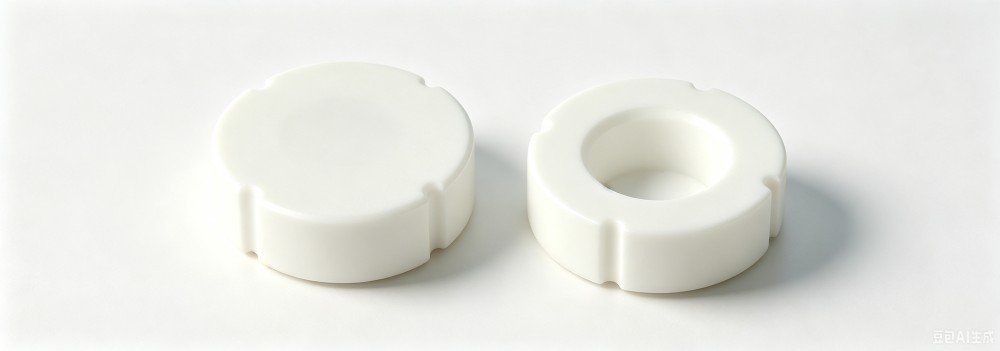
Every sensor application has unique structural and functional requirements. While standard ceramic components may be suitable for some projects, many industrial sensors require customized ceramic housings to achieve the desired performance and assembly compatibility.
Typical customization options include:
- Custom outer dimensions and geometries
- Precision holes, slots, and mounting features
- Internal cavity structures
- Surface grinding and polishing
- Tight machining tolerances
- Material selection based on application requirements
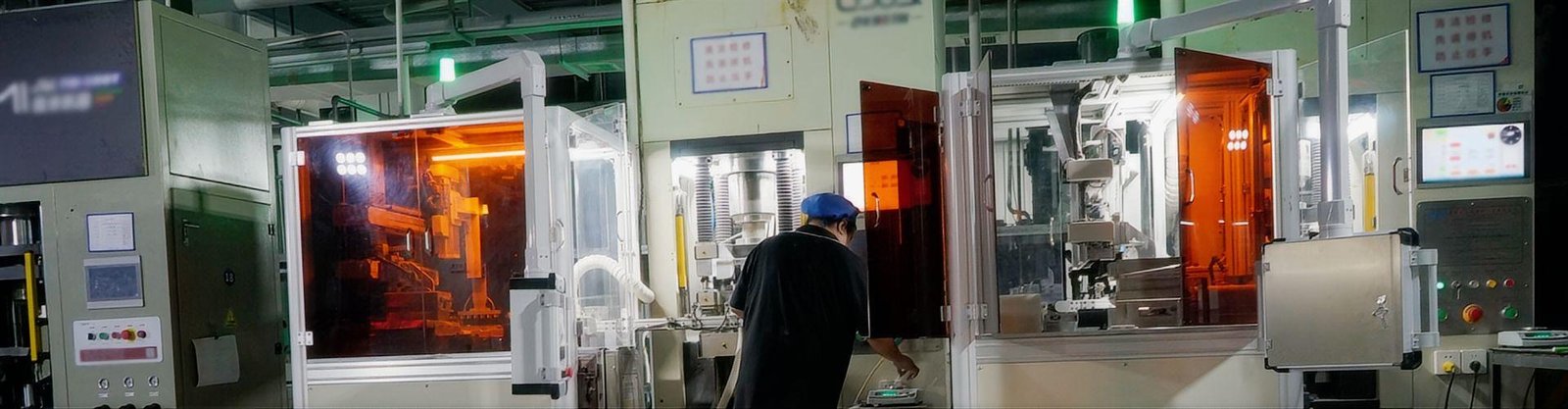
With precision ceramic machining capabilities, customized alumina ceramic housings can be manufactured according to customer drawings or specific application requirements. From prototype development to volume production, custom manufacturing helps ensure each ceramic component meets the performance and assembly needs of the final sensor.
Conclusion
Ceramic sensor housings have become an essential solution for protecting sensitive sensing components in demanding industrial environments. Their combination of durability, electrical insulation, and design flexibility makes them well suited for a wide range of sensor applications.
From chemical processing and semiconductor manufacturing to environmental monitoring and food processing, ceramic sensor housings continue to support reliable sensor performance under challenging operating conditions. As sensor designs become increasingly specialized, customized ceramic housing components are playing a growing role in improving assembly compatibility and long-term reliability.
Whether you require a standard component or a custom-designed ceramic sensor housing, understanding the application requirements and manufacturing considerations is key to achieving reliable, long-lasting performance.
Frequently Asked Questions
Q1: Why are ceramics used for sensor housings?
A1: Ceramic materials provide excellent corrosion resistance, electrical insulation, thermal stability, and mechanical strength. These properties make them ideal for protecting sensors operating in harsh industrial environments.
Q2: Why is alumina commonly used for ceramic sensor housings?
A2: Alumina offers an excellent balance of performance and cost. It combines high hardness, chemical resistance, electrical insulation, and dimensional stability, making it one of the most widely used engineering ceramics for sensor applications.
Q3: Are ceramic sensor housings brittle?
A3: Ceramics are generally more brittle than metals because they have limited plastic deformation. However, properly designed alumina ceramic housings provide excellent reliability when the material, wall thickness, and structural design are optimized for the intended application.
Q4: Can ceramic sensor housings be customized?
A4: Yes. Ceramic sensor housings can be customized with different dimensions, holes, grooves, cavity structures, surface finishes, and machining tolerances to meet specific sensor designs and assembly requirements.
Q5: Can ceramic sensor housings withstand high temperatures?
A5: Yes. Alumina ceramics maintain excellent mechanical strength and dimensional stability over a wide temperature range, making them suitable for sensors operating in high-temperature industrial environments.
Q6: What ceramic materials can be used for sensor housings?
A6: Alumina is the most common choice because of its balanced performance and cost. For applications requiring higher fracture toughness or impact resistance, zirconia ceramics may also be considered.
Q7: Do you provide custom ceramic sensor housing components?
A7: Yes. JINGHUI manufactures custom alumina ceramic sensor housing components according to customer drawings or application requirements, supporting both prototype development and volume production.