

Introduction
In semiconductor packaging, high-power electronics, aerospace systems, and precision sensors—any application involving hermetic sealing—an improper material selection may lead to reliability risks such as leakage, seal degradation, or even complete failure of the ceramic-to-metal interface.
These failure mechanisms are further explained in detail in our Ceramic-to-Metal Hermetic Seal Failure: Causes, Testing, and Solutions.
Engineers are constantly faced with a practical dilemma: for power module substrates, hermetic housings, feedthroughs, connector insulators, and sensor packaging cases—should they use metallized alumina or metallized AlN?
Neither material is absolutely superior; the key depends on the operating conditions. A correct selection can account for more than half of the success of a hermetic package design.
This article explains these two materials in detail from seven dimensions: thermal conductivity, CTE matching, electrical performance, mechanical strength, cost, and application scenarios, providing a practical ceramic selection methodology for hermetic packaging.
Core Logic of Ceramic Material Selection for Hermetic Packaging
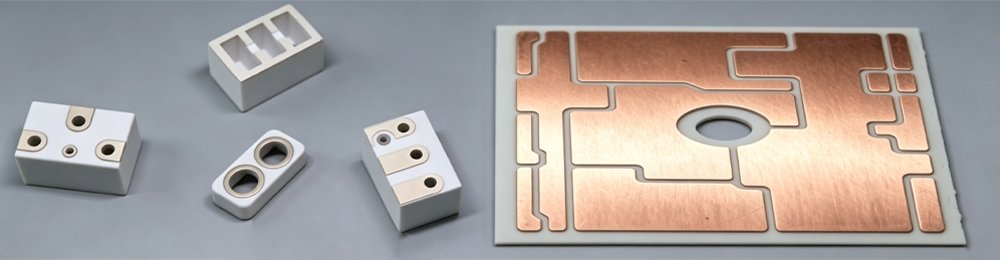
In hermetic packaging applications, the selection between metallized alumina and metallized AlN is fundamentally determined by system-level thermal design and structural constraints, rather than the superiority of a single material property.
- Aluminais more suitable for mature, low-to-medium thermal load, cost-sensitive packaging structures.
- AlN is more suitable for high heat flux, high-power chips, and Si/SiC packaging applications.
- The primary selection criterion is typically thermal management requirements, followed by CTE matching and process compatibility.
- In most industrial applications, aluminaremains the default baseline solution, while AlN is used for performance bottleneck optimization cases.
Simply put: first consider thermal requirements, then structural compatibility, and finally cost.
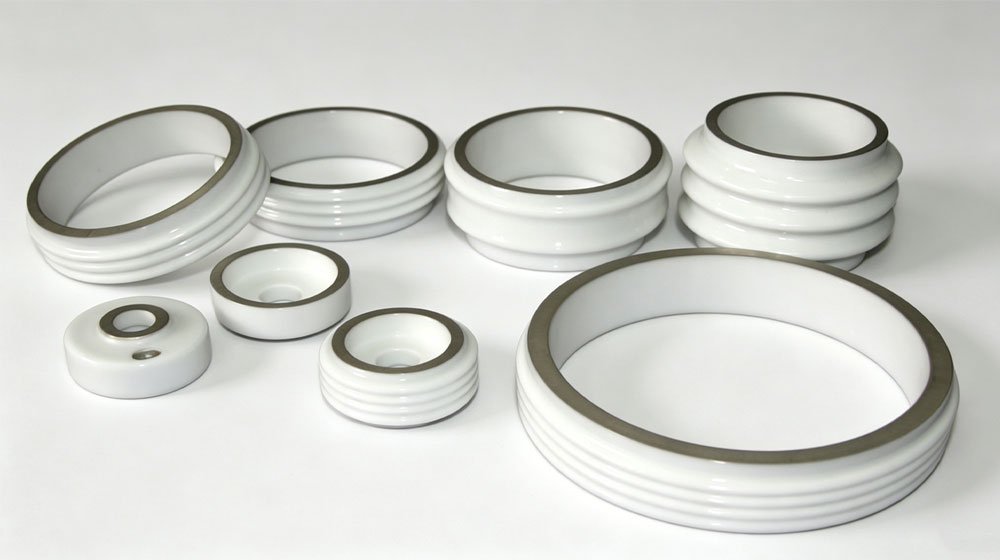
What Is Metallized Alumina (Al₂O₃)
In terms of industrial maturity, mass production scale, and process stability, alumina holds the undisputed leading position in the field of hermetic packaging ceramics.
It is widely used in substrates, housings, insulating components, feedthroughs, and structural parts.
Process
A traditional Mo-Mn metallization process is used to form a brazable metal layer on the ceramic surface, enabling hermetic bonding with metals such as Kovar, stainless steel, and copper.
A detailed explanation of this process can be found in Mo-Mn (Molybdenum-Manganese) Metallization Process Explained.
Advantages
The process is mature, and hermetic sealing performance is stable. It offers high electrical insulation and dielectric strength. It has good impact resistance, strong aging resistance, and controllable mass production cost. Lead time is short, and batch-to-batch consistency is high.
Limitations
Its thermal conductivity is relatively low. In high heat flux or localized high-power density applications, heat dissipation capability becomes insufficient. Its relatively higher CTE can also lead to gradual degradation of hermeticity under extreme thermal cycling conditions. It is not suitable for ultra-high-power or fine-pitch packaging applications.
What Is Metallized Aluminum Nitride (AlN)
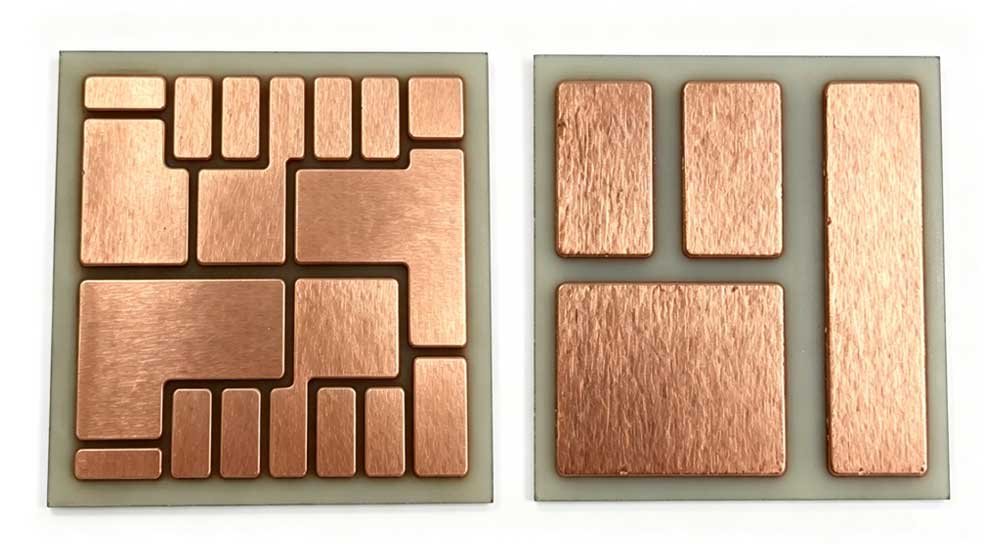
Aluminum nitride is a high-end ceramic material designed for high-power, high heat flux, and high-reliability packaging applications.
In advanced semiconductors, high-power RF devices, and precision optoelectronic components, AlN is a key material selection.
Process
From a manufacturing perspective, metallizing AlN is significantly more difficult than alumina. Every process step—including sintering temperature control, film uniformity, and interface bonding precision between ceramic and metal—is much more demanding than for alumina.
If metallized AlN ceramics are exposed to air for more than 4 hours before electroplating, micro-oxidation will begin at the surface. This places extremely high demands on process control and manufacturing precision.
Advantages
Its thermal conductivity is 5 to 10 times higher than that of alumina. It has a low CTE, providing good thermal matching with semiconductor chips and metal packaging structures. It also exhibits strong thermal shock resistance, with minimal thermal stress under large temperature gradients.
Limitations
Raw material cost is high, metallization processing cost is high, and lead time is longer. In conventional low-load insulation packaging applications, its performance is often over-specified, resulting in lower cost efficiency in mass production scenarios.
Performance Comparison of Hermetic Packaging
In hermetic packaging applications, the selection between alumina and AlN involves multiple dimensions. Whether for substrates, housings, or insulating components, these parameters directly affect final sealing reliability and service life.
Thermal Conductivity Comparison
| Material | Thermal Conductivity |
| Alumina | 20–30 W/m·K |
| AlN | 170–230 W/m·K |
The thermal conductivity difference between AlN and alumina is about 5–10 times, which is the most fundamental distinction between the two materials.
In simple terms, for high-power and high-current devices such as laser diodes and IGBT modules, AlN can significantly reduce the chip junction temperature, thereby preventing thermal stress from degrading hermetic integrity.
For low-heat applications such as signal connectors and small sensors, alumina is fully sufficient, and there is no need to incur additional cost.
CTE Matching Comparison
CTE mismatch is one of the primary causes of hermetic sealing failure. This mechanism is further explained in Understanding CTE Matching in Ceramic-to-Metal Seals.
When the CTE difference between ceramic and metal is too large, thermal cycling induces interfacial stress, which may lead to microcrack formation and degradation of hermetic integrity over time.
| Material | CTE (×10⁻⁶/°C) | Match with Si / SiC / GaN | Match with Kovar Alloy |
| Alumina | 6.5–8 | Higher thermal mismatch | Generally compatible |
| AlN | 4–6 | Good CTE compatibility | Acceptable but less optimal |
Selection rule of thumb
For Si / SiC / GaN-based applications, AlN is generally preferred.
For Kovar-based structures, alumina is the more stable and mature choice.
Electrical Insulation and Dielectric Properties
At low frequency and room temperature, both materials exhibit dielectric strength above 10 kV/mm, which is sufficient for high-voltage insulation applications.
However, in high-frequency microwave signal transmission, the situation is different. AlN exhibits lower dielectric loss, resulting in reduced signal distortion and attenuation during transmission through ceramic substrates.
In high-frequency, high-power ceramic feedthroughs or RF/microwave vacuum windows, where signal integrity is critical, AlN is a more reliable choice.
Mechanical Strength and Thermal Stress Behavior
The flexural strength of alumina ceramics is typically in the range of 300–400 MPa, while AlN is around 300–350 MPa. The difference between the two is not significant.
A more important parameter is CTE. The CTE of AlN is approximately 4–6 × 10⁻⁶/K, which is very close to that of Si / SiC / GaN chips.
This means that under large temperature cycling conditions, thermal stress between the AlN ceramic and the chip is minimal, significantly reducing the risk of chip deformation or cracking. As a result, AlN is often the preferred choice for high-reliability ceramic-metal sealing components in demanding applications.
Cost Analysis
| Cost Factor | Alumina | AlN | Difference |
| Raw material | Low | High (5–10×) | AlN powder is significantly more expensive than alumina |
| Sintering process | Conventional | More demanding | Higher temperature and controlled atmosphere required |
| Metallization process | Conventional | More demanding | Requires more precise parameter control |
| Machining difficulty | Low | Medium to high | AlN has higher hardness and lower machining efficiency |
Although AlN has a much higher raw material cost than alumina—typically 5–10× at powder level—the finished component cost difference is usually around 3–5×, depending on process complexity and yield.
This is because final cost is influenced not only by material price, but also by sintering difficulty, metallization process, machining loss, and production yield.
In high-power applications, AlN may reduce system-level cost by improving thermal performance and reliability, while alumina remains the most cost-effective choice for low to medium thermal load applications.
Typical Applications of Metallized Ceramics
| Recommended Material | Typical Application | Reason |
| Alumina | High-power vacuum interrupter tubes | Large volume, low heat concentration, sufficient thermal conductivity |
| Alumina | Vacuum circuit breakers | Low heat flux, cost-sensitive applications |
| Alumina | Medical X-ray tube insulating ceramics | Distributed heating, moderate thermal cycling |
| Alumina | High-voltage grid insulation components | Low thermal load, insulation-focused, cost-optimized selection |
| AlN | Semiconductor wafer heating plates | Small space, high heat density, requires rapid thermal uniformity |
| AlN | High-power LED packaging substrates | High chip thermal stress, requires effective junction temperature reduction |
| AlN | Laser thermal management components | Extremely high local heat flux, requires high thermal conductivity |
| AlN | Automotive-grade IGBT inverter substrates | High power and severe thermal cycling, requires both thermal and CTE performance |
In general, metallized alumina is widely used in mature, cost-sensitive, and low-to-medium thermal load applications.
Metallized AlN is preferred in high-power, high heat flux, and thermally demanding environments where reliability and junction temperature control are critical.
Selection Case Studies
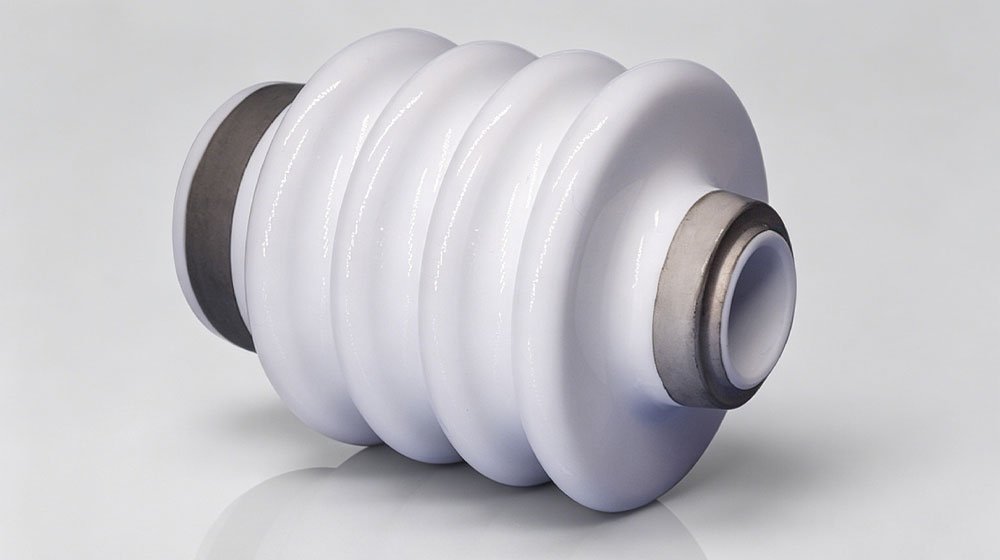
Case 1: Ceramic Insulator for X-ray Tube
A customer was developing a ceramic insulator for an X-ray tube operating at a voltage of several tens of kilovolts.
Initially, AlN was considered. However, after engineering evaluation, it was found that the heat generation in this application is distributed and thermal cycling is not severe. As a result, alumina is fully sufficient for the performance requirements.
The final solution adopted was alumina combined with a Mo-Mn metallization process. Helium leak testing passed successfully, batch yield exceeded 98%, and the overall cost was approximately 60% lower than the AlN-based solution.
Performance overspecification leads to unnecessary cost waste. The right material selection is more important than using a higher-end material.
Case 2: Electric Vehicle IGBT Module
A electric vehicle IGBT module operates under high power density conditions, with a working temperature range of -40°C to 150°C.
In the initial design, an alumina substrate was used. However, during thermal cycling tests, chip solder layer cracking occurred due to CTE mismatch with Si.
After switching to an AlN substrate, the issue was resolved. The design passed 1,000 thermal cycling tests and has been successfully applied in mass production vehicles.
CTE mismatch is a fundamental limitation that cannot be solved through process compensation alone. In such cases, changing the material is the correct solution.
Three-Step Selection Guide
Step 1: Hard Screening (Engineering Heuristic Rules)
| Trigger Condition | Material Guidance |
| Extreme heat flux (>50 W/cm²) when thermal design space is limited | Alumina becomes less suitable |
| Large-area (>10×10 mm) Si / SiC / GaN die with ≥500 thermal cycles | Alumina is generally less preferred |
| Large-area (>5 cm²) brazing with Kovar alloy | Alumina is typically preferred due to CTE and process maturity |
| Operating frequency > 6 GHz with strict insertion loss requirements | Alumina is less preferred due to dielectric loss |
If only one material remains clearly preferred, it becomes the primary candidate.
Step 2: Conflict Resolution (Priority Hierarchy)
Thermal failure and CTE-induced cracking have the highest priority, followed by electrical integrity requirements. Cost is considered only when no technical bottlenecks are present.
Step 3: Economic Validation
AlN incremental cost = (unit price of AlN − unit price of alumina) × usage quantity
AlN potential savings = reduction in thermal management complexity + improvement in system reliability (including reduced rework and failure risk)
If potential savings exceed incremental cost → AlN is justified; otherwise, alumina remains the preferred option.
Quick Reference Summary Table
| Decision Dimension | Choose Alumina | Choose AlN |
| Thermal load | Low heat flux, sufficient thermal design space | High or localized heat flux requiring efficient heat dissipation |
| CTE matching | Industry-standard compatibility with Kovar-based sealing systems | Better thermal expansion match for Si / SiC / GaN-based chip integration |
| Operating frequency | DC–6 GHz with acceptable dielectric loss | >6 GHz applications requiring lower dielectric loss and better signal integrity |
| Production scale | Mature, cost-sensitive medium to small batch production | High-performance or large-scale applications where reliability justifies cost |
Alumina is the cost-effective default option, while AlN is chosen for high thermal and high reliability applications.
Frequently Asked Questions
Q1: For feedthrough applications, is AlN better than alumina?
A1: It depends on whether the application involves signal transmission or power carrying.
For standard signal feedthroughs, alumina is sufficient and more cost-effective due to its stable insulation performance and mature processing technology.
For high-current or high-power feedthroughs, AlN is generally preferred, as its higher thermal conductivity and better thermal management capability help reduce temperature rise and improve reliability under high power density conditions.
Q2: Is AlN more prone to cracking than alumina in hermetic housings?
A2: Cracking behavior cannot be determined by ceramic material alone; the key factor is system-level design compatibility.
AlN performs very well in systems with good CTE matching, such as Si / SiC / GaN-based assemblies. However, when brazed to stainless steel housings without proper stress design, cracking risk increases due to thermal expansion mismatch.
Q3: Is the metallization reliability of AlN worse than that of alumina?
A3: If the metallization process is well controlled, both alumina and AlN can achieve high hermetic reliability.
However, AlN is more sensitive to process parameters such as sintering control, surface oxidation, and interface quality, making supplier process capability a critical factor for consistency.
Conclusion
There is no absolute answer to whether to choose “metallized Alumina or AlN”.
From an engineering perspective, metallized alumina and metallized AlN do not have a universal superiority relationship.
Alumina is more suitable for mature, cost-sensitive systems, while AlN is more suitable for high heat flux and high-performance applications.
Cost savings from alumina do not always translate into system-level value, and higher cost of AlN does not necessarily result in proportional reliability improvement. Only proper application matching is the real engineering principle.
If you are evaluating ceramic materials for hermetic packaging applications, you can explore our metallized ceramic component solutions for alumina and AlN-based designs to find suitable options for your application requirements.