


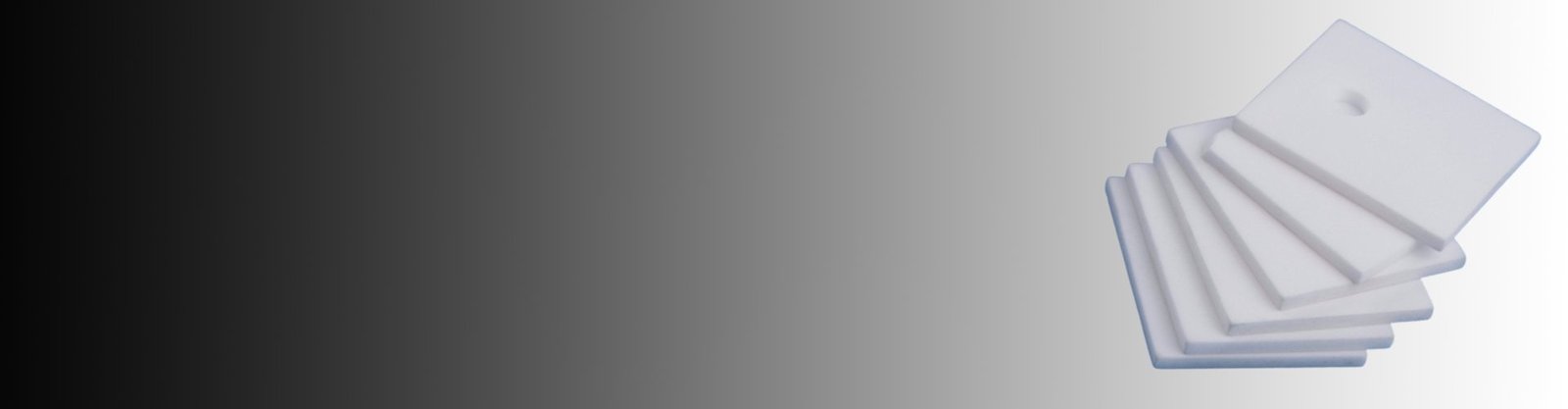
Features and Benefits
Ceramic setter plates are high-temperature ceramic supports used in kilns to carry products during sintering while maintaining dimensional stability and thermal resistance.
- Ideal flatness and low roughness (<1.5μm);
- Designed for demanding thermal cycling applications;
- High-temp stability if even extreme heat conditions;
- Chemical durability in various acids-base environments;
- Custom shape availability fit for sintering bespoke parts;
- Energy-saving and precised ceramics after sintering.
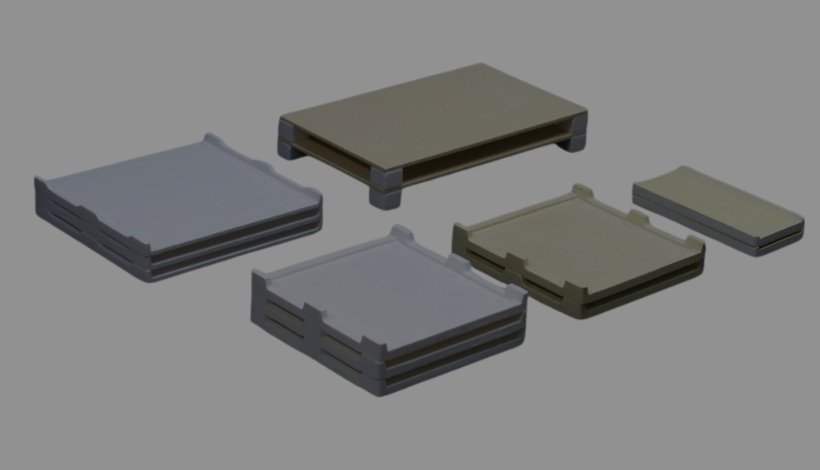
China OEM Manufacturer of Ceramic Setter Plates
Advanced ceramic setter plates play a crucial role in sintering molded parts. They can make your components more precise in terms of dimensions and shapes, and reduce energy consumption. In comparison with traditional graphite and tungsten setter plates, ceramic setter plates can significantly promote your parts’ quality and also generate more competition.
Our facility manufactures a wide range of ceramic setter plates, the material covers high-purity alumina, aluminum nitride, boron nitride, zirconia, mullite, etc. They can be formed by dry pressing, cold isostatic pressing, or hot pressing with custom geometries, and the maximum size is up to 500mm.
Ceramic setter plates require precision surface grinding to minimize deformation and ensure the achievement of desired dimensions after sintering. For more information on plate thickness, dimensions, edge design, and material selection, see our alumina setter plate design guide.
These products are highly versatile and ideally suited for sintering processes such as Ceramic Injection Molding (CIM), Metal Injection Molding (MIM), and Low Temperature Co-fired Ceramics (LTCC).
Ceramic Setter Plates by Material
We offer ceramic setter plates in various materials.
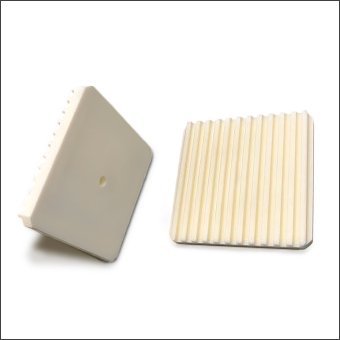
High-temperature stability (1,600°C) and electrical insulation for kiln furniture and furnace components.
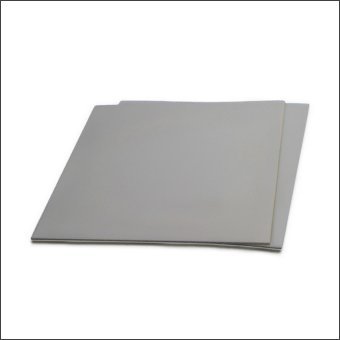
Ultra-high thermal conductivity (170–200 W/m·K) for semiconductor wafer annealing and LED packaging.
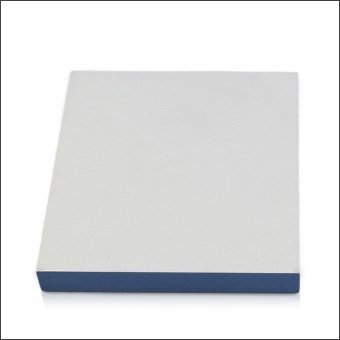
Non-stick surface and chemical inertness, and mainly used for molten metal handling and CVD processes.
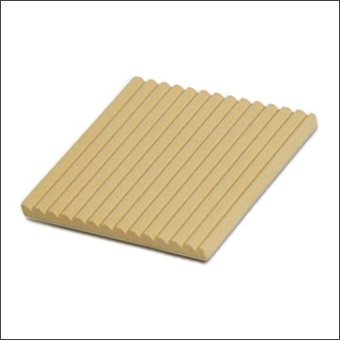
High fracture toughness (6–8 MPa√m) for precision sintering of dental and aerospace components.
Ceramic Setter Plates by Features
Below are some of the products we have previously made. We can support your customization needs.
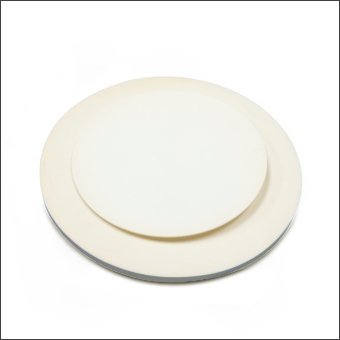
Uniform heat distribution for ceramic or powder metallurgy sintering in rotary kilns.
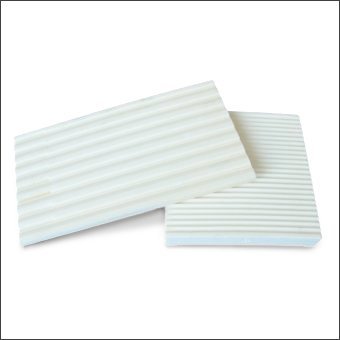
Secure holding of cylindrical workpieces in high-temperature brazing and glass molding.
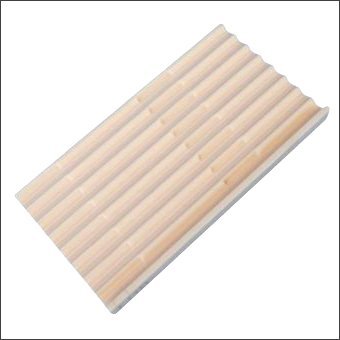
Corrosion-resistant support for wire mesh catalysts in chemical reactors.
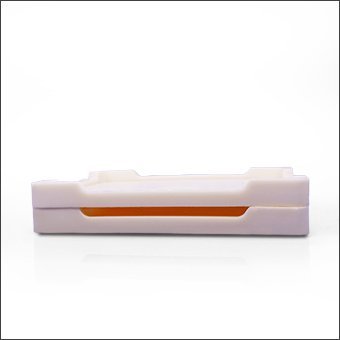
Multi-layer stacking for batch processing of electronic ceramics and battery materials.
A Quick Guide for Ceramic Setter Plates
Compared with traditional setter plates, ceramic setter plates significantly improve the stability, precision and efficiency of the high-temperature sintering process, and are particularly suitable for the production of high-value-added and high-complexity products.
Material Properties of Ceramic Setter Plates
| Property | Alumina
(Al2O3) |
Zirconia (ZrO2) | Aluminum nitride (AlN) | Silicon Nitride
(Si3N4) |
Boron Nitride
(h-BN) |
|
| Max. Use temperature (℃) | Air | 1600~ 1700 | 1500~ 1600 | 1000~1300 | 1200 ~1400 | 800~1000 |
| Inert or
vacuum |
1800~1900 | 2200~2400 | 1800~2000 | 1600~1700 | 1800~2400 | |
| Thermal Conductivity (W/m·K) | 20~30 | 2~3 | 170~230 | 30~40 | 30~60 | |
| Thermal Expansivity
(× 10-6/ ℃) |
7~8 | 10~11 | 4.5 | 3.2 | 1~3 | |
| Bending Strength
(MPa) |
350~450 | 900~1000 | 350 | >1000 | ||
| Hardness
(HV/GPa) |
15~20 | 12~14 | 9~9.5 | 24~30 | 0.3~1 | |
| Thermal Shock Resistance | Good | Better | Good | Best | Best | |
| Chemical Stability | Resistant to acid and alkali, and corrosion-resistant | High inertness and resistant to molten metals | Corrosion Resistance | Resistant to acid and alkali, oxidation resistance | Resistant to molten metals and acids-base | |
Note: Our ceramic setter plates are designed to withstand repeated thermal cycling and demanding high-temperature environments. Proper material selection, plate design, and handling are important for minimizing cracking and extending service life. Learn more about why alumina setter plates crack.
Typical Applications
- For the sintering of electronic component materials
- For the heat treatment of metal injection products
- Kiln setters for support and hold use
- Jigs for the brazing process
Traditional setter plates are usually made of metal (i.e: stainless steel and other heat-resisting alloy) and graphite. Compared to traditional setter plates, advanced ceramic setter plates have the following advantages:
- Better high-temperature resistance: Silicon nitride and silicon carbide setter plates can withstand 1600℃, but metal setter plates may soften at 1200℃.
- Lower thermal expansivity: Silicon nitride, silicon carbide, and boron nitride setter plates can withstand rapid temperature rises and drops without cracking.
- Optimized mechanical strength: As the hardness of advanced ceramics is similar to diamond, so the wear resistance and mechanical strength of ceramic setter plates are much higher than traditional ones.
- Exceptional chemical stability: They can resist corrosion, oxidizing without pollution risk because of high purity of raw material.
- Cost advantage: The service life of ceramic setter plates are much longer than traditional ones with less maintenance, so the overall cost is lower accordingly.
- Idea for extreme working conditions: Ceramic setter plates are fit for high-vacuum, inert gas and reducing atmospheres, and high-voltage and high-current fields.
- Other advantages: Lighter in weight, better surface quality and easier to separate ceramic parts after sintering.
Ceramic setter plates have ideal chemical stability, also they can withstand corrosion and molten materials. Please find the following tables in different operation conditions.
| Raw Material | Acid-resistant gas | Alkali-resistant gas | Resistant to Molten metals | Resistant to molten salt/glass |
| Aluminum Oxide
(Al2O3) |
Average – High (<1200℃) |
Average | Average
(Non-active metals) |
Low |
| Aluminum Nitride
(AlN) |
High
(Dry gas) |
Average | High (Except for Al, Ca) |
Low |
| Silicon Nitride
(Si3N4) |
High | High
(<1000℃) |
High (nonferrous) |
Average |
| Boron Nitride
(BN) |
Higher
(In the inert) |
Average | Higher
(inoxidizability) |
Low |
| Zirconium Oxide
(ZrO2) |
High
(Except for HF) |
High
(<800℃) |
High (Except for Al, Cu) |
High |
In most common cases, alumina, silicon nitride, boron nitride, and zirconia ceramic setter plates are used in the sintering process for CIM (Ceramic Injection Molding) parts. You will need to comprehensively consider from four aspects: material properties, part characteristics, operation conditions and cost.
Selecting the appropriate ceramic setter plate for MIM (Metal Injection Molding) parts directly affects the shape quality and dimensional consistency of the parts. Here are some tips for you:
- Alumina setter plates: Lower cost, good corrosion resistance and easy-processing. It’s suitable for Low-load, non-high-precision parts.
- Silicon carbide setter plates: High strength, high thermal conductivity and excellent thermal shock resistance. However, compared to similar products, their prices are higher. They are suitable for high-precision and high-temperature sintering parts.
- Zirconia setter plates: Ultra-high strength, high temperature resistance and low thermal conductivity. However, due to the difficulty of processing, their prices are higher. Therefore, they are fit for high value added MIM parts.
- Silicon nitride setter plates: Extreme high mechanical strength and high thermal shock resistance, with higher costs. They are suitable for extreme temperature fluctuations or high-mechanical loading applications.
Due to the unique process requirements of LTCC (Low Temperature Co-fired Ceramics), such as low-temperature sintering, multi-layer structure, and high-precision alignment, special attention should be paid to the thermal matching, surface quality, and structural design of the ceramic setter plate.
In this application, the commonly used materials include alumina, cordierite, mullite, and aluminum nitride ceramics. The following is a comparison of them in terms of performance, cost, and application.
- Alumina setter plates: Easier to machine, adjustable thermal expansivity, and lower cost. They are fit for general-purpose LTCC, especially non-high-precision multi-layer substrates.
- Cordierite ceramic setter plates: Excellent thermal shock resistance and low CTE with average cost. They are fit for precision LTCC components with high CTE matching requirements.
- Mullite ceramic setter plates: Resist to oxidization in high temperature and average CTE with middle level cost. They are fit for applications requiring antioxidant and CTE matching.
- Aluminum nitride setter plates: High thermal conductivity and adjustable CTE but with higher cost. They are fit for high-frequency or high-power LTCC devices.
Ceramic setter plates are designed to withstand repeated heating and cooling, but their thermal shock performance depends on the material, plate thickness, dimensions, heating and cooling rates, furnace temperature uniformity, and surface condition.
There is no single ΔT value that applies to all ceramic setter plates. For a detailed explanation of thermal shock, temperature gradients, and thermal shock cracking, see our guide to ceramic setter plate thermal shock.