

Introduction
Ceramic burr grinders have become increasingly popular in coffee grinders, spice grinders, grain mills, and precision food-processing equipment due to their excellent wear resistance, corrosion resistance, and stable grinding performance.
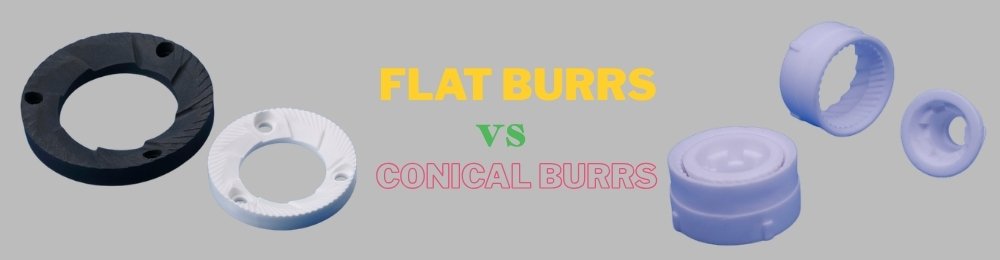
Among all grinding burr designs, two structures dominate the market:
Both flat and conical ceramic burrs are widely used in manual coffee grinders, electric coffee grinders, commercial grinding systems, and specialty food-processing equipment. However, they differ significantly in grinding geometry, particle consistency, heat generation, grinding efficiency, durability, and application suitability.
This article explains the differences between flat burrs and conical burrs, their advantages and disadvantages, ceramic material properties, manufacturing methods, and how to choose the right ceramic grinding burr for your application.
What Is a Ceramic Burr?
A ceramic burr is a precision ceramic grinding component used to crush, shear, and grind coffee beans, spices, grains, or food materials into controlled particle sizes.
Compared with stainless steel burrs, ceramic burrs offer:
- Higher wear resistance
- Better corrosion resistance
- Lower metallic contamination
- Longer service life
- Stable grinding performance
Ceramic burrs are commonly manufactured from high-purity alumina ceramics due to their excellent hardness and dimensional stability.
Flat Burr vs Conical Burr: Basic Structure
Flat Burr
Flat burr grinders use two parallel ring-shaped burrs facing each other. Coffee beans or materials pass between the flat grinding surfaces and are progressively crushed into uniform particles.
Flat burrs are commonly used in:
- Commercial coffee grinders
- Espresso grinders
- Precision grinding systems
Conical Burr
Conical burr grinders use a cone-shaped inner burr rotating inside an outer ring burr. Materials move vertically through the burr geometry and are gradually reduced in size.
Conical burrs are widely used in:
- Manual coffee grinders
- Household grinders
- Low-speed grinding systems
Grinding Performance Comparison
| Property | Flat Burr | Conical Burr |
|---|---|---|
| Particle Uniformity | Excellent | Good |
| Grinding Consistency | Higher | Moderate |
| Heat Generation | Higher | Lower |
| Noise Level | Higher | Lower |
| Grinding Speed | Faster | Moderate |
| Retention | Higher | Lower |
| Espresso Suitability | Excellent | Good |
| Manual Grinding | Less common | Ideal |
Advantages of Ceramic Flat Burrs
Flat ceramic burrs provide:
- Highly uniform particle size
- Better espresso extraction consistency
- Stable grinding geometry
- Excellent grinding repeatability
- High productivity for commercial use
Because flat burrs create more consistent coffee particles, they are widely preferred in professional espresso applications.
Advantages of Ceramic Conical Burrs
Conical ceramic burrs offer:
- Lower heat generation
- Lower grinding noise
- Reduced motor load
- Lower retention
- Better suitability for manual grinders
- More energy-efficient operation
Their lower rotational resistance makes them highly suitable for portable and household grinders.
Why Use Ceramic Burrs Instead of Steel Burrs?
Ceramic burrs offer several advantages over stainless steel burrs:
- Superior wear resistance
- Better corrosion resistance
- Reduced metallic taste contamination
- Longer service life
- Better chemical stability
However, ceramic burrs are generally more brittle and require careful handling to avoid impact damage.
Ceramic Materials Used for Grinding Burrs
Most ceramic burrs are manufactured using:
- High hardness
- Excellent wear resistance
- Cost-effective
- Higher toughness
- Better crack resistance
- Premium applications
High-purity alumina remains the most common material for coffee grinder burrs.
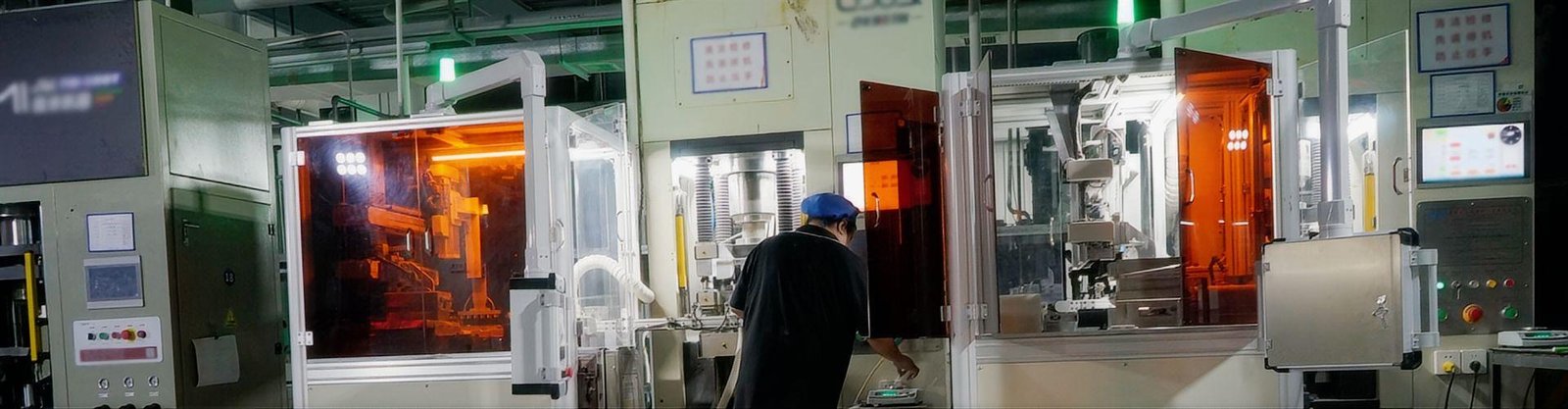
Manufacturing Process of Ceramic Burrs
High-quality ceramic burrs require precision manufacturing processes, including:
- Powder preparation
- Press forming (generally flat burrs for dry pressing, conical burrs for hot pressing)
- Injection molding (generally applicable to sharp, pointed tooth)
- High-temperature sintering
- Precision grinding
- Surface polishing
- Dimensional inspection
Burr geometry accuracy directly affects grinding consistency and service life.
Which Burr Type Is Better for Espresso?
Flat burr grinders are generally preferred for espresso because they produce narrower particle distribution and more consistent extraction.
However, conical burrs are still widely used in espresso systems because of their lower heat generation and smoother workflow.
The best choice depends on flavor preference, workflow, budget, and grinder design.
How Long Do Ceramic Burrs Last?
Under normal household use, ceramic burrs can often last for several years.
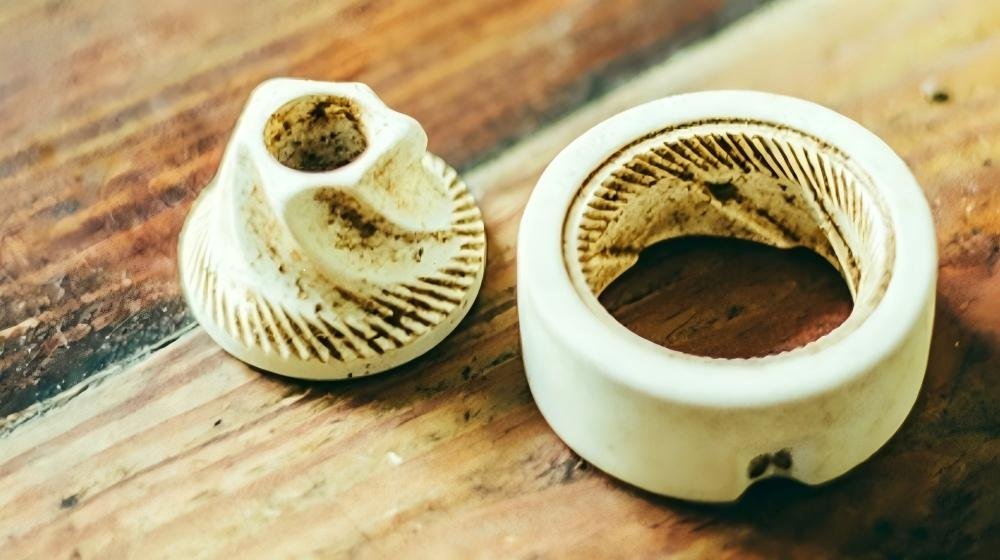
Typical service life depends on:
- Grinding frequency
- Bean hardness
- Foreign particle contamination
- Burr geometry
- Ceramic material quality
Compared with steel burrs, ceramic burrs usually maintain sharpness longer under normal conditions.
FAQ
Q1:Are ceramic burrs better than stainless steel burrs?
Ceramic burrs generally provide better wear resistance and corrosion resistance, while steel burrs offer higher impact resistance.
Q2:Do ceramic burrs affect coffee flavor?
Ceramic burrs reduce metallic contamination and heat generation, which may help preserve coffee flavor consistency.
Q3:Which is quieter: flat burr or conical burr?
Conical burr grinders are generally quieter because they operate at lower rotational resistance and speed.
Conclusion
Both flat burrs and conical burrs offer unique grinding characteristics for coffee and food-processing applications. Flat ceramic burrs provide superior particle consistency and are widely preferred for espresso and commercial grinding systems, while conical ceramic burrs offer lower heat generation, quieter operation, and better suitability for household and manual grinders.
With their excellent wear resistance, corrosion resistance, and long service life, ceramic burrs continue becoming an important solution in modern precision grinding equipment.