


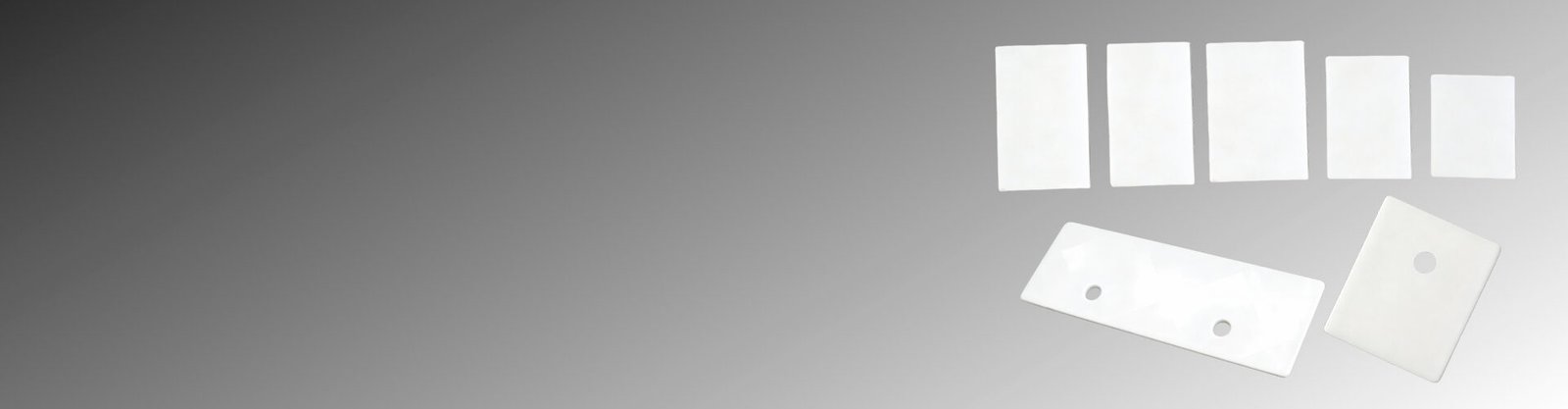
Alumina Ceramic Thermal Plate Overview
Alumina ceramic thermal plates are electrically insulating ceramic components designed to transfer heat away from heat-generating parts. They are commonly manufactured as flat plates, with or without mounting holes, and can be customized in various sizes and thicknesses to meet different thermal management requirements.
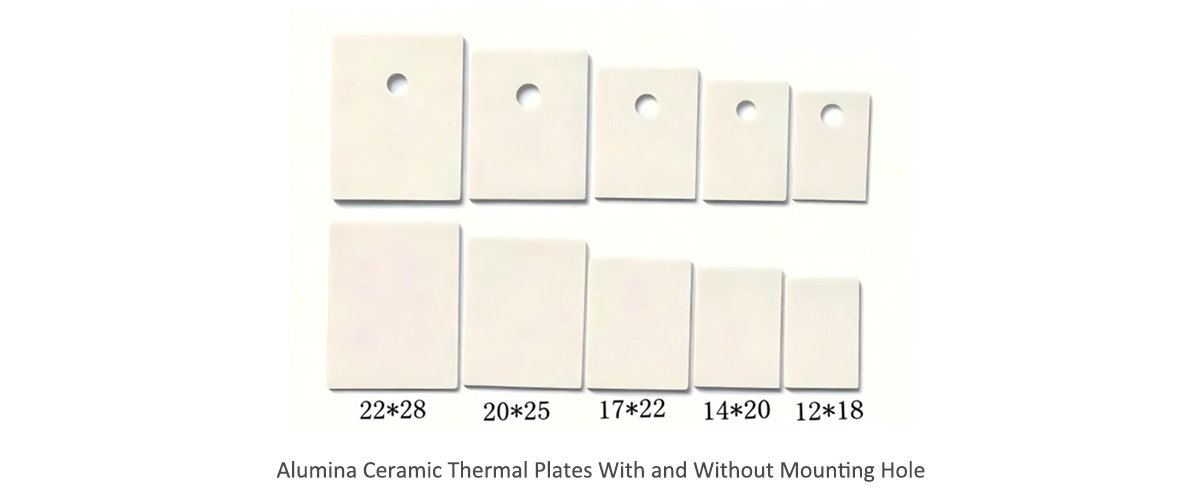
Combining thermal conductivity, electrical insulation, high-temperature resistance, and corrosion resistance, alumina thermal plates are widely used in resistor assemblies, heating equipment, electrical insulation systems, and other applications requiring reliable heat dissipation with electrical isolation.
| Material | Alumina Ceramic (Al2O3) |
| Available Purity | 95% / 96% / 99% / 99.6% |
| Typical Thickness | Customized |
| Thermal Conductivity | 24–30 W/m·K |
| Machining Options | Holes, Slots, Grooves, Custom Shapes |
Why Use Alumina for Thermal Management
Alumina ceramics provide a practical balance between thermal conductivity, electrical insulation, mechanical strength, and manufacturing cost.
Compared with metal materials, alumina ceramics offer inherent electrical insulation and improved corrosion resistance. Compared with high-end thermal ceramics such as aluminum nitride, alumina provides a more economical solution for medium-power heat dissipation applications.
Different alumina purity grades are available to meet varying thermal and cost requirements:
| Alumina Purity | Typical Characteristics | Recommended Applications |
| 95% / 96% Alumina | Cost-effective thermal insulation and heat dissipation performance | General industrial thermal management applications |
| 99% Alumina | Higher thermal conductivity and improved electrical performance | Applications requiring enhanced thermal and electrical properties |
| 99.6% Alumina | Higher thermal stability and lower impurity levels | Precision applications with stricter thermal performance requirements |
In one customer evaluation project involving 22 × 17 × 1 mm alumina ceramic thermal plates, comparative testing of 96%, 99%, and 99.6% alumina materials showed relatively small thermal performance differences under the tested conditions, although the 99.6% alumina version achieved the best overall heat dissipation performance.
Actual thermal management efficiency depends not only on ceramic thermal conductivity, but also on interface design, contact resistance, mounting structure, and airflow conditions.
Key Features
Alumina ceramic thermal plates combine thermal management capability with electrical insulation and structural reliability. The following features make them suitable for a wide range of electronic and industrial heat dissipation applications.

Alumina ceramics combine moderate thermal conductivity with excellent electrical insulation, making them suitable for applications where metal heat spreaders cannot be used directly.

Alumina thermal plates maintain dimensional stability and insulation performance under continuous high-temperature conditions.

The ceramic material resists oxidation, moisture, and many corrosive environments.

Compared with many polymer-based thermal materials, alumina ceramics provide higher rigidity and longer service life.

Custom holes, slots, grooves, and precision geometries can be manufactured according to drawings.

Available in 95%, 96%, 99%, and 99.6% alumina grades to balance thermal performance, purity, and cost requirements.
Thermal Plates vs Ceramic Substrates
Although both thermal plates and ceramic substrates are made from ceramic materials, their structures and primary functions are different. Understanding these differences helps clarify which type of ceramic component is more suitable for a specific thermal management or electronic application.
| Item | Thermal Plate | Ceramic Substrate |
| Primary Function | Heat dissipation & insulation | Circuit carrier |
| Metallization | Usually not required | Commonly required |
| Conductive Circuits | Normally absent | Usually present |
| Typical Use | Thermal management | Electronic packaging |
| Structure Focus | Thermal & mechanical | Electrical integration |
Typical Applications
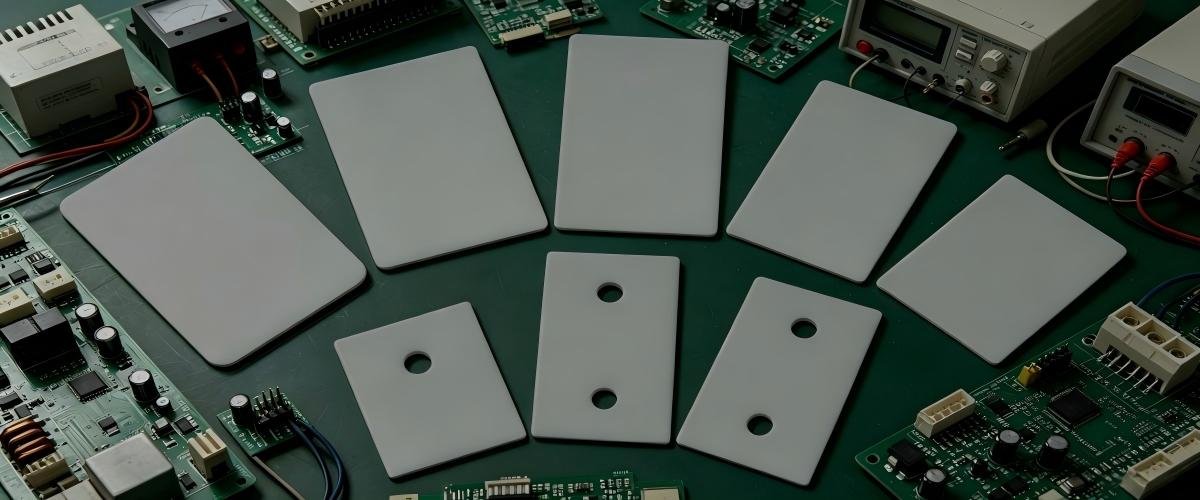
Alumina ceramic thermal plates are widely used in applications that require both heat dissipation and electrical insulation. Their stable thermal performance and structural reliability make them suitable for various electronic and industrial environments.
1. Power Resistors
Provide heat dissipation and electrical insulation for high-power resistor systems.
2. Heating Equipment
Used as thermally stable insulating components in heating and temperature-control systems.
3. High-Voltage Applications
Maintain reliable electrical insulation under elevated thermal operating conditions.
4. Electrical Insulation Systems
Used as insulating thermal barriers between heat-generating components and metal structures.
5. Transformers & Inductors
Provide thermal management and insulation support for magnetic components and coil assemblies.
6. Industrial Equipment
Applied as insulating thermal plates in mechanically demanding industrial environments.
Customization Options
Custom alumina ceramic thermal plates can be manufactured according to drawings or application requirements.
Available customization options include:
- Thickness and dimensions
- Hole patterns and slots
- Surface finish (as-fired / ground / polished)
- Precision machining features
- Flatness and tolerance control
- Material purity selection
Typical configurations include flat plates, mounting-hole structures, and customized thermal ceramic components for thermal management applications.
It is used for passive thermal management in electronic and industrial systems where both heat dissipation and electrical insulation are required.
No. Ceramic thermal plates are usually bare ceramic components without integrated cooling structures, metallization, or circuit layers.
No. Ceramic thermal plates are passive heat-conduction components used for heat dissipation, while ceramic heating plates are active heating elements designed to generate heat.
In general, higher-purity alumina provides better thermal conductivity. However, actual thermal performance also depends on interface conditions, mounting design, and overall thermal management structure.
Yes. Custom holes, slots, grooves, and precision-machined geometries can be manufactured according to drawings or samples.
Related Products
-
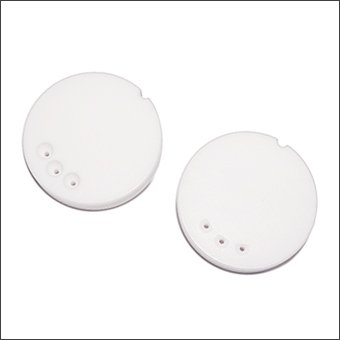
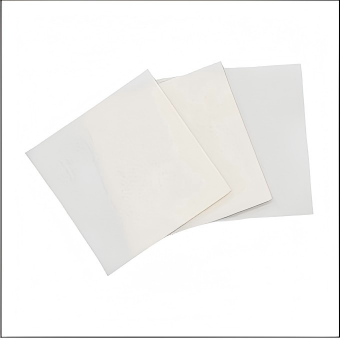
General-purpose insulating ceramic plates for industrial applications.
-
-
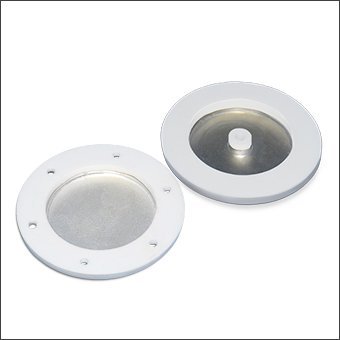
Ceramic plates prepared for ceramic-to-metal joining applications.
-
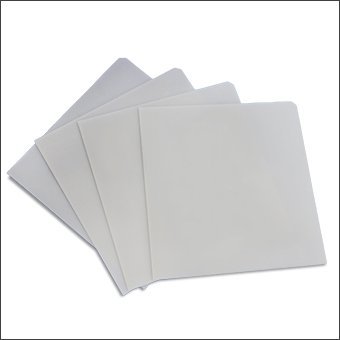
High thermal conductivity substrates for advanced thermal management.
-
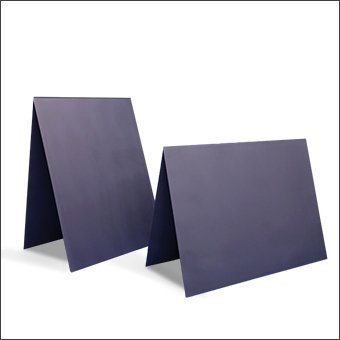
High-strength ceramic substrates for demanding power electronics applications.