


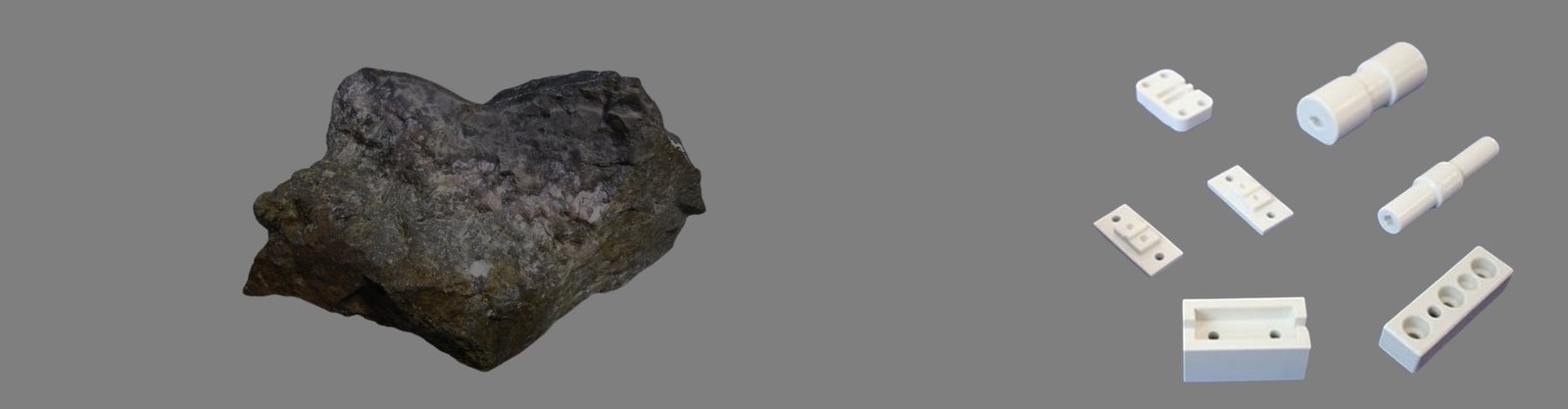
What Is Mullite Ceramic?
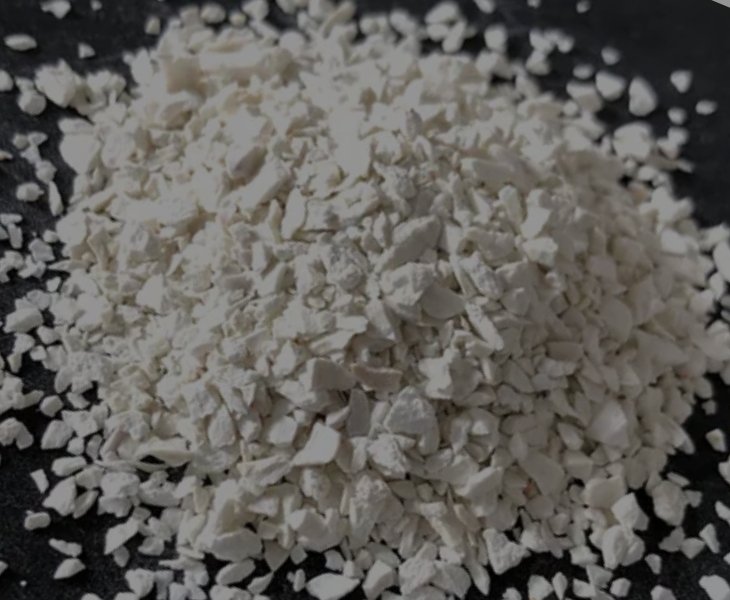
Mullite is an aluminosilicate ceramic phase within the Al₂O₃–SiO₂ system. A commonly referenced stoichiometric composition is 3Al₂O₃·2SiO₂, but practical mullite ceramics can have different alumina-to-silica ratios depending on material composition and manufacturing route.
The performance of a mullite ceramic component depends not only on its nominal composition, but also on density, porosity, grain structure, impurities, forming method and firing conditions. For this reason, material properties should be evaluated according to the specific grade and application rather than using one fixed value for every mullite product.
Typical Properties of Mullite Ceramic
The following values are provided as general engineering references. Actual values vary according to mullite composition, density, porosity and manufacturing process.
| Property | Typical Characteristics |
| Material System | Al₂O₃–SiO₂ |
| Main Phase | Mullite |
| Density | Grade-dependent |
| Thermal Expansion | Relatively low |
| Thermal Shock Resistance | Good, application-dependent |
| High-Temperature Stability | Excellent |
| Electrical Insulation | Good |
| Chemical Stability | Good in selected environments |
| Machinability After Sintering | Diamond grinding and precision machining available |
Engineering Note: For critical applications, we recommend selecting the material according to the required operating temperature, mechanical load, thermal cycling and chemical environment rather than relying on a generic material data sheet.
Mullite Ceramic Products & Forms
Jinghui supplies mullite ceramics primarily for refractory and high-temperature structural applications, where dimensional stability and thermal shock resistance are critical.
Common mullite ceramic product forms include:
-
Mullite ceramic crucibles
-
Mullite ceramic plates and slabs
-
Mullite ceramic rods and tubes
-
Mullite kiln furniture components
-
Custom-shaped mullite refractory parts
These products are widely used in industrial furnaces, heat treatment equipment, and materials processing systems operating under continuous high-temperature conditions.
-
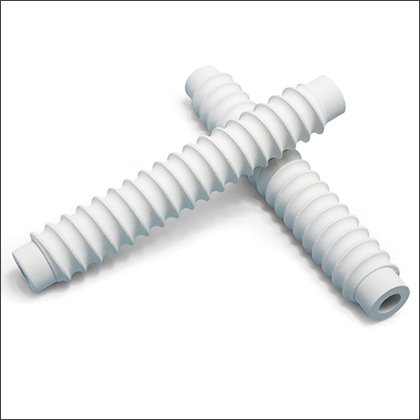 Mullite Ceramic Tubes
 -
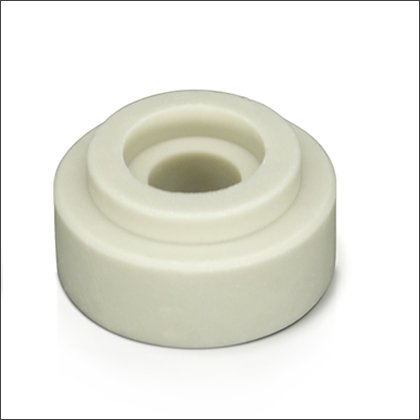 Ceramic Electrical Insulator
 -
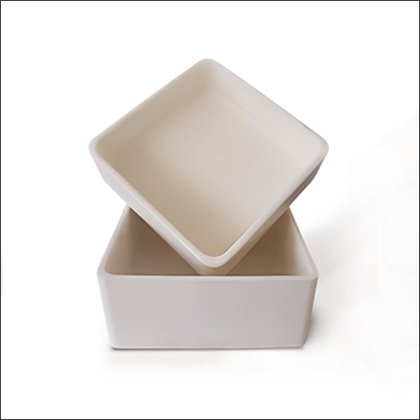 Kiln furniture
Key Advantages of Mullite Ceramics
Mullite ceramic is an aluminosilicate engineering ceramic valued for its high-temperature stability, relatively low thermal expansion, thermal shock resistance and chemical stability.

Mullite maintains good dimensional and structural stability at elevated temperatures, making it suitable for furnace components, kiln furniture and other applications exposed to prolonged heating.
The actual service temperature depends on composition, density, mechanical load, atmosphere and thermal cycling conditions.

Compared with many high-strength structural ceramics, mullite offers a useful combination of relatively low thermal expansion and high-temperature stability. This makes it suitable for components that experience repeated heating and cooling.
Thermal shock performance still depends on component geometry, wall thickness, density and the actual temperature change during operation.

Mullite provides good resistance to many high-temperature environments and can be used in selected refractory and furnace applications.
The actual chemical resistance should be checked against the specific atmosphere, molten material or process chemicals involved in the application.

Mullite generally has a lower coefficient of thermal expansion than conventional alumina ceramics. This can help reduce dimensional changes and thermal stress during temperature cycling.
This property is particularly useful for kiln furniture and furnace structures where dimensional stability is important.

Mullite is electrically insulating and can be considered for selected high-temperature electrical insulation and support applications.
Where electrical insulation is a key design requirement, the required grade, temperature and electrical conditions should be specified during material selection.
Limitations of Mullite Ceramics
To ensure proper material selection, the following limitations should be considered:
-
Lower mechanical strength compared with alumina ceramics
-
Higher thermal conductivity than cordierite ceramics
-
Not suitable for precision load-bearing or impact-resistant applications
-
Limited resistance to prolonged contact with molten metals
Mullite ceramics perform best in environments dominated by thermal stress rather than mechanical stress.
More for Mullite Ceramic Materials
- Typical Applications
- Material Selection
- Manufacturing
- Precision Machining
Refractory & Kiln Furniture Applications
Mullite ceramics are extensively used for:
-
Kiln shelves and setters
-
Furnace linings and structural supports
-
Heat treatment fixtures
Their resistance to thermal deformation and thermal shock significantly extends service life compared with conventional refractory materials.
High-Temperature Industrial Equipment
Mullite components are used in:
-
Furnace insulation structures
-
Thermocouple protection tubes
-
High-temperature processing equipment
Electronics & Insulation Applications
Due to low dielectric loss and thermal expansion compatibility with silicon, mullite ceramics are used in selected electronic substrates and insulating components operating at elevated temperatures.
Mullite vs Alumina vs Cordierite
| Property | Mullite | Alumina | Cordierite |
| High-Temperature Stability | Excellent | Excellent | Good–Excellent |
| Thermal Expansion | Low–Moderate | Moderate | Very Low |
| Thermal Shock | Good | Moderate | Excellent |
| Mechanical Strength | Moderate | High | Lower |
| Electrical Insulation | Good | Excellent | Good |
| Typical Use | Kiln furniture, furnace parts | Structural, electrical, wear parts | Thermal shock applications, kiln furniture |
Material selection tip: No single ceramic material is best for every high-temperature application. Mullite, alumina and cordierite each offer a different balance of thermal, mechanical and chemical properties.
The manufacturing route depends on material grade, component geometry, dimensional requirements and production volume.
1. Material Preparation
Mullite powder is prepared and controlled according to the required material composition and forming process.
2. Forming
Depending on geometry, forming methods may include dry pressing, isostatic pressing, extrusion or other suitable ceramic forming processes.
3. Debinding and Sintering
The formed green body is carefully debound and fired to develop the required density and ceramic microstructure.
4. Precision Grinding
After sintering, diamond grinding can be used to control dimensions, flatness, parallelism and surface finish.
5. Inspection
Finished components can be inspected according to drawing requirements, including dimensional accuracy, surface quality and other specified characteristics.
Precision Machining of Sintered Mullite Ceramics
Sintered mullite is hard and brittle, so conventional metal cutting methods are generally unsuitable for precision finishing. Diamond grinding and other ceramic machining techniques are commonly used when tighter dimensional or surface requirements are needed.
Typical post-sintering machining may include:
- Surface grinding
- Double-side grinding
- OD and ID grinding
- Precision lapping
- Polishing
- CNC ceramic machining
For complex components, machining requirements should be considered during the initial design stage to balance precision, yield and manufacturing cost.
Related Materials
-
ZTA ceramics combine the hardness of alumina with the toughness of zirconia, making them suitable for cutting tools and wear-resistant components.
-
Cordierite ceramics have ultra-low thermal expansion and are resistant to thermal shock, making them suitable for use as catalyst carriers and thermal insulation materials.
-
The machinable ceramics have excellent machinability and can be machined using traditional metalworking tools.
-
Steatite ceramics are low-cost, high-frequency insulators, and have low mechanical strength, making them suitable for use in general equipment parts.
-
Silicon nitride ceramics are high-strength, lightweight, and thermally shock resistant advanced ceramics commonly used in bearings and turbine components.
Custom Mullite Ceramic Components
JingHui Ceramic supplies custom mullite ceramic components based on customer drawings, samples and application requirements.
We can evaluate:
- Material grade
- Component dimensions
- Tolerance requirements
- Operating temperature
- Thermal cycling
- Mechanical load
- Chemical atmosphere
- Surface finish
- Production volume
From Prototype to Production
For new mullite ceramic components, we can support the process from drawing review and prototype development to production and inspection.
Send us your drawing or sample for an engineering review.
Mullite is worth considering when the application requires:
- High-temperature structural stability
- Relatively low thermal expansion
- Repeated heating and cooling
- Good electrical insulation
- Kiln furniture or furnace components
- A balance between thermal and mechanical performance
Mullite is an aluminosilicate ceramic in the Al₂O₃–SiO₂ system. The commonly referenced stoichiometric composition is 3Al₂O₃·2SiO₂, but commercial mullite ceramics can have different compositions and microstructures. The actual performance depends on alumina-to-silica ratio, density, porosity, impurities and firing conditions, so the material should be selected according to the specific application.
Neither material is universally better. Mullite is attractive when relatively low thermal expansion, thermal shock resistance and high-temperature dimensional stability are important. Alumina generally offers higher mechanical strength, hardness and excellent electrical insulation. For kiln furniture and furnace components, mullite may be preferred in some thermal cycling conditions, while alumina may be a better choice when strength, wear resistance or electrical insulation is the main priority.
Yes. Mullite is commonly considered for kiln furniture because it combines high-temperature stability, relatively low thermal expansion and useful thermal shock resistance. It can be manufactured into setter plates, shelves, supports, spacers and custom firing fixtures. The suitable grade and structure should be selected according to firing temperature, product weight, thermal cycling and kiln atmosphere.
Mullite is specifically valued for high-temperature applications because it maintains good structural and dimensional stability at elevated temperatures. However, the maximum usable temperature should not be treated as a single value for every mullite product. Component geometry, density, mechanical load, atmosphere, thermal cycling and material composition all affect actual service performance. JHCERAM can evaluate these conditions when selecting a material for a specific component.
Yes. Mullite ceramic components can be customized in different shapes and dimensions, including plates, tubes, rods, crucibles, setter plates and other refractory structures. For precision components, post-sintering diamond grinding and machining can also be considered. Customers can provide drawings, samples, dimensions, tolerances and operating conditions so that the manufacturing process and material grade can be evaluated before production.