


Introduction
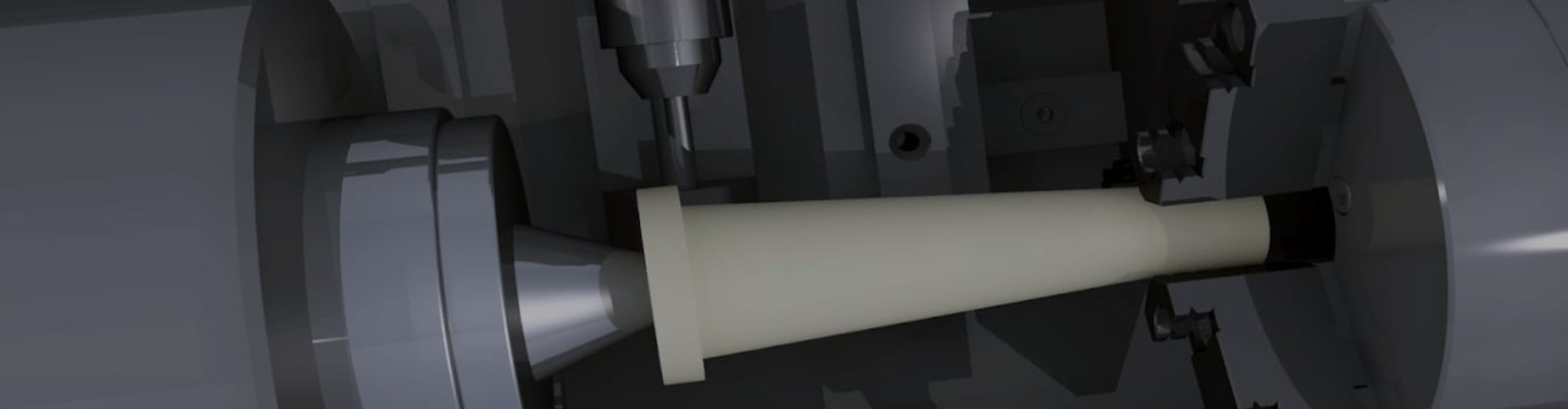
Precision ceramic components are not defined by dimensional accuracy alone. Material properties, part geometry, forming and sintering behavior, machining method, tolerance requirements, surface condition and operating environment all influence the final performance of a ceramic component.
Unlike metals, advanced ceramics combine high hardness with brittle behavior. This makes material removal, edge protection, dimensional control and surface integrity important considerations throughout the manufacturing process.
This Technology Hub brings these engineering factors together to help engineers select suitable ceramic materials, define practical tolerances, choose appropriate machining processes, design ceramic parts for manufacturability and understand common machining-related failure mechanisms.
Precision Ceramic Engineering Fundamentals
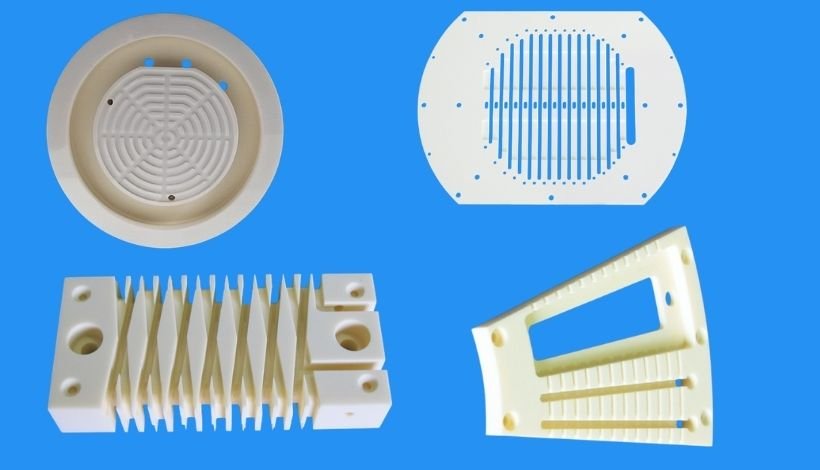
Precision ceramic manufacturing begins with understanding the relationship between material, geometry and process.
A ceramic component may require post-sintering machining because the as-fired part cannot always achieve the required dimensional accuracy, surface condition or functional geometry. However, machining performance is strongly influenced by the material’s hardness, fracture behavior, microstructure and thermal properties.
For this reason, a precision ceramic design should be evaluated as a complete manufacturing system rather than by dimensional requirements alone. Key engineering factors are as follow:
Material
Hardness, fracture toughness, thermal properties, electrical properties and chemical resistance influence both application performance and machinability.
Geometry
Wall thickness, hole depth, internal corners, slots, edges and aspect ratios affect machining accessibility and fracture risk.
Process
Grinding, CNC machining, laser processing, lapping, polishing and other processes have different capabilities and limitations.
Tolerance
Tolerances should be related to the actual function of the component rather than specified as tightly as possible.
Surface Condition
Surface roughness, grinding damage, edge condition and subsurface defects may influence sealing, wear, friction and reliability.
Operating Conditions
Temperature, mechanical loading, chemical exposure, electrical requirements and thermal cycling can affect material selection and design.
The best precision ceramic design is not necessarily the one with the tightest tolerance. It is the one that achieves the required function with an appropriate balance of material, geometry, process and reliability.
Ceramic Material Selection for Precision Components
Ceramic material selection should begin with the required function rather than with a single material property.
Different advanced ceramics offer different combinations of hardness, toughness, thermal performance, electrical insulation, chemical resistance and dimensional stability. The appropriate material therefore depends on the operating environment and the functional priorities of the component.
Select Materials by Functional Requirement
| Functional Requirement | Materials to Consider |
|---|---|
| Electrical insulation | Alumina, AlN |
| High toughness and mechanical load | Zirconia, ZTA |
| Thermal management | AlN, Si₃N₄ |
| Thermal shock and mechanical reliability | Si₃N₄, Alumina |
| Wear resistance | Alumina, Zirconia, Si₃N₄ |
| High-temperature structural applications | Alumina, Si₃N₄, SiC |
| Specialized machinability or prototyping | Machinable glass ceramics |
These are general engineering considerations rather than universal material rules. Final selection should consider the complete operating environment, geometry and manufacturing process.
Material Properties That Affect Machining
The same machining process may behave differently when applied to different ceramic materials.
Important factors include:
- Hardness
- Fracture toughness
- Grain structure
- Thermal conductivity
- Thermal expansion
- Porosity and microstructure
- Material homogeneity
Material selection should therefore be considered together with the intended machining process.
Ceramic Machining Process Selection
No single machining process is suitable for every precision ceramic component. Process selection should consider the material, geometry, dimensional requirements, surface finish, production volume and risk of edge or subsurface damage.
Choose the machining process according to the required function and geometry—not simply according to the highest achievable precision.

Diamond grinding is commonly used for post-sintering ceramic machining where dimensional accuracy and controlled surface quality are required.
Typical applications include:
- Surface grinding
- OD grinding
- ID grinding
- Cylindrical grinding
- Flatness and parallelism correction
Grinding is particularly useful when dimensional control is more important than high material removal rates.

CNC machining can be used for complex ceramic geometries and features such as:
- Slots
- Holes
- Profiles
- Steps
- Pockets
- Complex contours
The suitability of CNC machining depends strongly on material properties, feature geometry and required surface quality.

Laser processing is useful for selected ceramic features where non-contact material removal is advantageous.
Potential applications include:
- Scribing
- Cutting
- Small features
- Micro-scale openings
- Marking
Thermal effects and edge quality should be considered when selecting laser parameters.

Lapping and polishing are used when tighter surface control is required.
Typical functional requirements include:
- Sealing surfaces
- Sliding interfaces
- Optical or reflective surfaces
- Semiconductor-related components
- Precision reference surfaces
A smoother surface is not automatically better for every application. The required surface condition should be determined by function.

Ultrasonic machining uses abrasive action combined with ultrasonic vibration and can be considered for selected brittle ceramic features.
Its suitability depends on material, geometry, feature size and required dimensional accuracy.
Design for Ceramic Machining
Ceramic components should be designed with the manufacturing process in mind from the beginning. Because ceramics have limited ability to absorb plastic deformation, certain geometries can increase the risk of chipping, cracking or dimensional variation during machining.
Engineering principle: A ceramic component that is easy to machine is usually easier to control consistently in production.

Avoid unnecessarily thin walls, especially where the feature must withstand machining forces or mechanical loading.
Where thin sections are unavoidable, the material, geometry, fixturing and machining sequence should be evaluated together.

Hole diameter, depth, aspect ratio and access for the machining tool can affect both manufacturability and dimensional control.
Deep and narrow features generally require more careful process planning.

Sharp internal corners can increase local stress concentration and machining difficulty.
Where function permits, suitable corner radii can improve manufacturability and reduce damage risk.

Deep cavities may create difficulties with tool access, debris removal, cooling and dimensional inspection.
The required depth should therefore be evaluated together with cavity width and tool accessibility.

Sharp edges are more vulnerable to chipping during machining and handling.
Where sharp edges are not functionally necessary, chamfers or controlled edge radii can improve robustness.

A feature that cannot be accessed reliably by the selected tool may increase machining time, process variation and inspection difficulty.
Designers should consider:
- Tool access
- Fixturing
- Datum surfaces
- Machining sequence
- Inspection access
Ceramic Machining Tolerance & Surface Finish
Tolerance and surface finish should be specified according to function.
Applying unnecessarily tight tolerances to every feature can increase machining difficulty and inspection requirements without improving the performance of the final component.
-
Functional Tolerance
First identify which dimensions affect the function of the component.
Examples include:
- Mating dimensions
- Sealing dimensions
- Positioning features
- Bearing or sliding interfaces
- Electrical clearance
- Assembly alignment
Non-functional dimensions may not require the same tolerance level.
-
Dimensional Accuracy
Achievable accuracy depends on:
- Material
- Part size
- Geometry
- Machining process
- Fixturing
- Thermal conditions
- Inspection method
Therefore, a single “standard ceramic tolerance” should not be applied to every component.
-
Flatness and Parallelism
Flatness and parallelism are important where ceramic surfaces are used for:
- Sealing
- Mounting
- Positioning
- Thermal interfaces
- Precision assembly
These requirements should be defined according to the actual contact and assembly conditions.
-
Surface Roughness
Surface roughness should also be function-driven.
For example:
Sealing surfaces may require controlled surface roughness and flatness.
Sliding surfaces may require a surface condition appropriate for friction and wear.
Bonding surfaces may require a specific surface condition compatible with the joining process.
-
Avoid Over-Specification
A common engineering mistake is to specify the tightest possible tolerance simply because the material and machining process can potentially achieve it.
A better approach is:
Function → Critical Dimension → Required Tolerance → Suitable Process → Inspection Method
Ceramic Machining Process Control
Consistent ceramic machining requires more than selecting the correct machine.
Process stability is influenced by the interaction between tooling, machining parameters, cooling, fixturing, material characteristics and inspection.

Grinding conditions should be selected according to the ceramic material and required surface quality.
Important variables may include:
- Wheel specification
- Feed rate
- Grinding depth
- Wheel speed
- Dressing condition
- Cooling

Diamond tools are commonly used because advanced ceramics are highly abrasive and hard.
Tool selection should consider:
- Ceramic material
- Grinding mode
- Required surface finish
- Material removal rate
- Part geometry
- Production volume

Local heat generation during machining can affect ceramic surface integrity.
Appropriate cooling and process control can help manage thermal effects and reduce the risk of machining-related damage.

Ceramic components should be supported adequately during machining.
Poor fixturing can contribute to:
- Edge breakage
- Vibration
- Dimensional variation
- Local stress concentration

For complex components, the sequence of roughing, semi-finishing, finishing, grinding and polishing can affect the final result.
A suitable process sequence should consider both dimensional control and damage prevention.
Ceramic Machining Defects & Failure Mechanisms
A visually acceptable ceramic component can still contain machining-related damage below the visible surface.
Failure analysis should therefore consider not only final dimensions, but also edge condition, surface integrity, subsurface damage and the relationship between machining and subsequent assembly or service conditions.
| Defect / Failure Mode | Typical Contributing Factors |
|---|---|
| Chipping | Edge geometry, machining force, tooling condition |
| Cracking | Mechanical stress, thermal stress, material properties |
| Edge Breakage | Sharp edges, fixturing, handling |
| Subsurface Damage | Grinding conditions, material microstructure |
| Surface Damage | Tool selection, process parameters |
| Dimensional Variation | Process stability, thermal effects, fixturing |
| Warpage | Sintering behavior, residual stress, geometry |
Engineering approach to failure analysis
When a ceramic component fails, avoid focusing on a single process parameter immediately.
A useful investigation sequence is:
Material → Geometry → Forming / Sintering → Machining → Inspection → Assembly → Operating Conditions
This approach helps distinguish machining-related defects from material, design or application-related problems.
Ceramic Machining Inspection
Inspection should be connected directly to the function and risk of the component. Instead of measuring every feature with the same level of attention, critical characteristics should be identified according to the drawing, assembly requirements and operating conditions.
Engineering principle:Inspection should verify the characteristics that matter to function—not simply generate more measurement data.
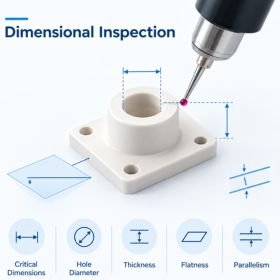
Typical characteristics include:
- Critical dimensions
- Hole diameter
- Thickness
- Flatness
- Parallelism
- Position
- Profile
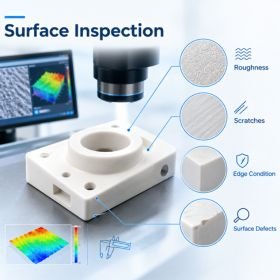
Depending on the application, inspection may include:
- Surface roughness
- Scratches
- Grinding marks
- Edge condition
- Visible surface defects
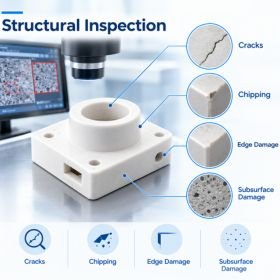
Where appropriate, inspection should consider:
- Cracks
- Chipping
- Edge damage
- Subsurface damage
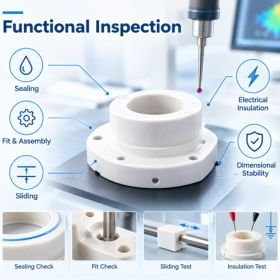
Some ceramic components require inspection based on their intended function, such as:
- Sealing
- Fit and assembly
- Sliding behavior
- Electrical insulation
- Dimensional stability
Ceramic Machining Cost Drivers
The cost of a precision ceramic component is influenced by the complete manufacturing route rather than by material cost alone.
Important cost drivers include:
- Material type
- Material utilization
- Geometry complexity
- Machining time
- Tolerance requirements
- Surface finish
- Inspection requirements
- Production volume
- Process stability and yield
Engineering insight
A component with unnecessarily tight tolerances or complex geometry may require additional machining and inspection without providing additional functional value.
Cost optimization should therefore begin at the design stage.
A practical approach is:
Function → Material → Geometry → Process → Tolerance → Inspection → Production Volume
Precision Ceramic Engineering Articles
Explore detailed engineering topics related to material selection, ceramic machining, design and reliability.
Browse all precision ceramic engineering articles →
- Material & Design
- Machining & Process
- Tolerance, Surface & Reliability
- Application & Component Guides
Precision Structural Ceramics Guide
Precision Structural Ceramics: Selection, Design, Processing, and Failure Analysis
Browse Article →
Why Ceramics Are Increasingly Used in Medical Devices
In many cases, electrical insulation, sterilization resistance, dimensional stability, and long-term reliability are equally important.
Browse Article →
Ceramic Sensor Housing Guide
Ceramic Sensor Housing: Benefits, Applications, and Custom Solutions
Browse Article →
Design & Machining Guide for Precision Ceramics
Designing and machining ceramic parts is very different from designing metal components.
Browse Article →
The Balance in Ceramic Manufacturing
The Balance in Ceramic Manufacturing: Volume Planning, Design Complexity, and Cost
Browse Article →
Thin Wall Ceramic Machining Challenges
Thin Wall Ceramic Machining Challenges: Design Guidelines, Manufacturing Methods and Failure Prevention
Browse Article →
CNC vs. Grinding
CNC machining and diamond grinding serve different primary purposes. Which ceramic machining process is right for you?
Browse Article →
Ceramic Machining Tolerance
Ceramic Machining Tolerance: Cost and Surface Roughness Guide
Browse Article →
Ceramic Machining Risk Management
This article will systematically analyze the main causes of ceramic failure based on typical cases and engineering experience.
Browse Article →
Ceramic Microcrack Prevention
Understanding surface and subsurface damage generated during ceramic machining.
Browse Article →
Ceramic Seal:
Ceramic Seal Ring Design Browse Article →
Alumina vs Zirconia for Sealing Applications Browse Article →
Why Do Ceramic Pump Pistons Crack Browse Article →
Ceramic Plungers vs Stainless Steel Plungers Browse Article →
Textile Ceramics:
Ceramic Guide Components for Textile Machinery Browse Article →
How Long Should Textile Ceramic Guides Last Browse Article →
Setter Plates:
Alumina Setter Plates Design, Failure & Selection Guide Browse Article →
Why Alumina Setter Plates Crack Browse Article →
Ceramic Setter Plate Thermal Shock Browse Article →
Precision Ceramic Applications
Precision ceramic components are used where material properties and dimensional control are both important.
Semiconductor Equipment
Ceramic components can be used for handling, positioning, insulation, wear resistance and other demanding equipment functions.
Medical Equipment
Ceramics may be selected where dimensional stability, wear resistance, chemical compatibility or electrical insulation is required.
Fluid Control
Ceramic components can be used in valves, pumps, seals and other fluid-handling systems where wear and chemical resistance are important.
Industrial Equipment
Precision ceramics can serve as insulating, wear-resistant, high-temperature or structurally stable components in industrial machinery.
Power and Electronics
Selected ceramic materials can provide electrical insulation, thermal performance and dimensional stability for electronic and power-related components.
Need Help With a Precision Ceramic Design?
Have a ceramic component drawing, material requirement or machining challenge?
We can review the design from the perspectives of:
- Material selection
- Manufacturability
- Machining process
- Tolerance
- Surface finish
- Inspection requirements
Share your drawing, critical dimensions, operating conditions or surface requirements with our engineering team.
Precision ceramic components are engineered ceramic parts that undergo controlled manufacturing and, where required, post-sintering machining to achieve the dimensional, surface and functional requirements of a specific application.
Advanced ceramics combine high hardness with brittle behavior. Unlike metals, they have limited plastic deformation capability, so inappropriate machining conditions can cause chipping, cracking or surface damage.
Tolerance should be determined according to the function of each feature. Critical dimensions may require tighter control, while non-functional dimensions can often use more practical tolerances.
Grinding is commonly considered when dimensional accuracy, flatness, parallelism or controlled surface quality is important, particularly after sintering.
Common contributing factors include material properties, sharp geometry, machining forces, tooling condition, thermal effects, fixturing and process parameters.
Surface condition can influence sealing, friction, wear, contact behavior and assembly performance. The required surface finish should therefore be defined according to the actual function.
Design should consider wall thickness, hole geometry, internal corners, edge conditions, tool accessibility, fixturing and inspection requirements.
Complex geometry, deep features, tight tolerances and difficult-to-access surfaces can increase machining time, process complexity and inspection requirements.
Defect reduction usually requires coordinated control of material selection, geometry, tooling, machining parameters, cooling, fixturing and inspection rather than changing a single process parameter.