

On January 19, 2026, Beijing time, the return capsule of China’s Shenzhou-20 spacecraft successfully returned to Earth, its exterior intact and its contents undamaged. Previously, the outermost glass of the spacecraft’s window had been struck by space debris, resulting in a minor crack. After on-orbit repairs, the spacecraft was no longer intended for manned missions and was repurposed for cargo return. This article will explore the implications of material reliability under extreme conditions, starting with this in-orbit spacecraft repair incident.
Material Failure Modes
In this case, many people’s first reaction is: since the glass has cracked, does that mean the material is unreliable? Can the repaired spacecraft still be used? With these questions in mind, let’s analyze this in depth.
1. Material Reliability Does Not Equate to Never Having Problems
Let me give you an example. Imagine a ceramic bushing that shows slight wear after two years of use, but the wear rate remains stable. Engineers might predict it can still be used safely for another year—this is a high-reliability material. However, if the same ceramic bushing, with an intact surface, suddenly shatters, then it’s a low-reliability material.
Returning to the spacecraft window issue, although the outermost glass developed a crack, it didn’t fail instantly. Experts can assess the nature of the crack, predict its propagation trend, and determine the maximum damage the spacecraft can withstand. The crack can be assessed, and the propagation trend can be calculated, indicating that the material’s failure mode is clear—this is the core characteristic of high-reliability materials.
2. Material Failure Does Not Equate to System Failure
The windows of the Shenzhou spacecraft are not constructed from a single material layer but feature a multi-layered redundant design. This is a perfect combination of high-reliability engineering design and high-reliability materials. So, how should the windows be repaired? After in-depth discussions, the ground team ruled out the option of directly applying patches from outside the cabin, making internal reinforcement the only viable solution. The specific approach involved adding a protective shield to the inner window. This shield not only withstands cracks and prevents their propagation but also enhances local heat resistance and sealing capabilities. Judging from the actual landing of the spacecraft, this repair solution was highly effective. This teaches us that excellent engineering design does not rely on materials that never have problems, but rather allows for problems to be controllable, assessable, and repairable.
Long-Term Stability of Material Properties
We need to pay attention to a fact often overlooked in material selection: extremely high single-point performance does not necessarily mean more reliable long-term performance. Why is “long-term stability” more important than “initial performance”? Let me give you an example. Suppose you have the following two materials, which one would you choose?
| Material A | Material B |
| Initial strength: 1000 MPa
After 3 months: Performance decreases by 30% After 6 months: Cracks become obvious Scrapped after 1 year |
Initial strength: 650 MPa
After 3 years: Performance decreases by <10% Remains stable after 5 years |
I’d guess 99% of industrial customers would choose material B. This is because equipment downtime costs far outweigh material costs. In practical applications, engineers tend to choose material solutions with high batch consistency, mature processes, predictable long-term performance, and assessable risks.
The Engineering Logic of Material Reliability
The spacecraft’s original mission was manned return, but it was later changed to cargo return. This was an engineering decision to reduce mission risk. Such decisions happen every day in the industrial sector.
| Situation | Handling Method |
| New equipment | Full load operation |
| Slight wear | Reduced load operation |
| Increased risk | Switch to low-risk operation |
| Uncontrollable risk | Shutdown and replacement |
The handling method will be adjusted accordingly based on specific situations. This is not a material failure, but rather the reliability engineering management system at work.
Lessons for Us
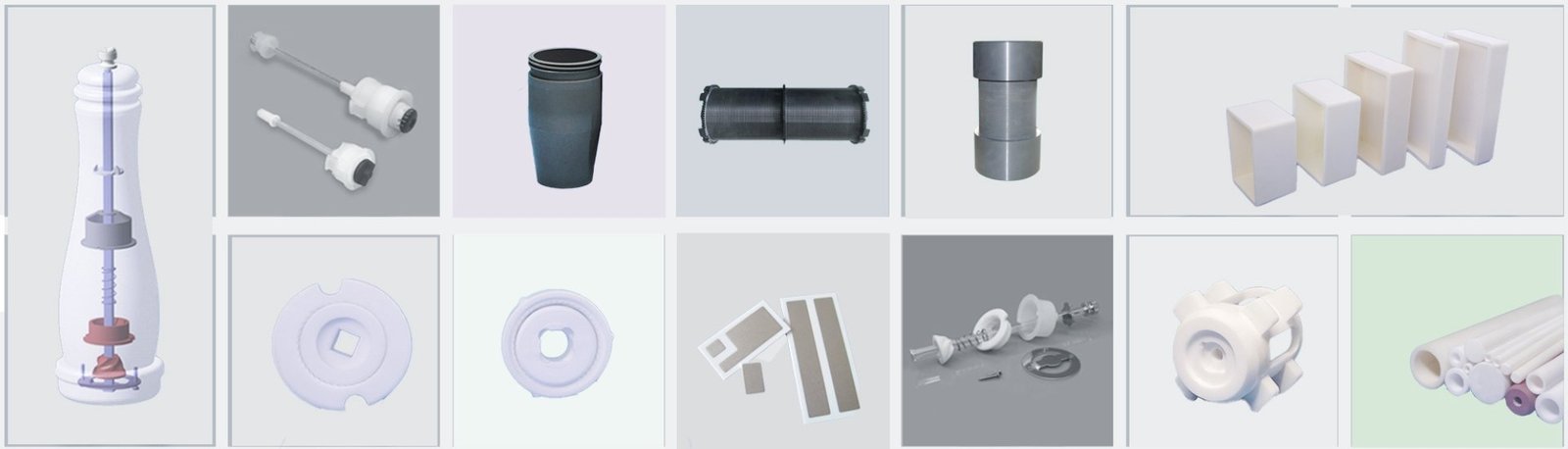
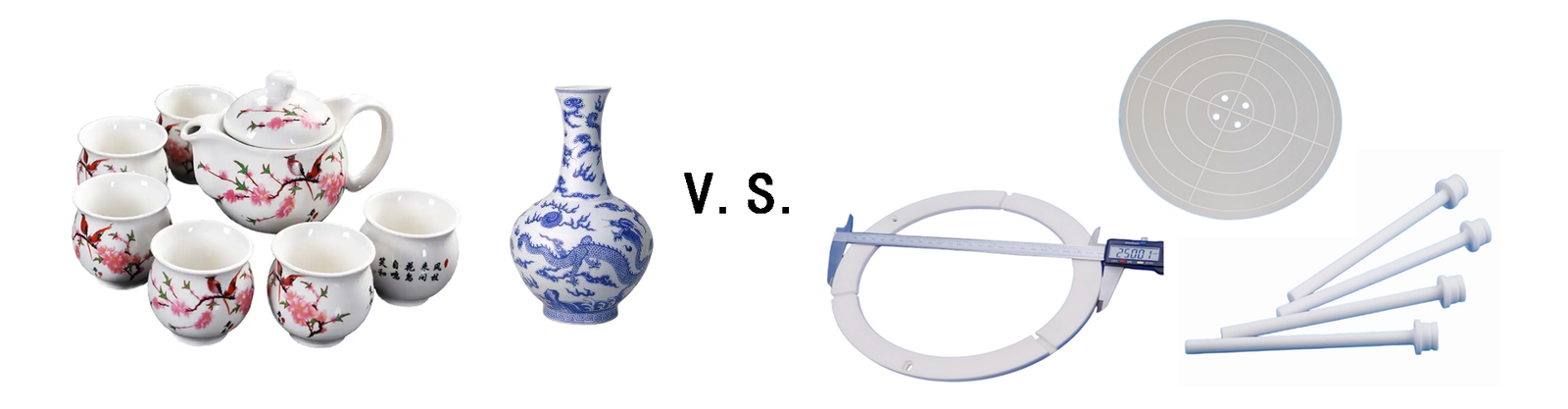
In aerospace engineering, material reliability is understood as follows: material reliability does not mean that it will never have problems, but that after a problem occurs, its behavior is predictable, the risk is assessable, and the system can be safely adjusted. This aligns perfectly with the application logic of advanced ceramic materials. For advanced ceramics, reliability means long service life, batch stability, and predictable performance. The reason why advanced ceramics such as alumina and zirconia are widely used in demanding industrial fields is not because they are indestructible, but because their performance is predictable and reliable over time.
Conclusion
For companies like ours engaged in advanced ceramics manufacturing, the aerospace engineering case serves as a timely reminder: the true value of materials lies not only in their specifications but also in their long-term, stable, and predictable performance. Therefore, in our daily production, we consistently prioritize consistency, reliability, and quality control.