

Introduction: Why Ceramic Micro Crack Prevention Directly Affects Your Product Reliability
In precision ceramic machining, a smooth surface does not always mean structural safety. Many ceramic components appear flawless after polishing but contain hidden micro cracks beneath the surface. These cracks often expand during operation and lead to unexpected failure.
Ceramic micro crack prevention refers to the systematic control of surface and subsurface cracks generated during machining. It focuses on reducing tensile stress, thermal shock, and structural defects to ensure long-term reliability of precision ceramic parts.
For procurement teams and technical managers, micro crack prevention is not only a machining issue. It is a cost control and risk management issue.
What Are Ceramic Micro Cracks and Why Are They Critical?
Ceramic micro cracks are microscopic fractures formed during grinding, drilling, or polishing. They may exist on the surface or below it. Even if invisible, they reduce the load-bearing capacity of the component.
Surface crack Vs Subsurface crack
| Crack Type | Location | Risk Level |
| Surface crack | Visible layer | Medium |
| Subsurface crack | Below surface | High |
Surface cracks can sometimes be detected through inspection. Subsurface cracks are more dangerous because they remain hidden while weakening structural integrity.
Compared to metals, ceramics are more brittle and undergo almost no plastic deformation before fracture. When ceramics replace metals as core components in certain special environments, cracks will propagate rapidly when the stress in the working environment exceeds the local strength. Therefore, microcracks are a “time bomb” for ceramics.
Potential risks include:
- Reduced strength
- Shortened fatigue life
- Leading to seal failure
- Rapid propagation at high temperatures
- Becoming a fracture source at stress concentration points
In high-end applications (semiconductors, seals, bearings), microcracks can directly lead to mass scrapping.
Why Do Micro Cracks Form During Ceramic Machining?
The causes of microcracks can be analyzed in detail from four aspects.
1) Material inherent brittleness
- Low fracture toughness
- High hardness
- No plastic deformation buffer
2) Excessive processing stress
Typical sources:
- Excessive cutting force
- Coarse abrasive grains on the grinding wheel
- Inappropriate feed rate
- Severe tool wear
3) Thermal stress
- Dry grinding or insufficient cooling
- Local temperature rise
- Uneven thermal expansion
Different thermal conductivity of ceramics (e.g., high for SiC, low for alumina) leads to different risks of thermal cracking.
4) Internal material defects
- Porosity
- Incomplete sintering
- Coarse grains
- Impurities
Internal defects can become crack initiation points.
Effective ceramic micro crack prevention requires coordinated control of all these factors.
Key Processing Stages for Microcrack Development
By following the processing flow, we can gain a clearer understanding of how microcracks are generated during the processing stage.
1) Rough Machining Stage After Sintering
Risks:
- Excessive Removal of Material
- Strong Impact
- Large Abrasive Particles
2) Fine Grinding Stage
Risks:
- Subsurface Damage
- Microcracks Extending Inward
- Local Stress Concentration
3) Drilling and Grooving
Risks:
- Stress Concentration
- Edge Chipping
- Cracks at the Bottom of the Hole
4) Polishing Stage
Risks:
- Surface Appears Smooth
- But Subsurface Cracks Are Not Removed
This is crucial: Smooth Surface ≠ No Microcracks
The impact of microcracks on different applications
The impact of microcracks in different applications can be broadly explained from four aspects:
1) Mechanical Seals
- Microcracks → Media Leakage
- Reduced Lifespan
2) Bearing Rollers
- Crack Propagation → Sudden Fracture
3) Semiconductor Ceramic Components
- Surface Defects → Particulate Contamination
4) High-Temperature Structural Components
• Thermal Cycling → Rapid Crack Propagation
A certain ceramic sealing ring used in a pump experienced an abnormally high leakage rate after six months of use. Failure analysis showed subsurface micro cracks generated during aggressive rough grinding. Although surface roughness met specification, internal damage reduced pressure resistance.
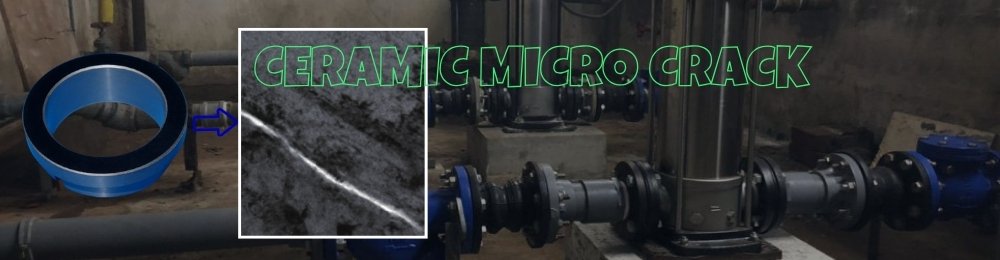
After optimizing grinding parameters and adding intermediate stress reduction steps, seal life improved by more than 40 percent. This case shows that surface inspection alone is not enough for ceramic micro crack prevention.
Core Strategies for Ceramic Micro Crack Prevention
Effective ceramic micro crack prevention includes five coordinated actions.
1) Optimize Material Selection
- Select ceramics with higher fracture toughness
- Control grain size
- Control porosity
- Use high-purity powders
Relative crack resistance of several ceramic materials:
| Material Type | Alumina | Zirconia | Silicon Carbide | Silicon Nitride |
| Crack Resistance (Relative) |
Medium | High | Medium-High | High |
2) Reasonable Control of Machining Parameters
Key Variables:
- Feed Rate
- Depth of Cut
- Linear Speed
- Contact Pressure
Principles: Small Feed Rate, Small Depth of Cut, Stable Speed, Avoid Impact Loads
3) Use appropriate abrasives and tools
- Diamond grinding wheel
- Fine grit size
- High-precision dressing
- Keep tools sharp
Tool wear directly increases the risk of microcracks.
4) Adequate cooling and thermal management
- Wet grinding
- Continuous cooling
- Controlling local temperature rise
- Avoiding thermal shock
5) Multi-stage stress relief processing
For example:
Rough grinding → Semi-finish grinding → Finish grinding → Polishing → Stress relief treatment
Gradually reduce residual stress.
Inspection Methods That Support Micro Crack Prevention
The detection methods and their corresponding application scopes are as follows.
| Inspection Method | Dye penetration | Ultrasonic testing | X-ray inspection | Microscopic analysis | Fracture analysis |
| application scopes | inspection detects surface cracks | detects internal flaws | provides detailed internal imaging | verifies surface integrity | Used for failure analysis |
Combining machining control with inspection ensures reliable ceramic micro crack prevention. In high-end applications, many customers require test reports.
Why Buyers Should Evaluate Micro Crack Control Capability
For high-speed, high-temperature, or sealing applications, small cracks can expand rapidly.
Procurement decisions should consider machining discipline, inspection standards, and process stability.
A supplier with systematic ceramic micro crack prevention capability reduces long-term operational risk.
Conclusion
Ceramic micro crack prevention is not a single machining adjustment. It is a systematic quality control strategy that protects structural integrity and extends service life. For precision ceramic parts, prevention during production is always more cost-effective than failure correction after installation.