


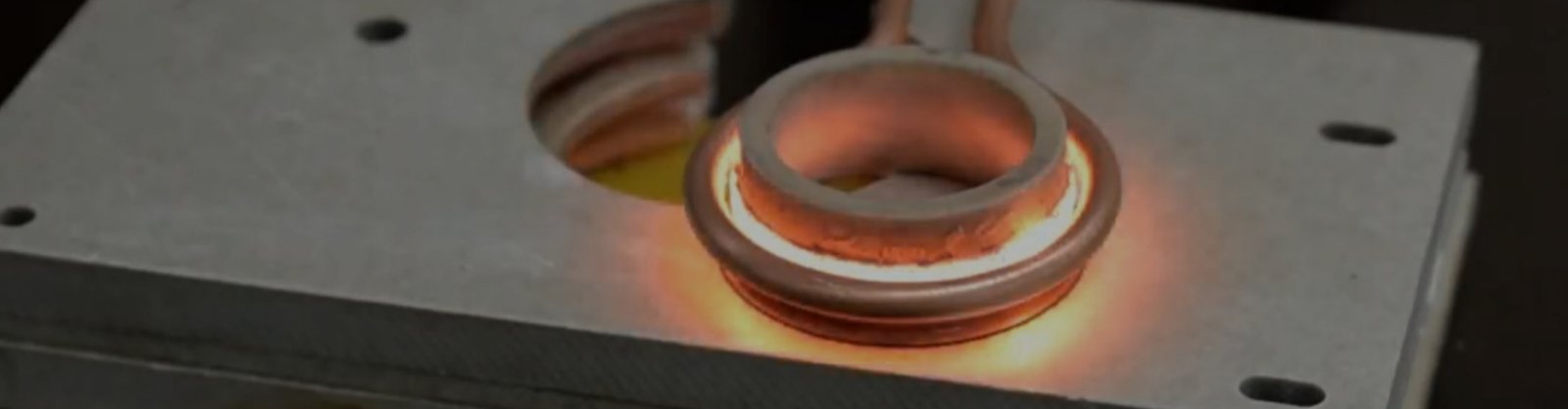
Introduction for Ceramic Brazing
Ceramic brazing is a high-temperature joining process used to bond ceramics to metals using specially designed filler alloys. Since ceramics cannot be welded like metals, brazing provides a reliable method to achieve strong, hermetic, and durable joints.
The working principle of ceramic brazing: A filler metal with a melting point lower than both the ceramic and the base metal is used. When heated to the filler metal’s melting temperature (but much lower than the base metal’s melting point), the liquid filler metal flows like glue and fills the gap between the ceramic and the metal. It then cools and solidifies, forming a strong, dense, and reliable integral connection. Brazing differs from welding in that it does not melt the workpiece itself, but rather heats it to near the material’s melting point and then uses filler material to achieve the connection.
This technology is widely used in power electronics, vacuum devices, aerospace systems, and medical applications where performance and reliability are critical.
Key Advantages
- Enables reliable ceramic-to-metal joining
- Provides hermetic sealing for vacuum and pressure applications
- High temperature resistance and long-term stability
- Suitable for complex geometries and precision components
Ceramic Brazing Methods
Active Brazing
Active brazing uses filler alloys containing active elements such as titanium or zirconium, which react directly with ceramic surfaces to form a strong bond without the need for prior metallization.
This method simplifies processing and is suitable for general industrial applications.
Metallized Brazing
Metallized brazing involves coating the ceramic surface with a metal layer (such as Mo-Mn), followed by nickel plating and brazing.
This method offers superior hermeticity and bonding strength, making it ideal for high-reliability applications.
Comparison of Brazing Methods
| Feature | Active Brazing | Metallized Brazing |
|---|---|---|
| Process Complexity | Lower | Higher |
| Cost | Lower | Higher |
| Bond Strength | Medium | High |
| Hermeticity | Moderate | Excellent |
| Application | General | High-reliability |
Conclusion: Metallized brazing is preferred for applications requiring hermetic sealing and long-term reliability.
Ceramic Brazing Process Flow
Typical Process Flow is as following: 1.Surface preparation–>2.Metallization (if required)–>3.–>Component assembly–>4.Vacuum brazing–>5.Cooling and inspection
Vacuum environments prevent oxidation and ensure clean, high-quality joints.
-
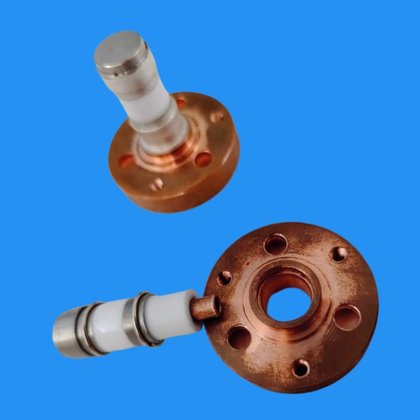 Surface Preparation
Cleaning removes surface oil and dirt; any residue will hinder the wetting and spreading of the solder.
-
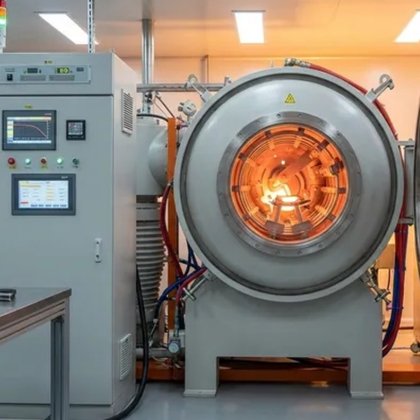 Vacuum Brazing
The assembled components are placed in the uniform temperature zone of the vacuum brazing furnace, where the automatic program precisely controls the brazing process.
-
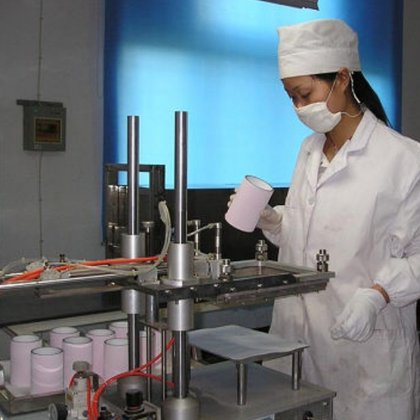
Key Process Parameters and Engineering Design Considerations for Ceramic Brazing
Common failure modes include cracking, poor bonding, and leakage. These are typically caused by thermal expansion mismatch, contamination, or improper process control. Engineering Insight: Most failures result from design and process issues rather than material defects.
To control ceramic brazing effectively, several important process parameters and design considerations must be taken into account.

Brazing temperature typically ranges from 800°C to 1000°C depending on materials and filler alloys.

Vacuum or inert gas atmosphere is used to prevent oxidation.

Filler materials include Ag-Cu-Ti alloys for active brazing and gold-based alloys for high-end applications.

Wetting behavior is critical to achieving strong and uniform joints.

Mismatch between ceramic and metal can lead to stress and cracking. Proper material selection and intermediate layers are essential.

Avoid sharp edges and stress concentration to improve joint reliability.

Uniform joint thickness ensures even stress distribution and prevents failure.
Why is ceramic brazing technology irreplaceable?
The reason why ceramic brazing technology occupies a core position in this high-precision field is due to its unparalleled advantages:

Brazing can ensure a strong joint between ceramic materials and metals, meeting the connection strength requirements of electronic devices, mechanical devices and other products.

In many high-tech applications, ceramic-metallized components need to balance electrical conductivity and thermal conductivity. Solder is usually an excellent conductor, ensuring smooth heat and electrical signal transmission during device operation.

Brazing offers precise control and allows for connections to be made at relatively low temperatures, thus avoiding excessive thermal damage to ceramic materials. This is crucial for products with extremely stringent dimensional and performance requirements, especially high-precision components such as integrated circuits and sensors.

Brazing technology can provide stable metal connection solutions for various ceramics such as alumina and aluminum nitride, and is also suitable for a variety of metal materials, including copper, silver, gold, and molybdenum. Therefore, filler materials can be flexibly selected according to different application requirements.

The brazing technique produces a dense, non-porous weld, which can prevent moisture and impurities from entering and protect the internal precision chip circuitry.

Brazing technology can complete the complex assembly of multiple parts at once, making it easy to automate production.
Quality Assurance & Testing
Helium leak testing ensures hermetic sealing performance.
Mechanical strength testing verifies joint reliability.
X-ray inspection detects internal defects.
Manufacturing Capabilities
We provide complete ceramic brazing solutions including:
- Ceramic-to-metal brazing
- Active brazing and metallized brazing
- Vacuum brazing furnace processing
- Custom design and engineering support
Send your drawings or specifications for evaluation and technical consultation.
Ceramic brazing is a joining method that uses high-temperature filler metals to bond ceramics to metals. It is widely used because ceramics cannot be welded, and brazing provides a reliable way to achieve strong, hermetic, and high-temperature-resistant joints. It is especially important in industries requiring high reliability and precision.
Active brazing uses reactive filler materials to bond directly to ceramics without metallization, making it simpler and more cost-effective. Metallized brazing requires an additional metallization step but provides stronger bonding and better hermetic sealing, making it suitable for high-end applications.
Hermetic sealing is achieved through proper material selection, precise control of brazing parameters, and high-quality surface preparation. Vacuum brazing environments also play a critical role in preventing oxidation and ensuring clean, defect-free joints.
Ceramic brazing can join various ceramics such as alumina, zirconia, and silicon nitride to metals like stainless steel, copper, and Kovar alloys. The selection depends on application requirements such as thermal expansion compatibility and operating environment.
Yes, ceramic brazing components can be fully customized in terms of material combinations, geometry, joint design, and performance requirements. Custom engineering solutions are often developed to meet specific application needs and ensure optimal reliability.